
Occasion makeup planning
Job interview makeup that still feels like you
Plan a familiar, comfortable look for an in-person or video interview, then test it in the light and schedule you will actually face.
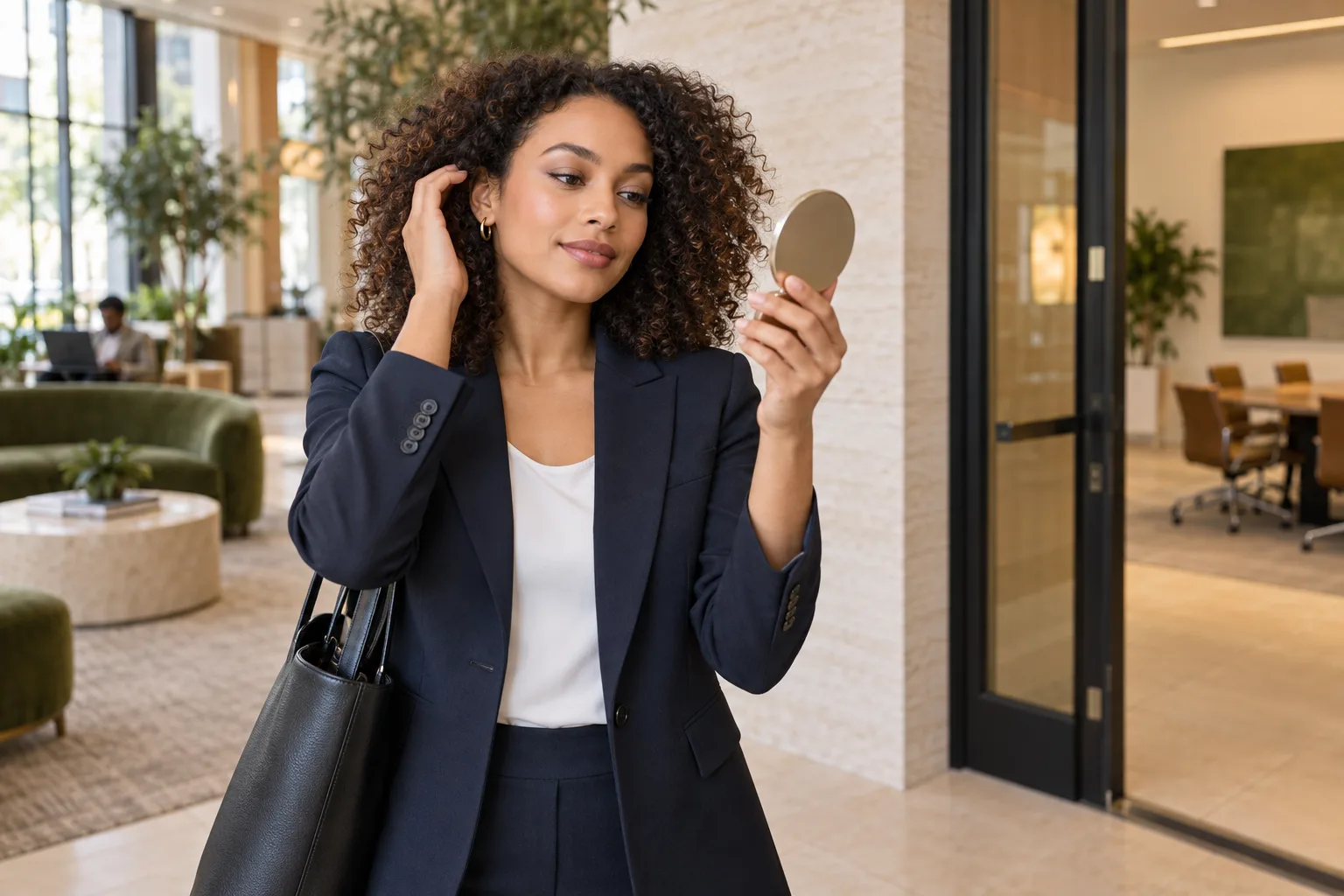
Job interview makeup should support the way you want to present yourself, not become another test you have to pass. Wearing makeup is optional. A bare face, a familiar soft routine and a visible signature lip can all be appropriate, depending on you, the setting and the role. The useful question is whether your choice feels comfortable, holds through the journey or call, and lets you focus on the conversation rather than checking a mirror every few minutes. An unfamiliar product or complicated technique on interview morning adds work when your attention belongs elsewhere.
Build around one look you already recognize. Consider the company's context and your planned clothing, then decide whether you want to change anything at all. If a visual comparison would help, MaqAI can show a few makeup directions on one clear photo while you keep the rest of the face stable. That is a planning aid, not a dress code or a prediction of how an employer will judge you. Finish with a real product rehearsal in the actual light and timing. Your preparation for the role, your examples and your questions remain the most important part of the interview.
Start with the interview, not a beauty rule
Read the role description and the employer's own material before choosing an outfit or makeup direction. A design studio, hospital office, shop floor and formal finance team can have different expectations, but no job title dictates one universal face. Look for reliable signals about the setting, then combine them with your usual style. Harvard's career service recommends researching the organization and considering its culture when preparing interview attire. That is a contextual starting point, not evidence that any particular lipstick or complexion finish wins an offer.
Decide what you would wear if you felt prepared and had no beauty advice in front of you. If your usual routine is mascara and a tinted lip, there is no need to build a full face solely for the meeting. If color is part of your everyday identity, erasing it may make you feel less at ease. Choose a level of attention and maintenance you can manage while traveling, listening and speaking. Your look should not demand a product hunt or an unfamiliar skin treatment in the final twenty-four hours.
Read Harvard career guidance on researching an interview setting
Choose an anchor that already belongs to you
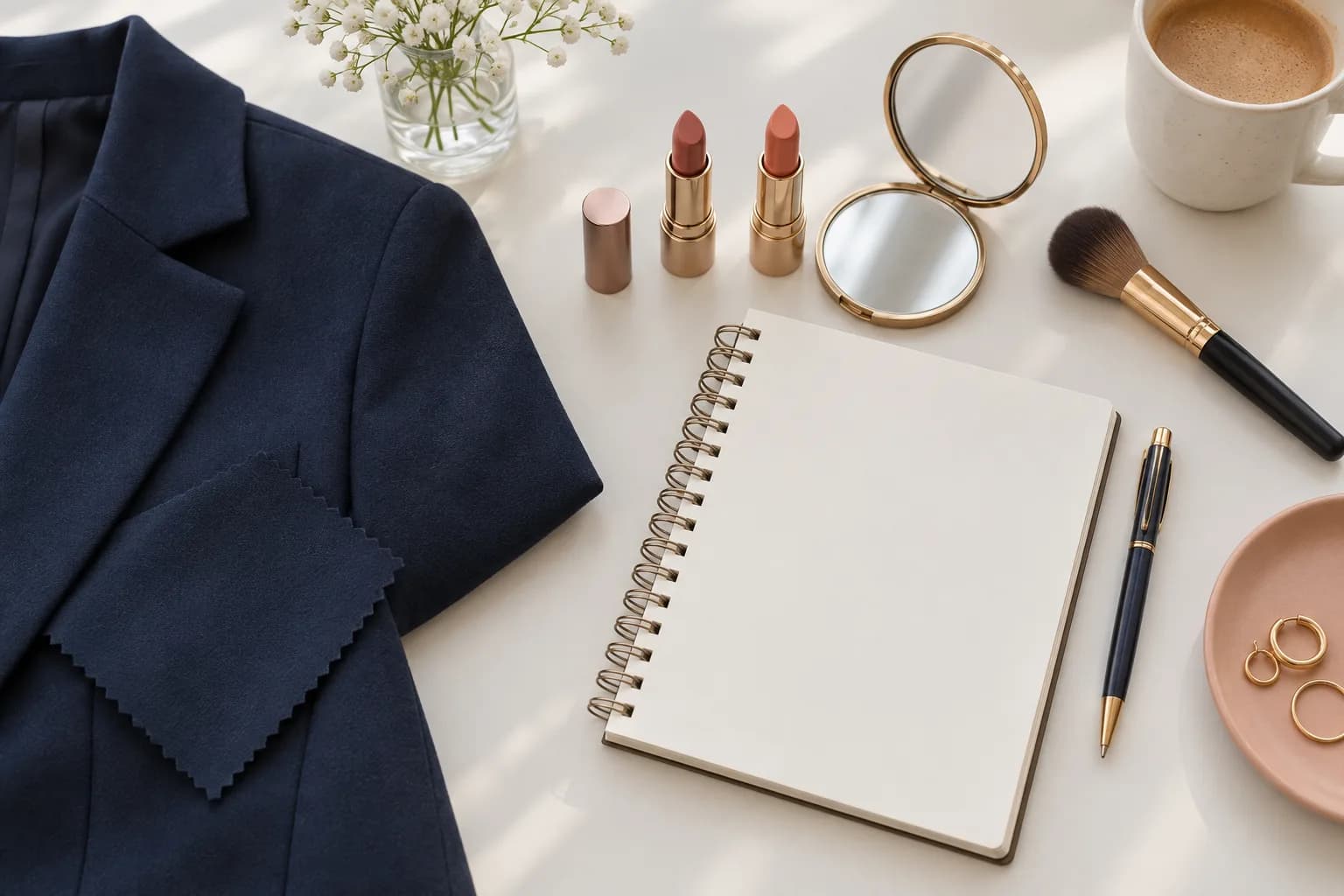
Write down the two or three features you usually define: perhaps brushed brows, a soft cheek, a clean lash line or a lip shade you know. Keep one as the anchor and let the others support it. A recognizable anchor makes a look easier to build and repair. It also keeps you from changing brows, eyes, cheeks, lips and foundation at once. If the interview is early, prioritize the part of your routine you can complete calmly even when time is shorter than expected.
Lay the planned clothing beside your usual makeup and check the whole impression in daylight. A navy or charcoal jacket can make a muted lip appear quieter; a bright top can make the same lip feel stronger. This is a visual relationship, not a rule that certain jobs forbid color. Take a normal-distance photo rather than judging from a magnifying mirror. If the outfit and face already feel coherent, stop planning. The goal is a dependable presentation, not the most complex version of yourself.
Use MaqAI to compare one interview makeup change
If you are deciding between two directions, use one clear, evenly lit portrait with the full face visible and no beauty filter. In MaqAI, begin with a look close to your real routine. Save that baseline. Then change just one meaningful variable, such as a softly defined eye versus a clearer lip, while leaving the complexion, lighting and other colors as steady as practical. A third option is enough if the first two reveal a real tradeoff. Ten versions often make a simple decision harder.
Compare the saved views at normal size. Ask which one still looks like you, which feature is easiest to recreate, and whether the look fits the clothes and setting you chose. Keep a shortlist of one or two directions and write the concrete steps behind them. A generated preview cannot tell you exact pigment, formula wear, skin comfort, oxidation or how office light will behave. Use it to select a direction for a real rehearsal, not to copy pixels or infer what an interviewer prefers.
Build a light base that survives conversation
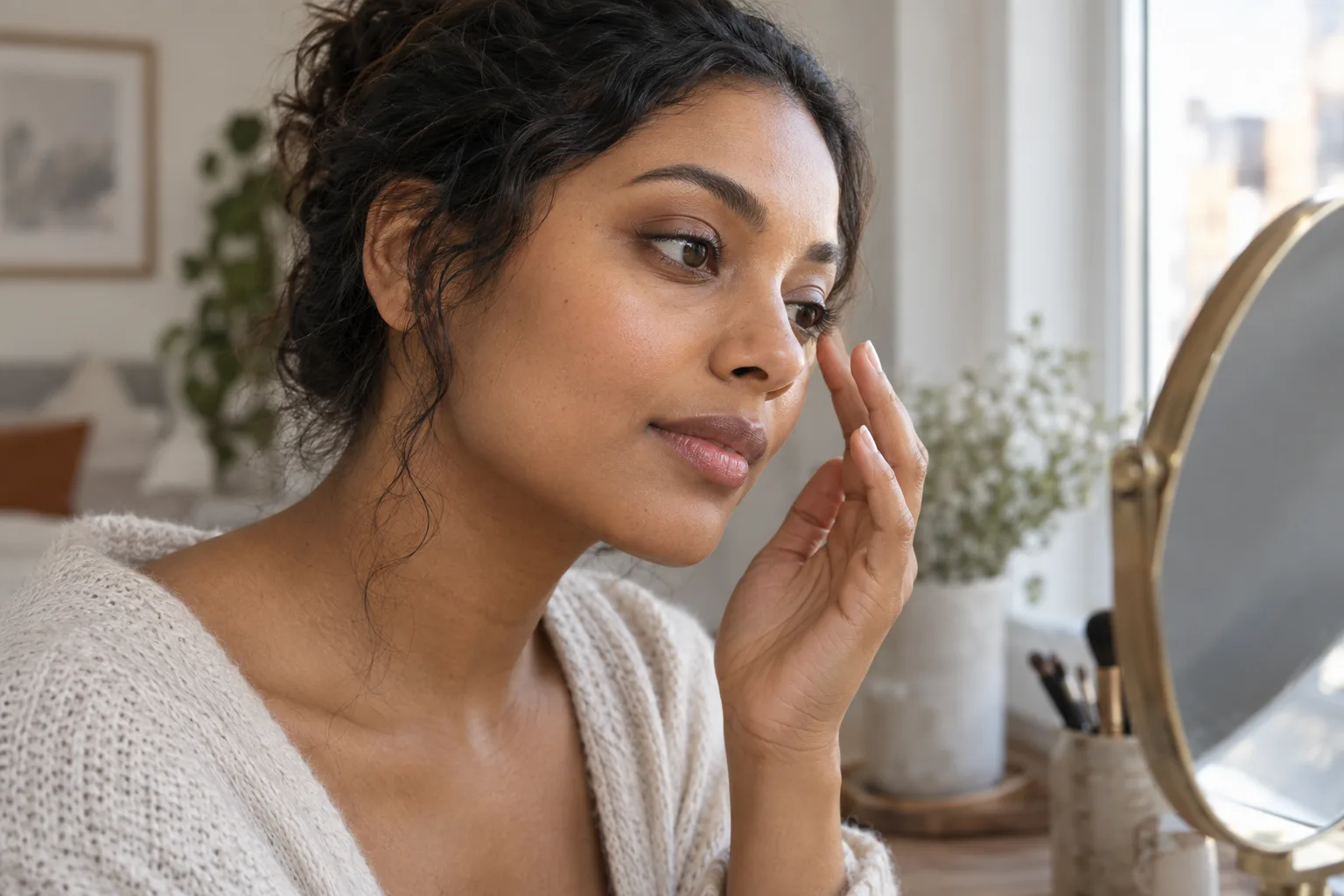
Start with the skin care and sun protection you already tolerate. The American Academy of Dermatology places moisturizer and sunscreen before makeup in its general order. Apply the necessary products as directed, then use complexion makeup only where it helps your chosen result. You do not need to hide natural skin texture to appear prepared. Spot concealer or a thin familiar base can be easier to maintain than a new full-coverage method, especially if the day includes travel, warmth or a mask.
Test the base while talking, smiling and turning your head, not only in a still photograph. Look for transfer at a phone or collar and for makeup collecting beside the nose or under glasses. If an area rolls up during application, stop adding layers and inspect the first unstable combination. If a layer feels tight or itchy, comfort matters more than keeping it for a photograph. Keep the real routine short enough that you can repeat it on the interview morning without improvising a rescue.
Check AAD guidance on the order of skin care and makeupTroubleshoot makeup that rolls up over skin care
Make eyes and lips easy to maintain
For the eyes, decide whether you want a clean lash line, one soft shadow, defined brows or no eye makeup. Use the tool and amount you already control. A carefully placed thin line can read more clearly than a heavy wing that needs repeated correction under time pressure. If mascara tends to smudge on your skin, test the full routine on an ordinary day before relying on it. Glasses can change what is visible through the lenses and what rubs near the nose, so look through your real frames rather than a filtered camera preview.
For lips, choose a texture you can talk and drink in comfortably. A lipstick that looks precise in a still image may leave a ring after water, while a familiar balm may need a small refresh but feel calmer. Practice saying a few answers aloud and take a sip of water, then inspect the result. If a stronger lip is your signature, keep it if you can apply and maintain it confidently; no universal nude shade is required. The test is whether you can forget about the product for most of the conversation.
Adjust job interview makeup for a video call
Set the camera at a comfortable eye-level angle and place the main light in front of you, rather than relying on a bright window behind your head. Open the actual meeting preview, because a laptop camera, phone camera and MaqAI image can show color and contrast differently. Check framing from the chest or shoulders upward, then speak for a minute. A lip or cheek color that seems subtle in the mirror may disappear on a small screen; a very reflective product may draw attention under a direct lamp. Change one element only after seeing the real feed.
Do not solve a technical problem with extra makeup. If the picture looks dark or washed out, move the light and adjust camera position first. A neutral, uncluttered background and tested audio usually matter more than a new cosmetic step. For an in-person appointment, check the look in the daylight you will travel through and the indoor light you expect, if possible. The same products can read differently across settings, so use the actual interview format as the final visual test.

Rehearse the route and the interview clock
Do a trial at roughly the same time of day as the appointment. Apply your normal skin care and makeup, then wait through the expected travel or setup period. Check the face once before the time you would enter the building or join the call. If the routine needs fifteen minutes of emergency repair, simplify it. Record what actually moves: lip color after a drink, shine on the center face, mascara under the eyes or foundation at a mask edge. Keep useful observations and ignore tiny details visible only in a magnifying mirror.
Harvard's interview guidance also recommends mapping the location or testing technology in advance. Put those tasks on the same rehearsal list as the makeup check so appearance does not absorb the whole preparation window. Set out clothes, documents, questions and the products you already know how to use. If you have a skin reaction during rehearsal, remove the trigger and return to a comfortable established routine. A successful look is one that gives you time and attention back for the actual interview.
Carry a small, clean correction plan
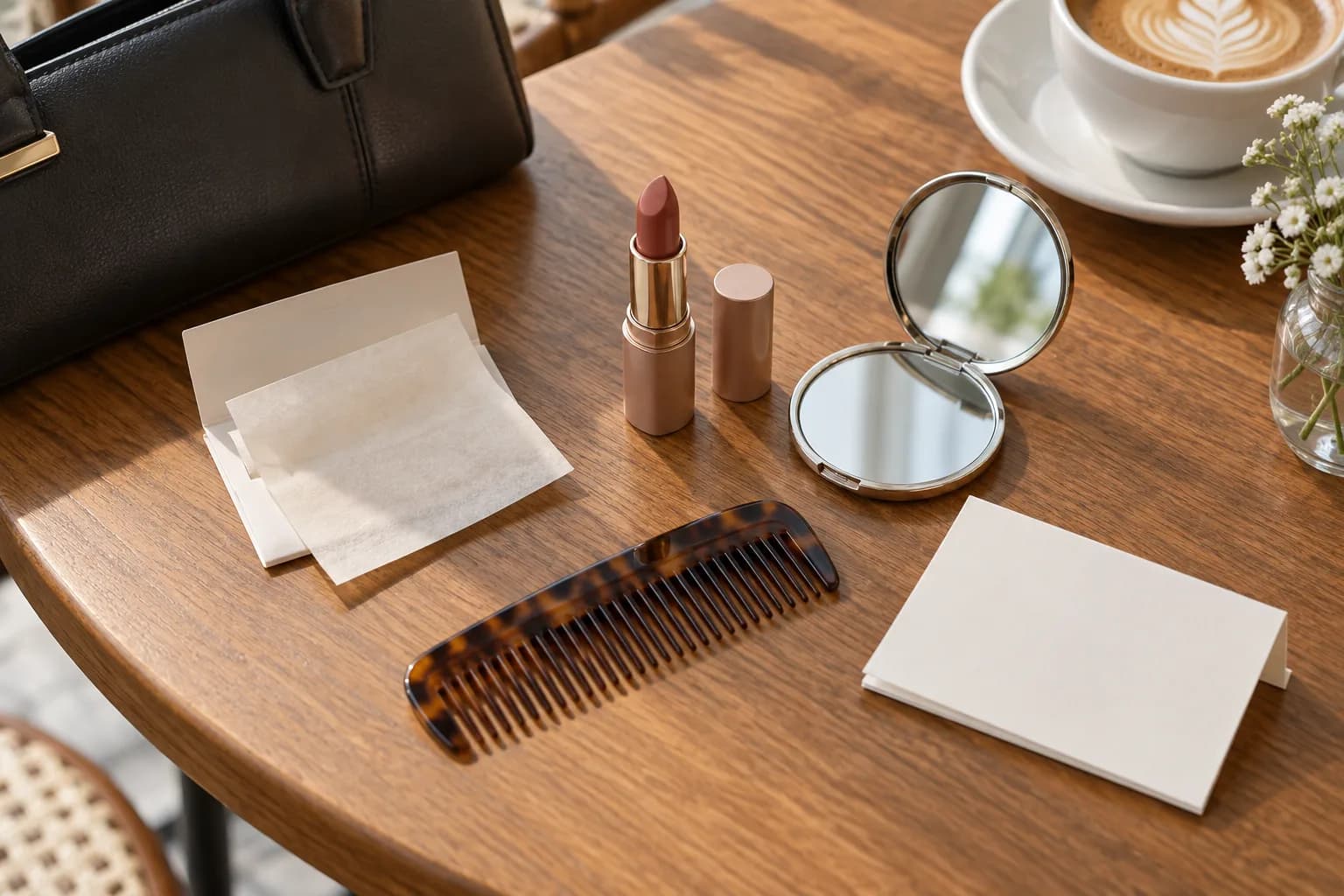
For an in-person interview, a small mirror, clean blotting sheet and the lip product you used may be enough. Blot shine before adding powder so you can see what still needs correction. Repair only the area that changed. A thick layer over existing makeup can make texture more visible, especially around the nose and mouth. Keep tools clean and avoid using a shared tester just before the appointment. If your interview is virtual, place any touch-up items away from the camera and finish corrections before joining.
Give yourself a firm stop point. Once the face looks comfortable at normal distance, put the mirror away, drink water and review the role, your examples and the questions you want to ask. It is easy to spend the final five minutes chasing a perfectly symmetrical brow while overlooking the meeting link. Makeup can support readiness, but it cannot compensate for a missed connection or a story you have not practiced. The best final check is whether you can look up and stay engaged with the person across from you.
Keep the version that lets you focus
After the rehearsal, write a short sequence: products you used, approximate amounts, one or two colors, application time and the only correction you may need. Save the MaqAI direction if it helped you decide, but let your real product test determine the final routine. A preview cannot guarantee a shade match, lasting power, texture, oxidation or skin reaction. If the preview suggested a beautiful but unfamiliar technique, practice it on another day rather than treating interview morning as the experiment.
You are allowed to choose no makeup, less makeup or the familiar look you love. You are also allowed to revise your choice if the role, workplace or camera setup calls for a different practical balance. The method remains the same: understand the setting, hold most variables steady, test a small change and keep the result that is comfortable and repeatable. Once that decision is made, redirect your energy to explaining what you can do, listening closely and deciding whether the organization suits you too.