
Complexion troubleshooting
Makeup pilling? Find the layer that rolls up
Separate product rolls from dry flakes, locate the first unstable layer and rebuild a shorter morning routine without sacrificing sunscreen.
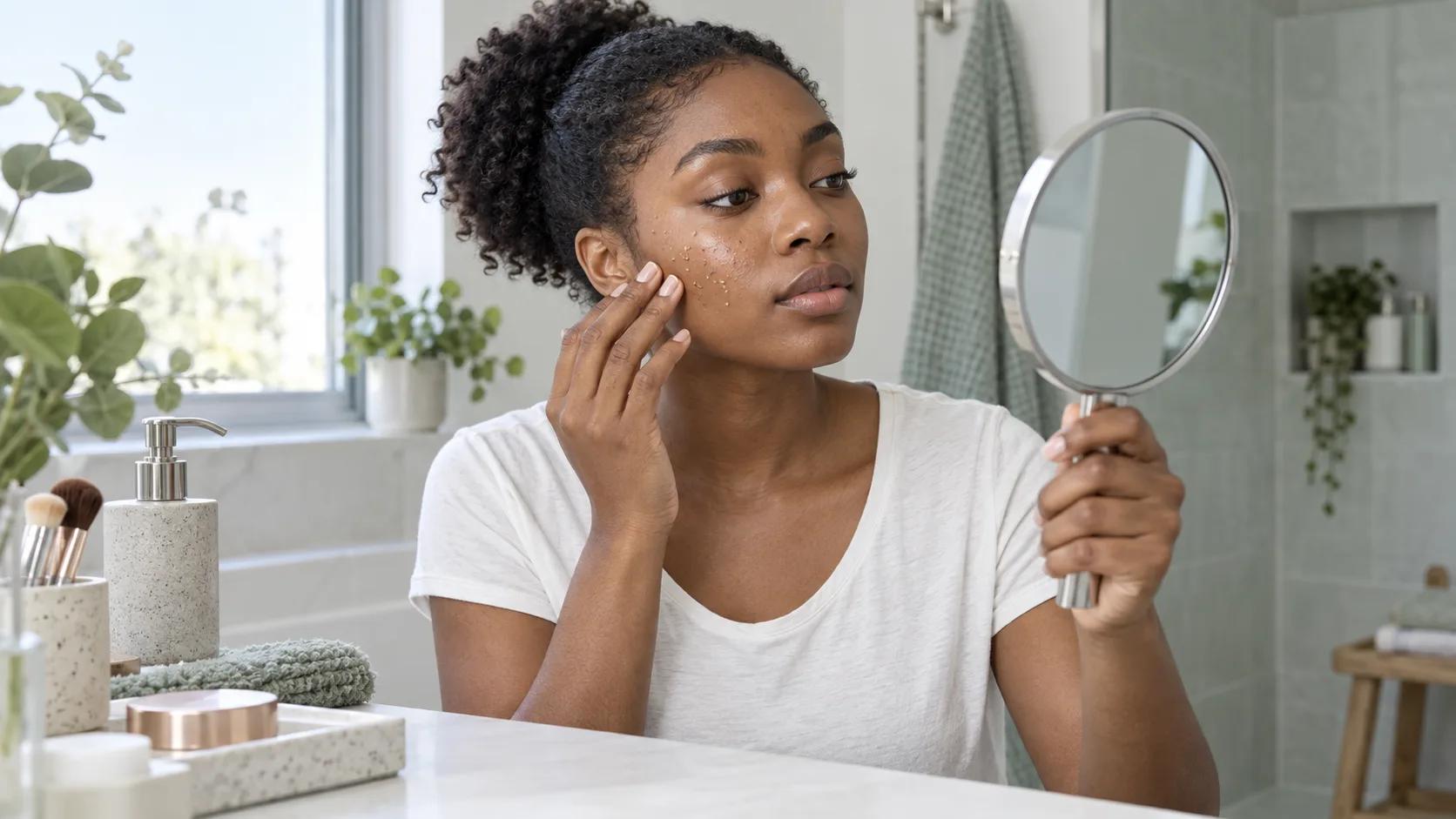
Makeup pilling describes products gathering into tiny rolls or crumbs as you spread another layer across the face. It can begin with skincare, sunscreen, primer or foundation, and the last product you touched is not automatically the cause. The useful clue is the moment the first roll appears. If moisturizer already balls up before sunscreen, foundation cannot repair that layer. If everything stays smooth until a brush moves repeatedly over one cheek, friction or the combined film may be the trigger.
Treat this as a layering problem before assuming that your skin or every product is wrong. A short, controlled test usually tells you more than buying a new primer. This guide helps you distinguish rolled product from dry skin, preserve the protective steps your skin needs and change one variable at a time. Stop any product that causes burning, swelling, persistent redness or an itchy rash. A smooth finish is a cosmetic goal; comfort and appropriate sun protection remain more important.
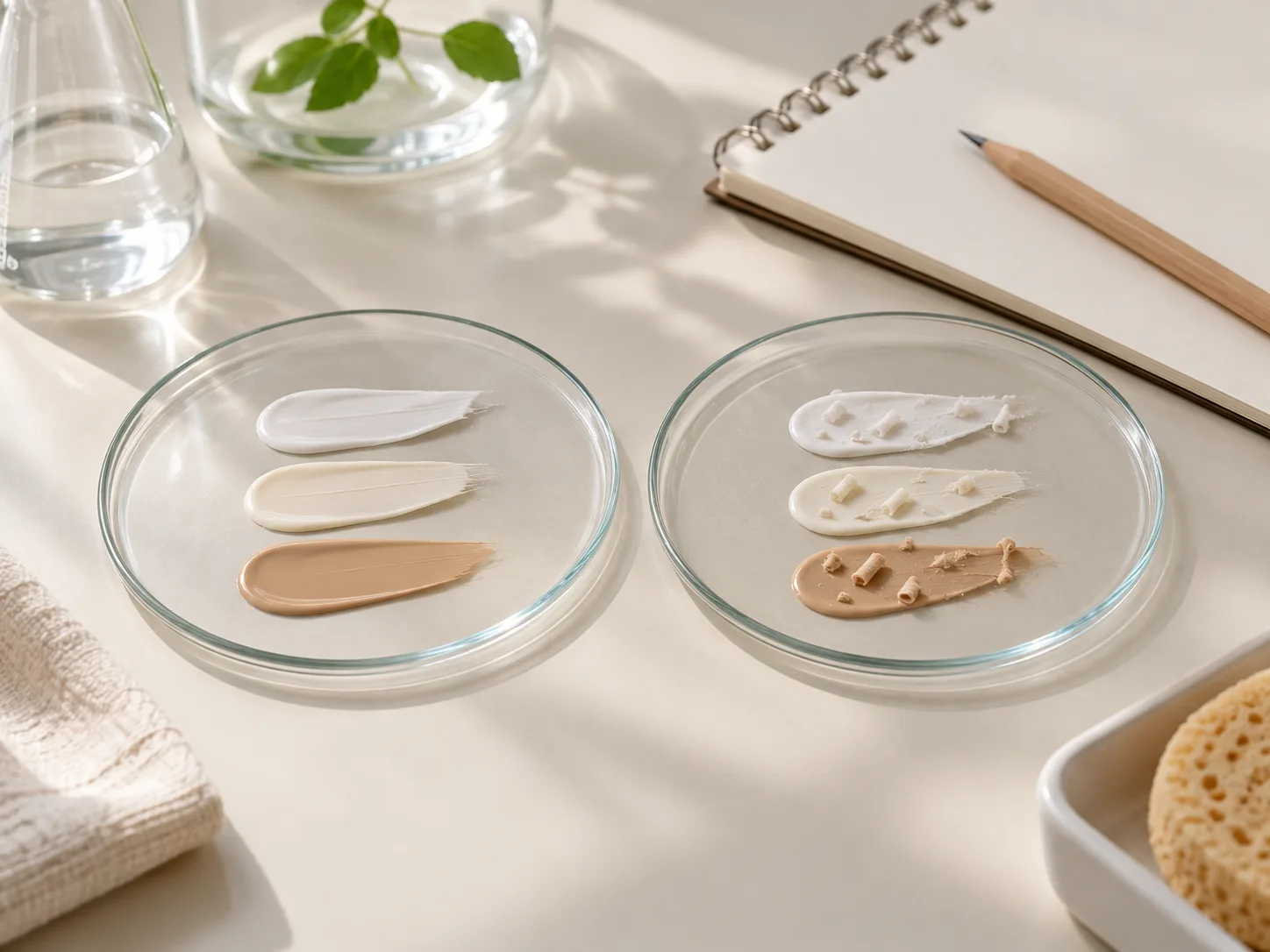
Confirm that the material is product, not skin
Look closely before brushing the crumbs away. Cosmetic pilling usually forms soft little rolls where fingers, sponge or brush have moved. It may match foundation color or appear pale when several clear layers combine. Dry skin tends to look like irregular attached flakes and may feel tight, rough or sore before makeup begins. A cleanser residue can create another similar film. Photograph the bare face in side light, then note whether the material appears before or only after the first cosmetic layer. Do not scrub an uncertain patch to make the distinction.
Test a small area near the jaw with clean hands. Apply one normal layer and let it settle according to its directions. Press once rather than rubbing repeatedly. If rolls form on the smooth testing area while nearby bare skin remains comfortable, the product film is likely involved. If visible flakes remain when no product is present, pause aggressive exfoliation and use a gentle routine appropriate for your skin. Persistent cracking, pain or inflammation deserves professional advice rather than another makeup experiment.
Write down the complete morning layer order
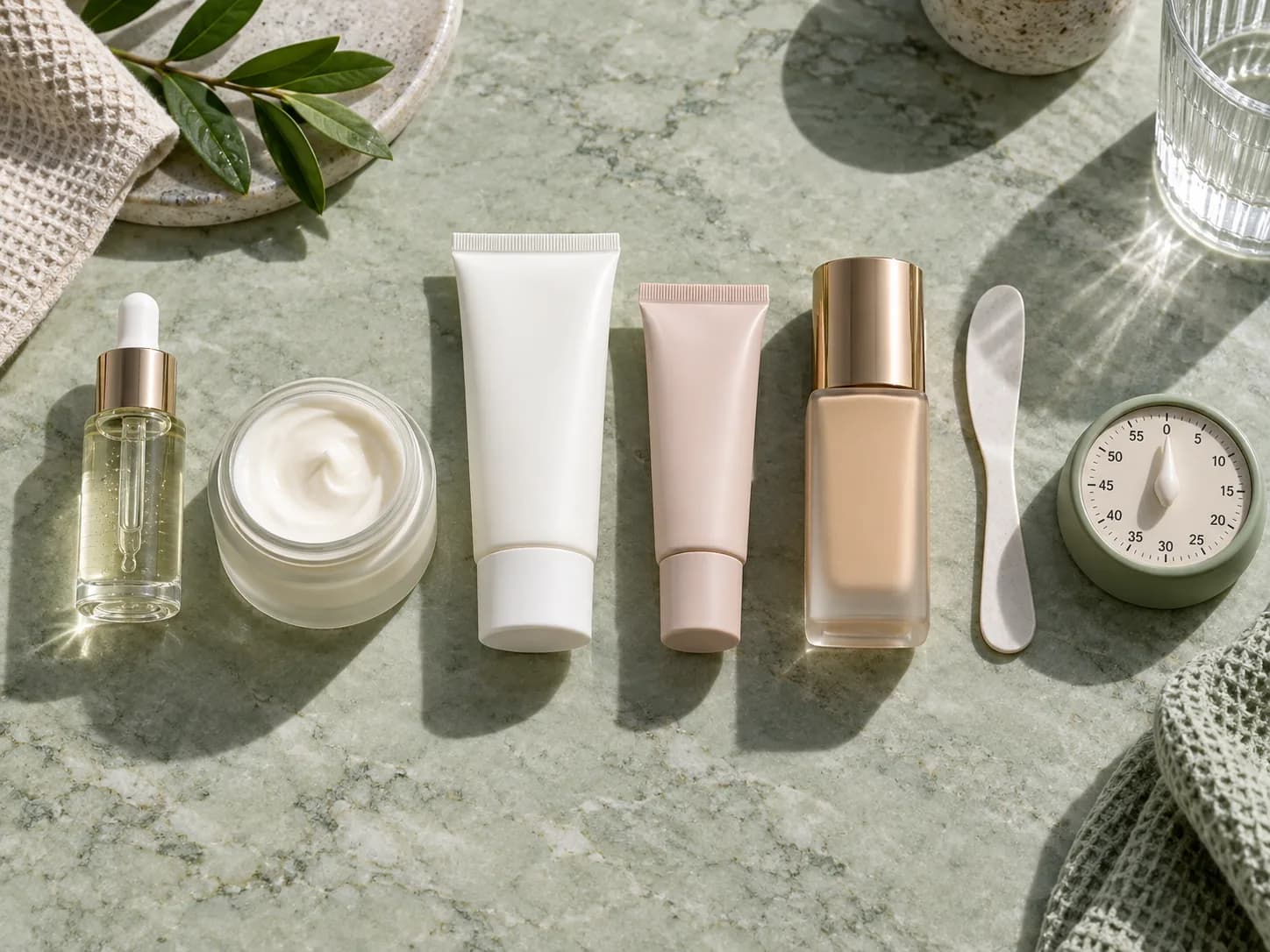
List every layer in application order, including toner, several serums, moisturizer, facial oil, sunscreen, primer, color corrector and foundation. Include products placed only around the eyes or nose. Record approximate amounts and where you rub, press or sweep. The purpose is not to declare a long routine bad. It is to see the actual number of films asked to sit together. A step that behaves well alone can roll when it meets the residue, polymers or texture of the layers beneath and above it.
Run the usual routine once and stop as soon as the first roll appears. Write down the product, area and movement used at that moment. If pilling begins during sunscreen, the unstable combination is already within skincare and sunscreen; leave primer and foundation out of that day's diagnosis. If it begins only with foundation, the cause may still lie underneath, but you now know the boundary. This simple timeline prevents replacing the final product merely because it made an earlier weakness visible.
Simplify the layers without neglecting protection
Build a calm baseline on a day when you can observe the result. Keep the skincare that your skin needs, but remove optional duplicate textures from the makeup test. For example, one comfortable moisturizer may be easier to evaluate than moisturizer, oil and two hydrating serums together. Apply each product in a measured, even layer instead of adding more wherever the skin still feels tacky. Follow product directions rather than inventing a universal waiting time; settling can differ by formula, amount, temperature and humidity.
Do not solve sunscreen pilling by deliberately using less protection than directed. The American Academy of Dermatology advises applying sunscreen before going outdoors, using enough for exposed skin and reapplying as needed. If the correct amount rolls over your morning skincare, first test a shorter routine beneath it, allow the preceding layer to settle and use gentler application. If incompatibility remains, a sunscreen that suits your skin and routine may be the layer to discuss with a dermatologist or replace, but protection itself should remain.
Reduce friction before changing formulas
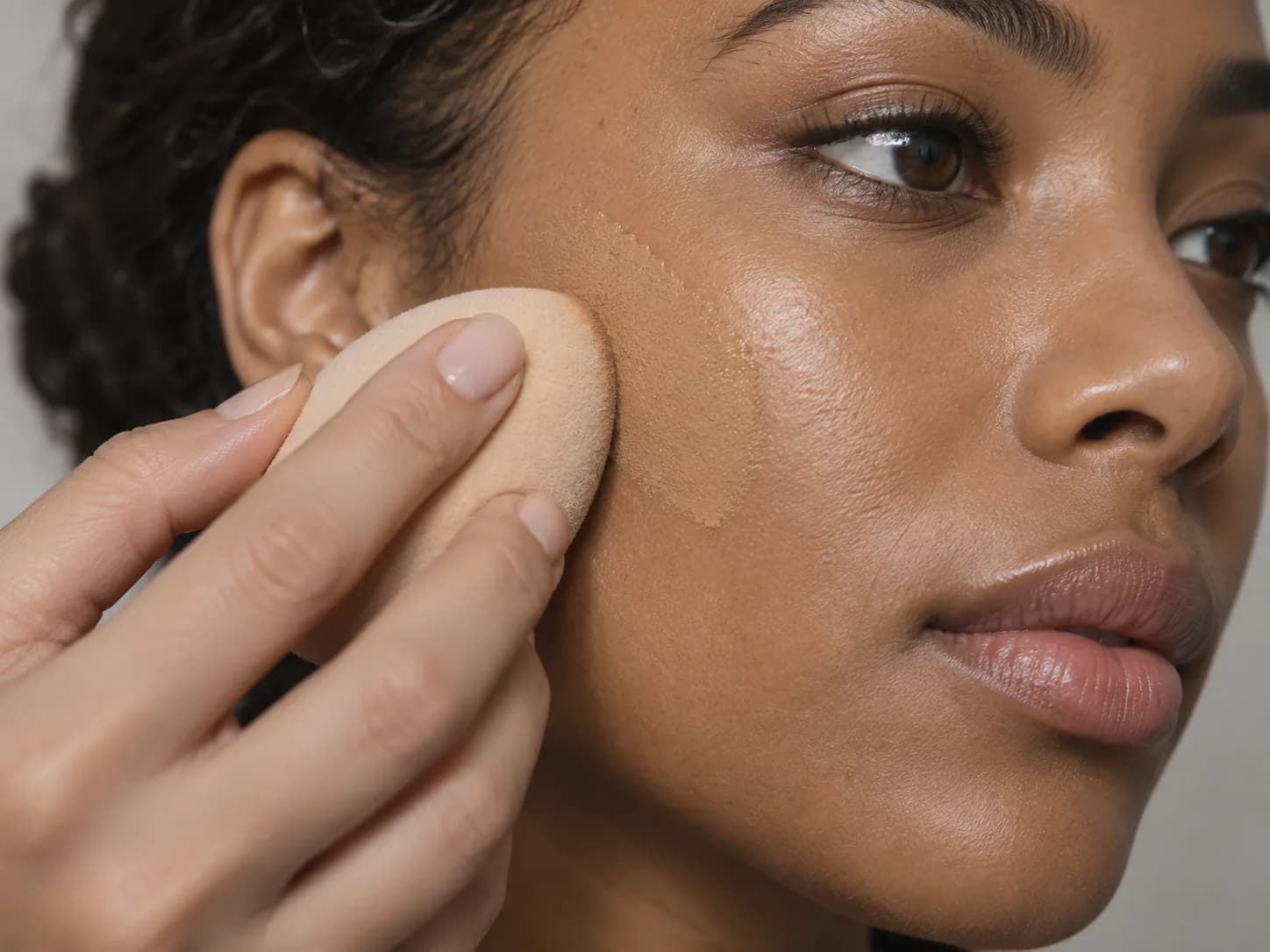
Pilling often becomes visible where the face receives the most passes: beside the nose, over textured cheeks, around facial hair or where foundation is repeatedly blended into an edge. Spread skincare with light, efficient movements, then leave it alone. When the surface is ready for makeup, place small amounts of foundation across the face and press or roll a sponge rather than dragging it back and forth. With a brush, use fewer deliberate strokes and avoid polishing one area long after coverage is even.
More waiting cannot rescue every incompatible combination, but it makes a fair test possible. Touch the skin lightly before the next step: it can feel hydrated without carrying a movable surplus. If your finger immediately lifts visible residue, adding primer will only bury the problem. Remove the failed area gently and restart that small zone instead of rubbing harder. For a rushed morning, a shorter known routine is more dependable than compressing every optional step and hoping vigorous blending will join them.
Investigate makeup pilling at the first product boundary
Once the shorter baseline is stable, add one removed layer back on a different day. Keep the cleanser, sunscreen, foundation, tool and amounts as consistent as practical. If adding primer brings the rolls back, test foundation directly over settled sunscreen on the next comparable day. If that stays smooth, the primer or its relationship with neighboring layers matters. This does not prove that an ingredient category is universally incompatible. Finished formulas contain many materials, and application amount and motion also influence their behavior.
A prospective cosmetic-science study available through PubMed Central examined pilling potential in relation to skin physiology, application method, sunscreen and foundation. That is a useful reason to test the whole combination rather than relying on a simple internet rule about water, oil or silicone. Ingredient lists can guide questions, but the first listed ingredient alone does not predict how a finished film behaves. Your controlled result with correct product use is more relevant than sorting every bottle into two oversimplified camps.
Repair a small failed area without spreading it
When rolls appear after the face is nearly finished, stop rubbing. Sweep loose material away with a clean soft brush or lift it gently with a clean dry sponge, keeping debris away from the eyes. If the patch beneath looks even enough at normal distance, leave it. If coverage has opened, use the smallest amount of the product that was stable below the failure and press it only onto the exposed area. Adding moisturizer, primer, foundation and powder together usually makes the patch harder to interpret.
A midday texture that looks flaky is not necessarily the same failure as rolls during application. Oil, sweat, facial movement, touching and product wear can change the finish over several hours. Record when the issue happened and whether it formed under active blending or later without friction. A quick repair helps you finish the day; it does not diagnose the cause. Save the diagnosis for a fresh test when you can control the starting layers and avoid repeatedly disturbing already-set makeup.
Run a three-day combination test
Day one documents the normal routine. Take a bare-skin photo, list every layer and record the exact step where the first roll appears. Day two uses the same sunscreen and foundation but a shorter underlying routine, while application amount and tool stay similar. If the result improves, one of the removed layers, excess total film or their interaction deserves attention. If nothing changes, do not add everything back yet; examine friction and the boundary between sunscreen, primer and foundation.
Day three changes only one suspect: omit primer, switch the application tool, or restore one skincare step. Choose one action, not all three. Test on the whole face only when the products are already safe for you; otherwise use an appropriate small area according to directions. Weather and skin condition can vary, so repeat a promising combination before declaring it solved. The winner should remain comfortable, preserve required skincare and sun protection, apply without rolls and wear acceptably through the hours you actually need.
Baseline first, shorter routine second, one suspect change third. Keep sunscreen use, foundation amount, tool and checking time as steady as practical.

Keep the shortest combination you can repeat
After finding a smooth combination, write down products, order, approximate amounts, settling cues and tool. Keep it as your dependable makeup-day baseline. Optional skincare can move to another time if that suits its directions and your needs, but do not change a prescribed routine without professional guidance. Reintroduce anything important one at a time. If pilling returns only in heat or around one facial area, adjust motion and local amount before rebuilding the entire routine.
Retest when a product is reformulated, the season changes or your skin feels different. A combination that worked in winter may behave differently in summer humidity, and a new bottle can alter the film even when the front label looks familiar. MaqAI can help plan a visual makeup direction, but an image cannot detect pilling, ingredient interaction, comfort or wear on living skin. This problem is best solved at the sink and mirror with patient observation. The successful routine is the one you can apply correctly and reproduce.