
Occasion makeup
Free date night makeup test: which focal point wins?
Compare an eye-led and a lip-led direction, then turn the stronger idea into a comfortable real-world routine.
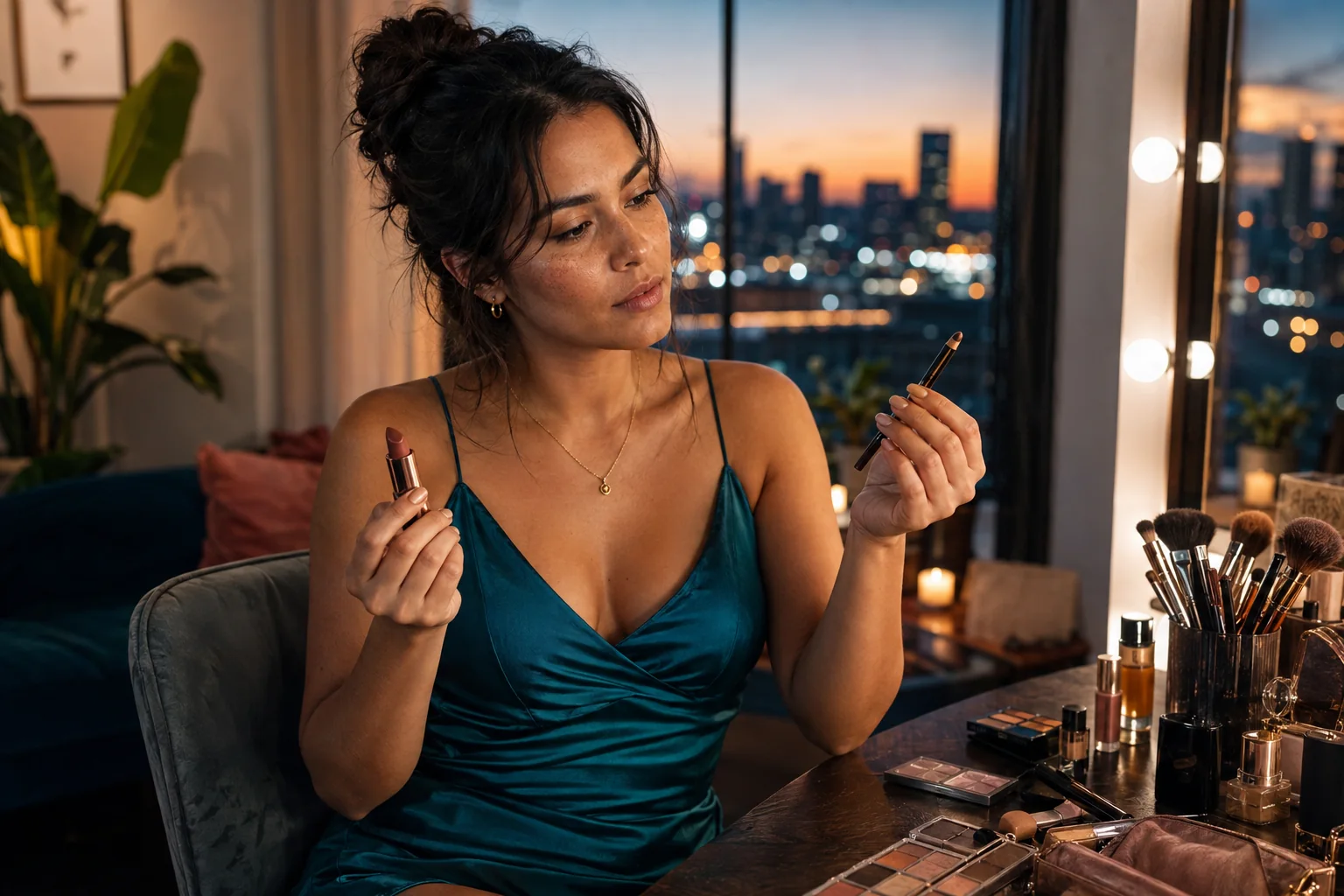
A free date night makeup test should answer a useful question, not prescribe what makes someone attractive. The practical decision is often simpler: should the eyes lead, should the lips lead, or should the whole face stay quiet and balanced? Venue, lighting, food, travel, comfort and your normal technique matter more than a generic rule about looking romantic. This guide uses two controlled directions so you can see a meaningful difference without rebuilding every part of your face at once.
MaqAI helps at the planning stage. Start with one clear portrait, change one visible variable at a time and save no more than two plausible finalists. A preview cannot guarantee an exact product shade, formula, oxidation, texture, wear, skin response or final result. Recreate the preferred direction with products you already understand, then check it in the light and activity that belong to the actual date. The winner is the look you can wear, maintain and still recognize as your own.
Define the real date before choosing the makeup
Write down the plan in concrete terms: afternoon coffee, outdoor walk, dinner under warm lamps, cinema, dancing, or several locations in one evening. Add travel time, weather, glasses or contact lenses, whether you expect photographs, and when a mirror will actually be available. These details decide whether precision, easy touch-ups, oil control, comfort or speed should lead the routine. A beautiful reference that ignores the evening is only decoration.
Name one feeling you want from the makeup and one problem you want to avoid. You might want polished but relaxed, soft but visible in low light, or expressive without needing constant checks. The problem might be lipstick moving during dinner, heavy shadow closing the eyes, a luminous base becoming shiny, or a complicated look making you late. This brief keeps the comparison tied to your life rather than someone else's face.
Compare dewy, satin and soft-matte finishes before setting the brief
Build two directions instead of collecting twenty ideas
Reduce inspiration to two complete directions. Direction A can be eye-led: softly deepened lash line, controlled outer-corner shadow, quiet cheek and a comfortable neutral lip. Direction B can be lip-led: restrained eyes, clean lashes, softly connected cheek color and a rose, berry or red lip. Keep complexion coverage, brow structure and overall finish similar so the focal-point change remains easy to read.
Avoid comparing a bare face with a fully finished glam look. That only proves that more makeup looks different. Give both options equal care, similar intensity and the same photograph. If one direction includes a glossy lip, do not also add heavier contour, stronger highlight and deeper brows. One meaningful variable reveals preference; five simultaneous changes create a mood board with no clear lesson.
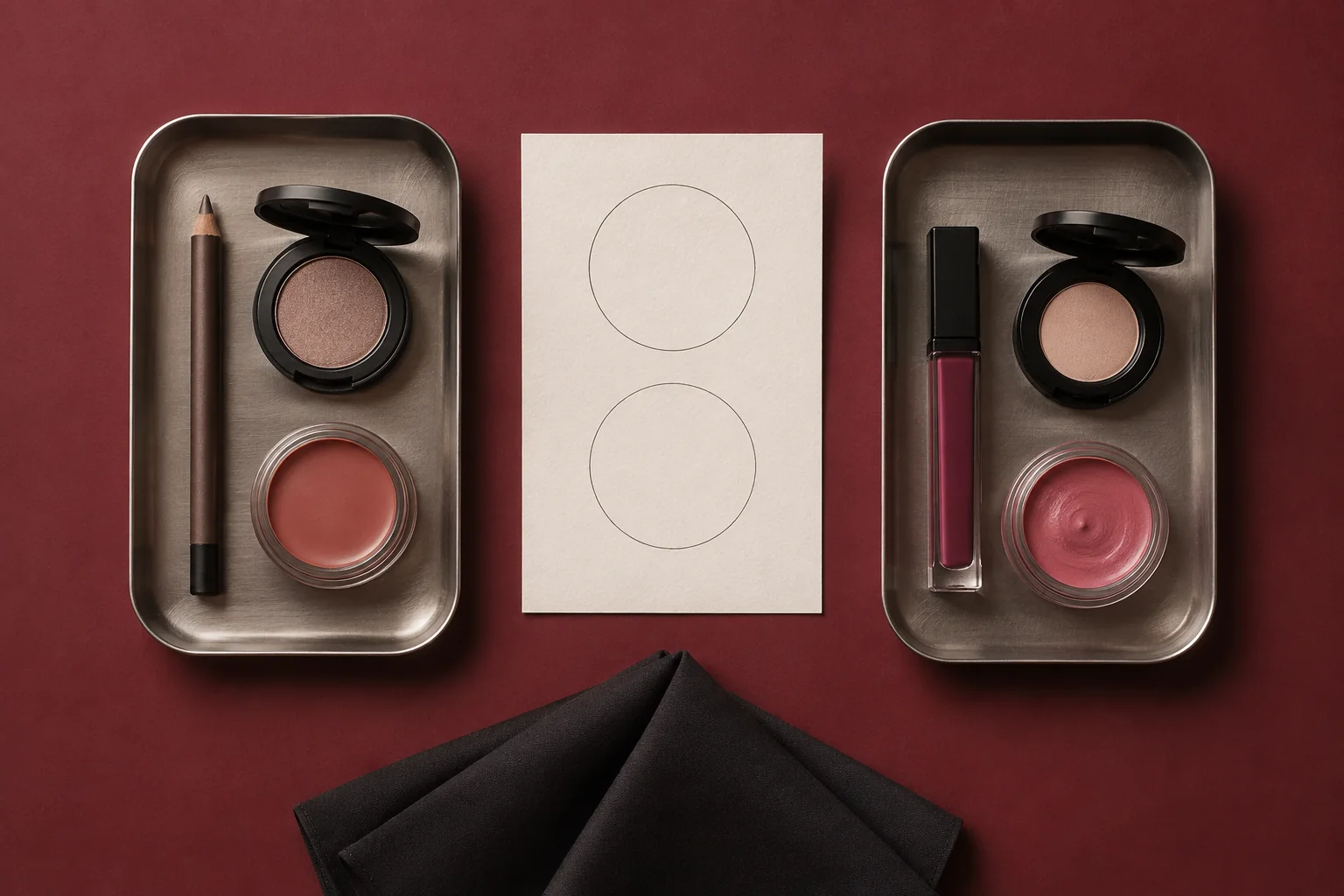
Use the flat lay as a decision map. Each tray should contain only the products needed for its direction, plus the shared base. If the eye-led option requires seven unfamiliar tools while the lip-led option needs one tested lipstick, that practical difference belongs in the choice. Complexity, removal, touch-up access and confidence with technique are valid design constraints, not failures of ambition.
Take one stable portrait for the free date night makeup test
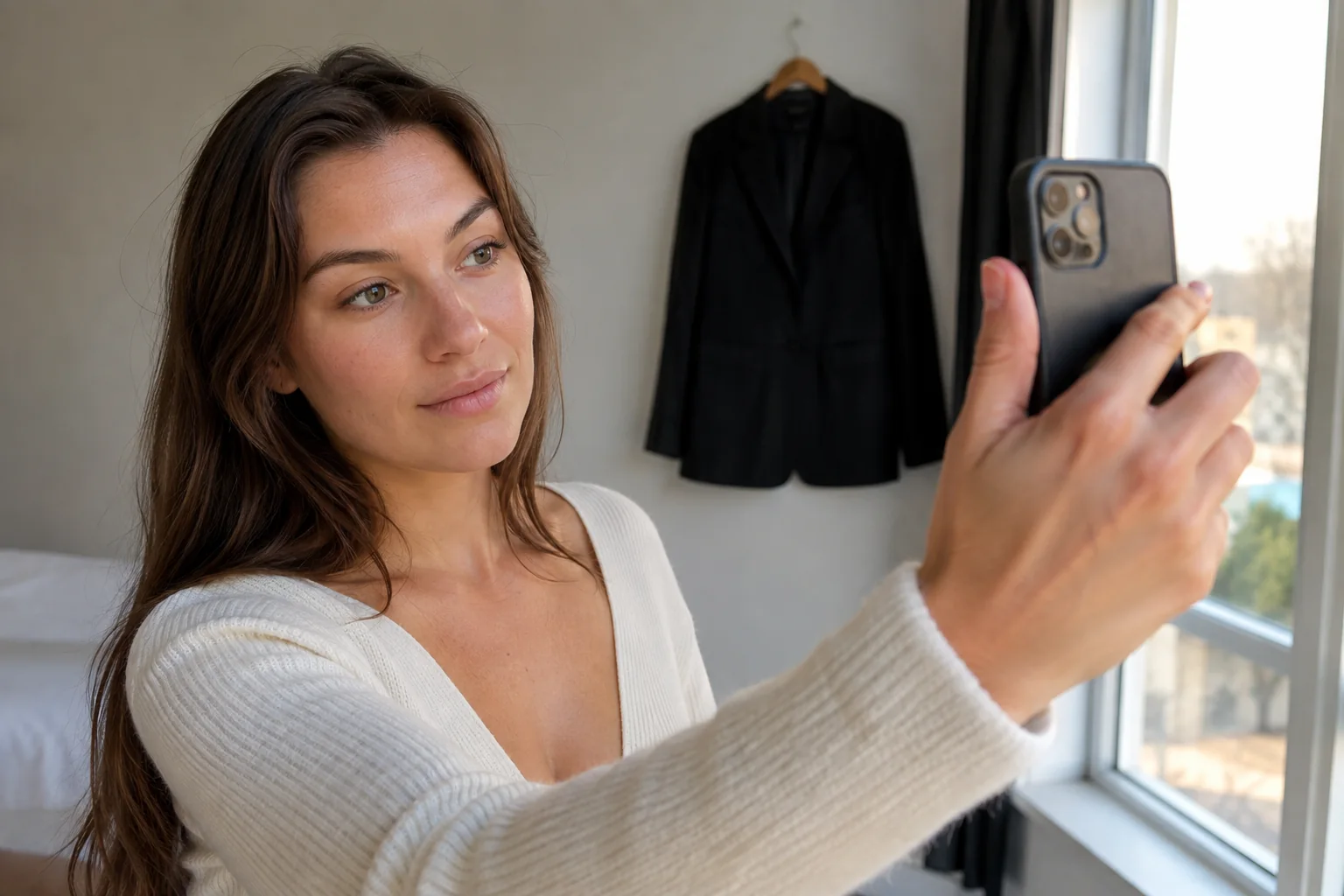
Photograph the face before the rush begins. Stand near a window or in open shade with the camera around eye level, the full face visible and the expression relaxed. Turn off beauty filters, portrait relighting and color effects. Keep hair away from important edges and use a simple top whose color does not cast strongly onto the skin. A stable source makes placement and hierarchy easier to compare.
Existing makeup changes the baseline. If possible, use a bare or very lightly made-up portrait without artificial lashes, strong liner or an opaque lip. You do not need perfect skin and should not erase texture. The purpose is not to create an unflattering before image; it is to preserve enough real information that the two creative directions start from the same face, crop, light and expression.
Save the original separately and do not replace it between versions. A tiny head angle, smile or camera exposure shift can make one option look more open or polished even when makeup is not responsible. If you need a better source, retake it before comparing. Our detailed selfie guide explains the same neutral-light baseline for other AI makeup decisions.
Compare one focal point at a time in MaqAI
Create the eye-led version first. Describe shape, edge, depth and finish rather than asking for a vague sexy look. For example: compact soft-brown definition close to the lashes, a slightly lifted outer edge, satin skin and a muted rose lip. Save the full-face result. Then return to the same portrait and build the lip-led version while keeping base, brows, cheek placement and overall intensity as consistent as possible.
Review the two images at normal screen size before zooming in. Ask where the eye lands first, whether expression still feels like you, and whether the focal point works with the outfit near the face. Then inspect practical details: can you reproduce the edge, do you own a related shade family, will the finish suit the venue, and can the anchor be repaired quickly? A technically dramatic preview is not automatically the better plan.
Use MaqAI as a visual notebook, not as evidence that a real formula will behave identically. Screens and generated light alter color; digital skin does not eat, blink, crease, transfer or react. Record useful language such as diffused brown lash line, medium muted berry lip, softly lifted rose cheek and satin center face. That recipe is more transferable than a guessed digital shade name.
Choose by hierarchy, comfort and recognition
Look at the whole portrait for five seconds, then look away and name what you remember. If the answer is eyes, lips, glow and contour all at once, the hierarchy may be crowded. Reduce the least important feature rather than intensifying the favorite again. A strong date-night look can still be quiet; it only needs a readable relationship between the focal point and its supporting colors.
Check emotional comfort separately from visual novelty. An unfamiliar dark lip may look excellent but make you monitor every glass. A crisp wing may be elegant but frustrating if you have ten minutes and no place to correct it. Confidence does not require pretending constraints do not exist. The most successful direction often uses one special change around a routine you already perform reliably.
If both directions work, use the activity as the tie-breaker. A long meal may favor an eye-led look with an easy lip; close conversation in soft light may make a controlled lip or luminous cheek especially effective. If neither works, do not invent a third complete face immediately. Lower intensity, soften an edge or change one color family while preserving the structure of the clearer option.
Recreate the winning direction with real products
Translate the preview into roles before opening the makeup bag: preparation, targeted coverage, finish control, brow support, eye or lip anchor, cheek connection and optional highlight. Choose familiar formulas first. Match depth and mood rather than chasing an exact screen color. A berry direction can be built with a stain, satin lipstick or layered pencil, but each will produce different edges, comfort and wear.
Apply thinly and stop at the first version that communicates the idea. Photograph it in the same neutral light as the source, then compare the real face with the written recipe rather than demanding pixel-for-pixel similarity. If the focus is right but the result feels heavy, adjust amount or placement. If the color family is wrong, change that family without rebuilding brows, base and every supporting feature.
Test new products before the date rather than introducing several at once. The American Academy of Dermatology describes a small-area method for checking whether a skin-care product may cause a reaction; follow relevant product directions and seek qualified help for significant irritation. A digital preview cannot assess allergies or compatibility, so safety and comfort must come from real use.
Check evening light, photographs and movement
Move beyond the bathroom. View the finished makeup in indirect daylight, ordinary indoor light and a warm low-light setting similar to the venue. Take one unedited rear-camera photo and one direct-flash photo only if flash is likely. Do not grade the look by a single close selfie. Conversation distance shows hierarchy; a closer image helps locate migration, separation or an edge that needs refining.
Wear the routine for several hours while talking, smiling, drinking and eating something similar to the plan when practical. Observe before repairing. Record when the lip fades, whether liner transfers, where shine appears and whether eyes feel dry or irritated. The goal is not frozen makeup. It is predictable change with a repair you can perform calmly and without adding heavy layers over moisture or texture.
Eye-area products deserve particular care. Use cosmetics intended for that area, keep tools clean, do not share them, follow labels and stop if irritation occurs. The US Food and Drug Administration provides general eye-cosmetic safety guidance; local rules and professional medical advice still apply. Never let an occasion pressure you into keeping a product that burns, scratches or interferes with vision.
Pack the smallest touch-up kit that solves real problems
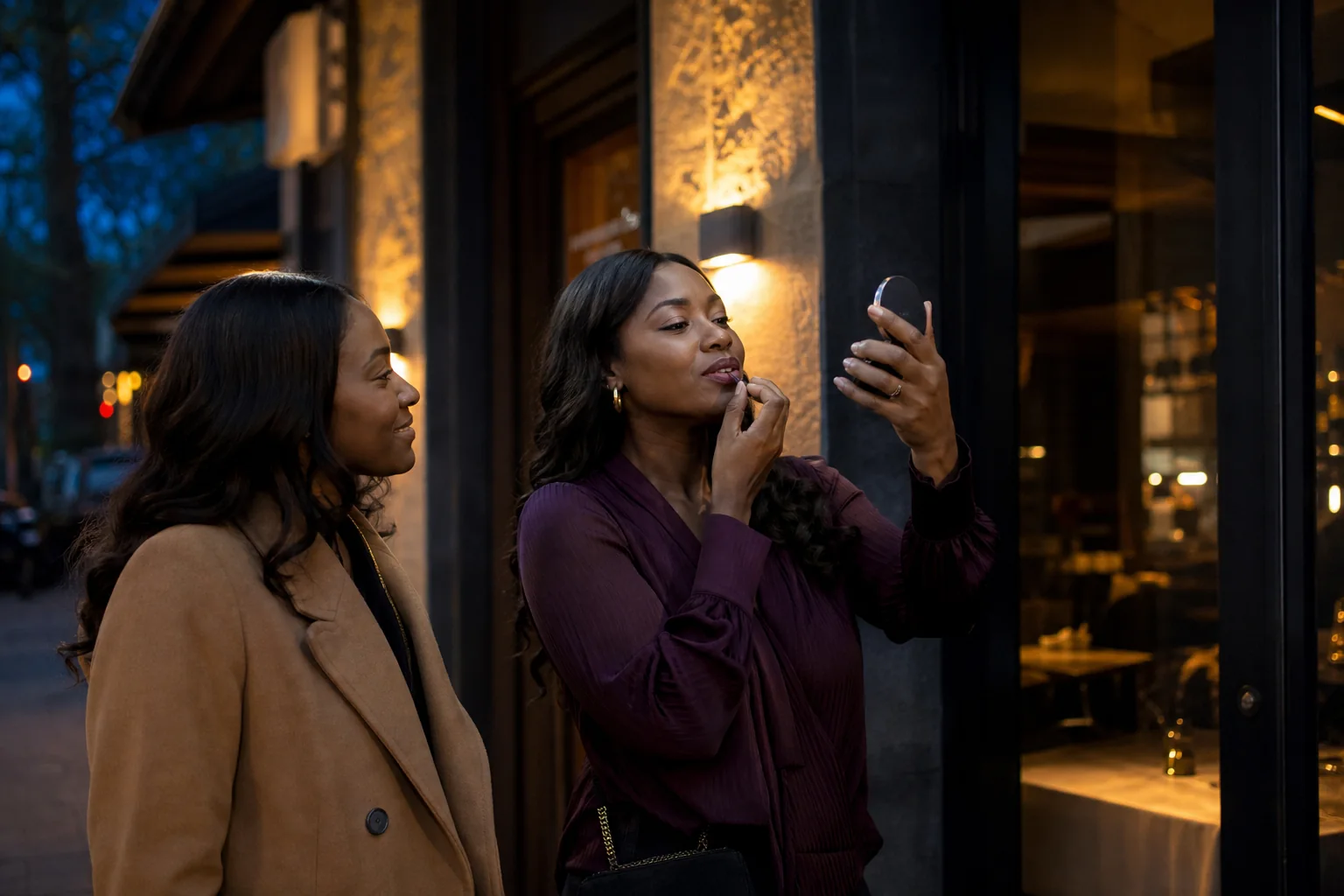
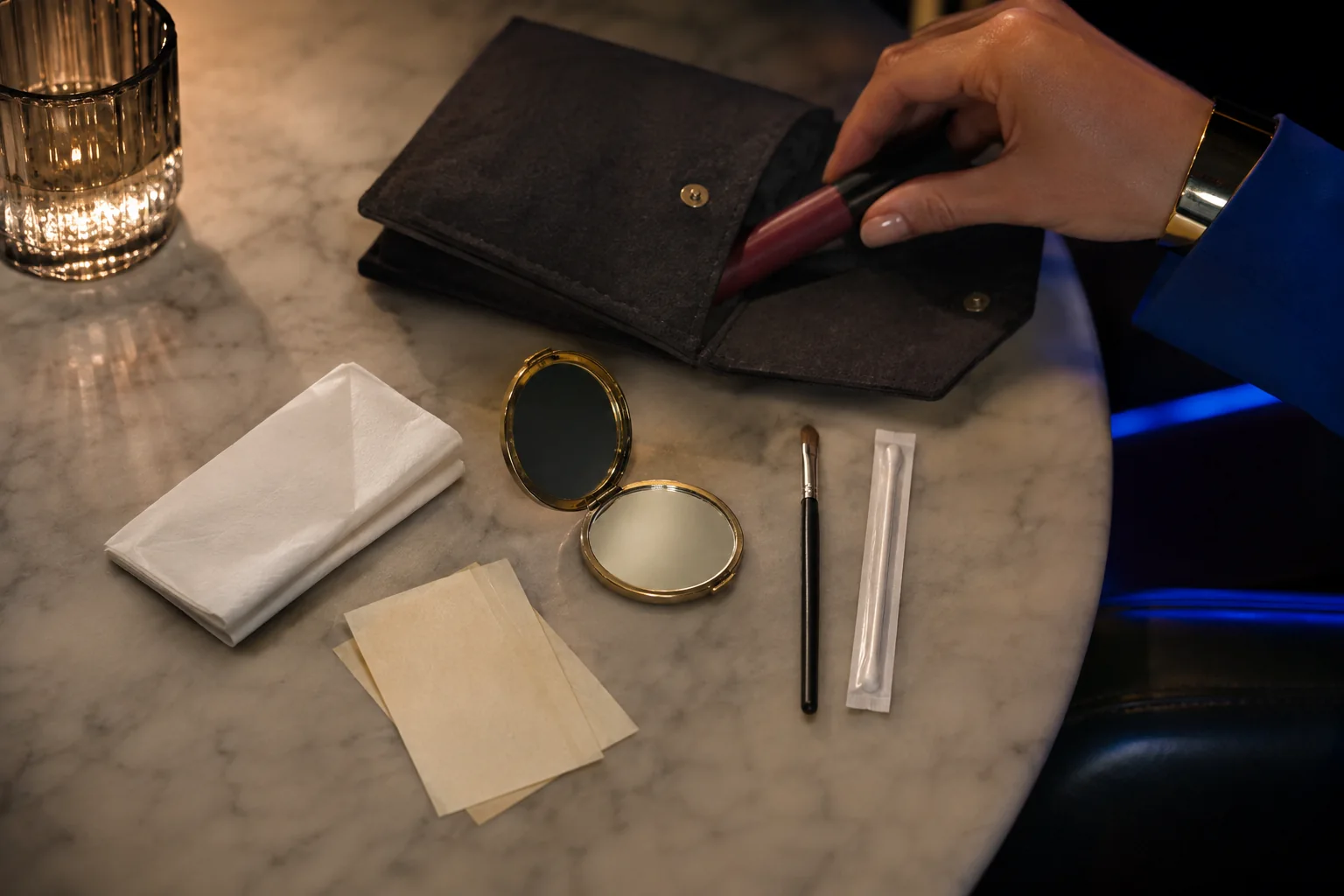
Build the kit from the wear test, not anxiety. A lip-led plan may need the lip product, a clean cotton bud, tissue and a small mirror. An eye-led plan may only need blotting paper and the comfortable lip already in your bag. Add compact powder or concealer only if the rehearsal proved a specific need and you know how to apply it without making the base thicker or patchier.
Write the repair order: blot moisture or oil, clean a migrated edge, replace only missing color, then reassess at normal distance. Do not powder over a wet spill or repeatedly redraw the whole mouth. Keep tools protected and avoid dipping used applicators into products shared with others. The kit should fit the actual access you will have, whether that is a restroom mirror, a café table or no private stop for several hours.
Place the full routine, final photograph and kit together the night before. This removes last-minute decisions and makes timing honest. If you cannot carry the anchor's repair product, reconsider whether it is the right anchor for this date. Good planning is not about preparing for every failure; it is about choosing a look whose likely changes you already understand.
Refine a lip-led finalist with a controlled shade comparison
Lock the choice and stop comparing
Choose one winner at least a day before the date when possible. Save the source, two MaqAI directions, one real-product result and one short recipe. Note the product roles, order, tools, time required and the first tested touch-up. Delete or archive weaker variations so they cannot restart the decision while you are getting dressed. A small record turns the look into something repeatable rather than a lucky evening.
Use three final tests: it reads in the likely light, it survives the key activity comfortably, and it still feels recognizably yours. If one fails, change the smallest responsible variable. Soften the lip edge, reduce eye depth, move blush slightly, control shine only where needed or replace one uncomfortable formula. Do not punish a useful plan because a digital image showed smoother skin or more perfect symmetry than a real face.
The finished free date night makeup test is not a universal formula for romance. It is a way to make one personal decision with less noise: define the occasion, compare two focused ideas, recreate one with real products and verify it in reality. Once those steps agree, the makeup has done its job. You can leave the mirror, meet the evening and spend attention on the date instead of the routine.