
Complexion troubleshooting
Foundation separating? Find the first break
Map where a smooth base first splits, slides or leaves bare islands, then test preparation, amount and contact one variable at a time.
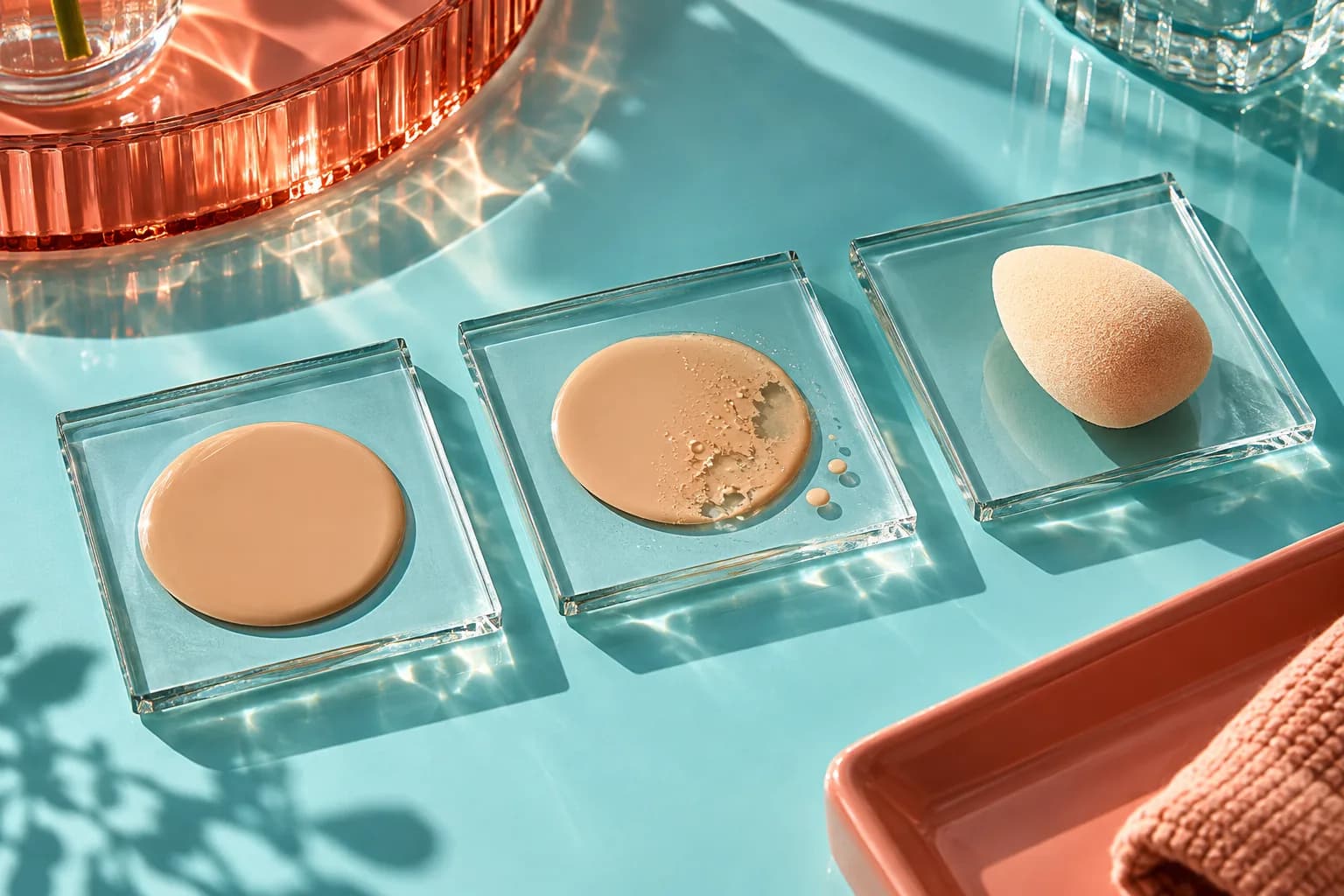
Foundation separating means a base that began as a reasonably even film later splits into small islands, slides away from a zone or gathers along an edge. Around the nose it may leave a bare ring; on the chin it may look broken between patches of color; across the forehead it may become shiny and mobile. This is different from pilling during application, when products roll into crumbs, and from a cakey finish that looks thick or dry from the start. Naming the visible change prevents you from applying the wrong fix.
Do not answer every broken patch with more foundation and powder. First locate the earliest change, note what touched the area and compare it with the rest of the face. A controlled test can show whether the base was too mobile, the foundation layer was too thick, friction removed it or skin oil changed the film over time. Keep necessary skin care and sunscreen correctly applied. The aim is a comfortable, repeatable base for your real hours, not a promise that makeup can remain untouched under every condition.
Confirm that the foundation separated after application
Look at when the problem first appears. If tiny rolls form while you blend foundation, investigate pilling instead. If the face looks heavy, powdery or cracked immediately, the amount or finish may be creating a cakey result. True wear separation begins with a film that looks acceptable and then loses continuity. You may see clean skin between pigment clusters, a shiny channel through the center face, or color collecting at the boundary of a moving patch. Photograph the completed base in diffuse light so you have a reliable starting point.
At the first later check, view the face from normal conversation distance before using a magnifying mirror. Record the location and shape: both sides of the nose, one smile line, chin center, forehead, mask edge or scattered dry areas. A narrow missing strip suggests contact; widespread movement may implicate the total film or changing surface oil. Do not rub the patch to test it. That creates a new failure and makes the original pattern harder to read.
Separate foundation wear from product pilling during applicationCheck whether the base looked cakey from the start
Map the first broken zone and its conditions
Divide the face into useful zones: forehead, nose and inner cheeks, outer cheeks, mouth and chin, and jaw. Note the first zone to change and the approximate time. Add heat, humidity, exercise, a mask, glasses, phone use or resting your face on a hand. Foundation degradation and movement over time have been observed in cosmetic research; a small study followed facial foundation under controlled conditions for eight hours. It does not predict your result, but it supports treating wear as a changing film rather than a fixed morning snapshot.
Compare left and right sides. If only the phone side or glasses contact point breaks, friction is a stronger clue than a full-face formula problem. If the center changes symmetrically while the outer cheeks stay intact, surface oil, sweat or excess product in that zone deserves a controlled test. If scattered areas look flaky or sore even without makeup, stop treating the issue as a simple cosmetic fault. Persistent irritation, cracking or rash is a reason to pause the product and seek appropriate professional advice.
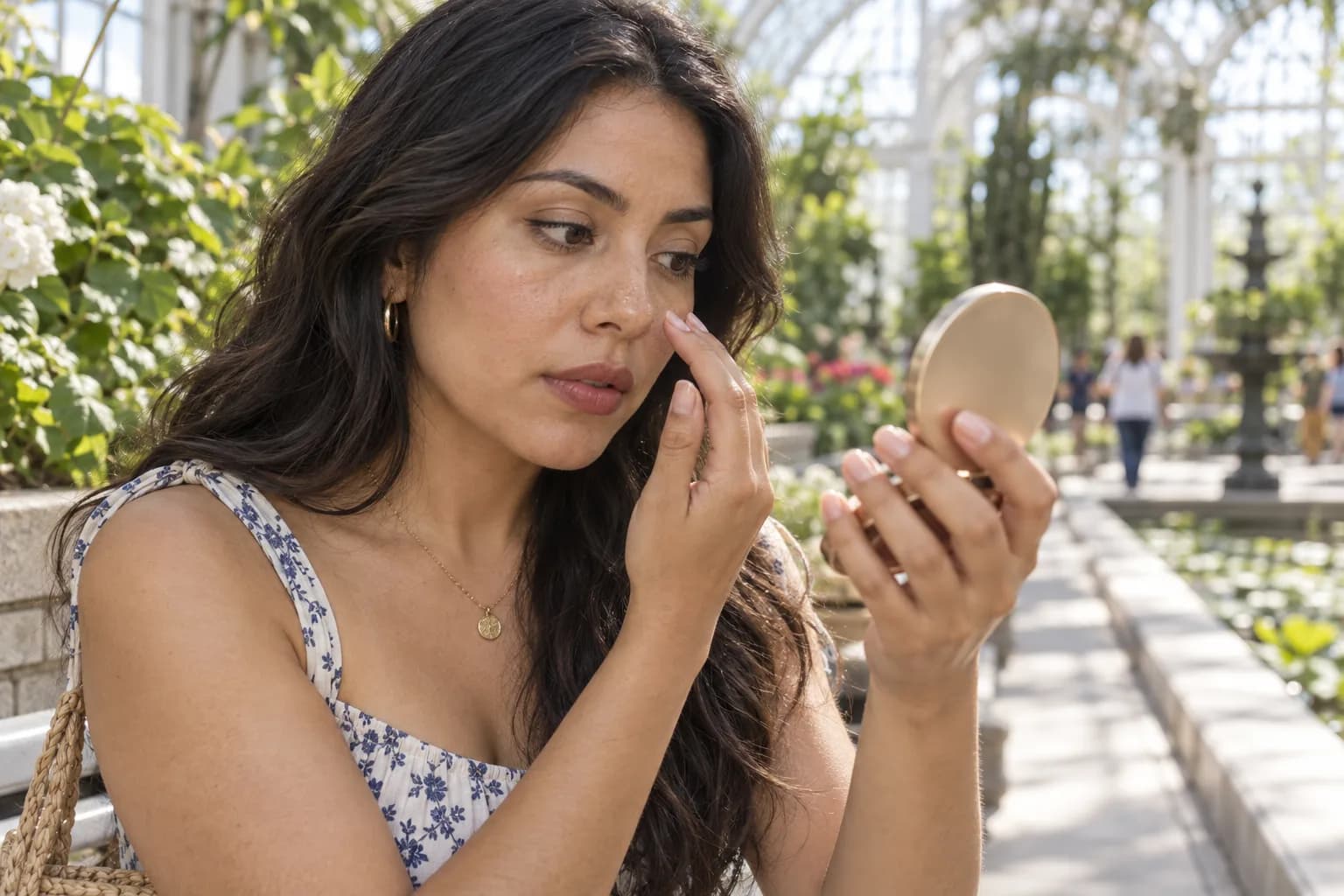
Read the PubMed abstract on foundation degradation and migration
Build a stable base without stripping the skin
Use a gentle cleanser and the skin care that keeps your face comfortable. Oily areas do not automatically need harsh washing or skipped moisturizer. The American Academy of Dermatology advises gentle cleansing, continued moisturizer and pressing blotting paper rather than rubbing when controlling oily skin. Follow the directions for your own products and apply sunscreen as required. Foundation wear is never a reason to deliberately reduce protection. If the skin is irritated or over-dry, adding a stronger cleanser may worsen the surface you are trying to cover.
Before foundation, touch the face lightly with clean fingers. The skin can feel hydrated, but a thick movable residue makes a fair wear test difficult. Remove optional duplicate cosmetic layers for one comparison day, not prescribed treatment or needed sun protection. If you use primer, place a thin amount only where you need its effect. There is no universal waiting time or simple ingredient-family rule that guarantees compatibility. Finished formulas, amounts, skin condition and application movement all influence the film.
When foundation separating begins, test less product
On a clean test day, apply less foundation to the zone that usually breaks. Place a small amount at the center of the face and spread it outward in a thin film, adding coverage only where it is still needed. Around the nostrils and between facial creases, use what remains on the sponge or brush rather than a fresh pump. A thicker layer has more material available to move and gather. Reducing it also makes a midday correction less visible if the area still changes.
Press or tap the product into place with a clean tool and stop when the coverage is even. Repeated polishing over the same nose fold can disturb both skin-care layers and foundation before wear begins. Check the result from normal distance. Natural pores and small color differences do not mean the film failed. If a thin layer gives adequate visual balance, keep that as the baseline. If it cannot provide the coverage you want, test localized concealer rather than thickening the entire center face.
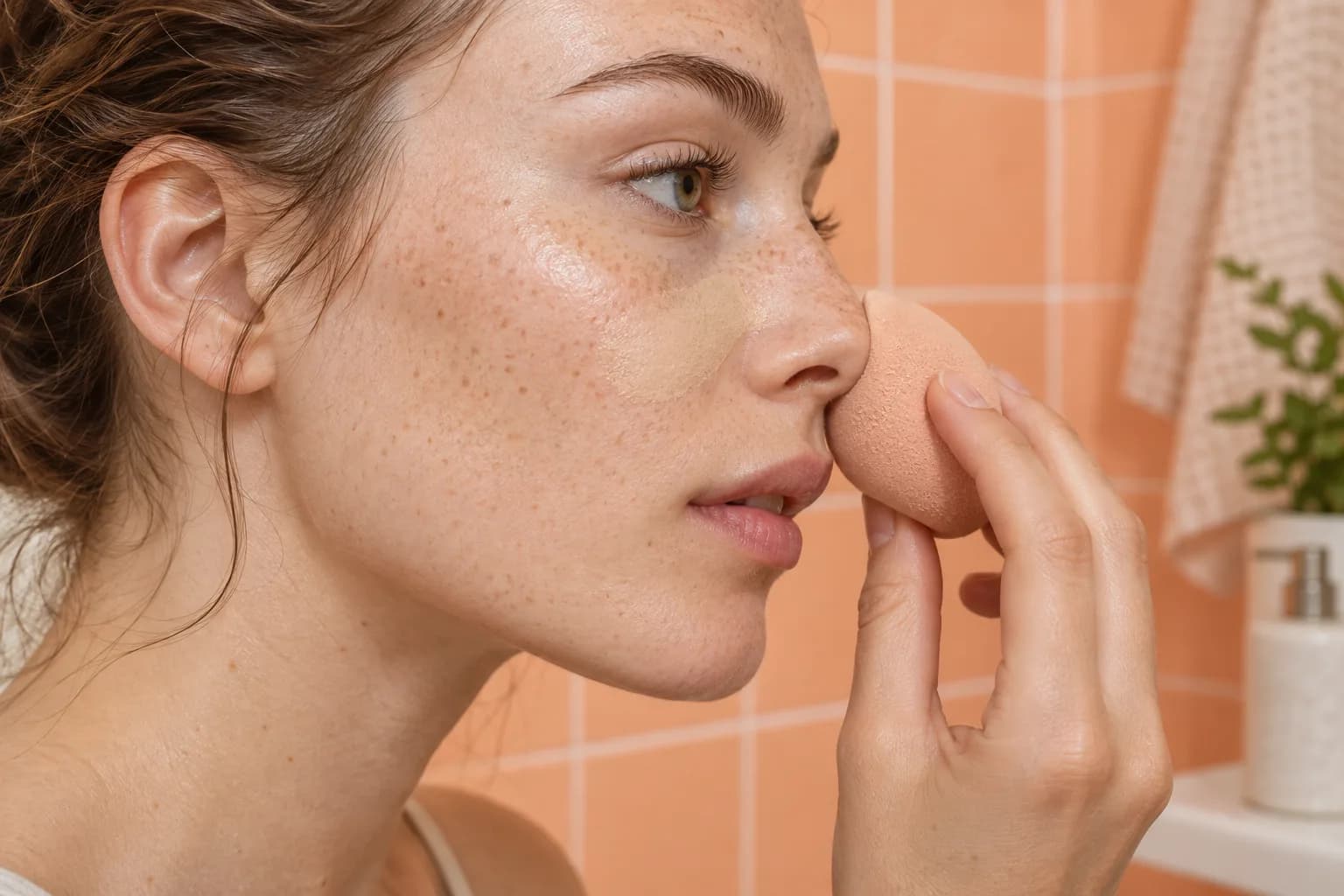
Audit every layer without inventing compatibility rules
Write the actual morning order: moisturizer, sunscreen, primer, foundation, concealer, powder and spray. Include approximate amounts and whether each product was spread, pressed or buffed. The last item applied is not automatically the cause. Foundation may reveal movement in the film below it, while powder may expose a foundation layer that never settled. Run the normal routine once and note the first moment a surface becomes visibly mobile, streaky or disrupted.
Then create a shorter comparison while preserving essential care and protection. You might omit an optional primer for one day or use foundation directly over settled sunscreen. Keep the foundation, amount, tool and checkpoint as similar as practical. If the break improves, restore one omitted step on a later day to confirm the relationship. Avoid declaring all water, silicone or oil formulas incompatible from the first ingredient alone. A finished product contains a full system, and your controlled result is more useful than a simplified internet category.
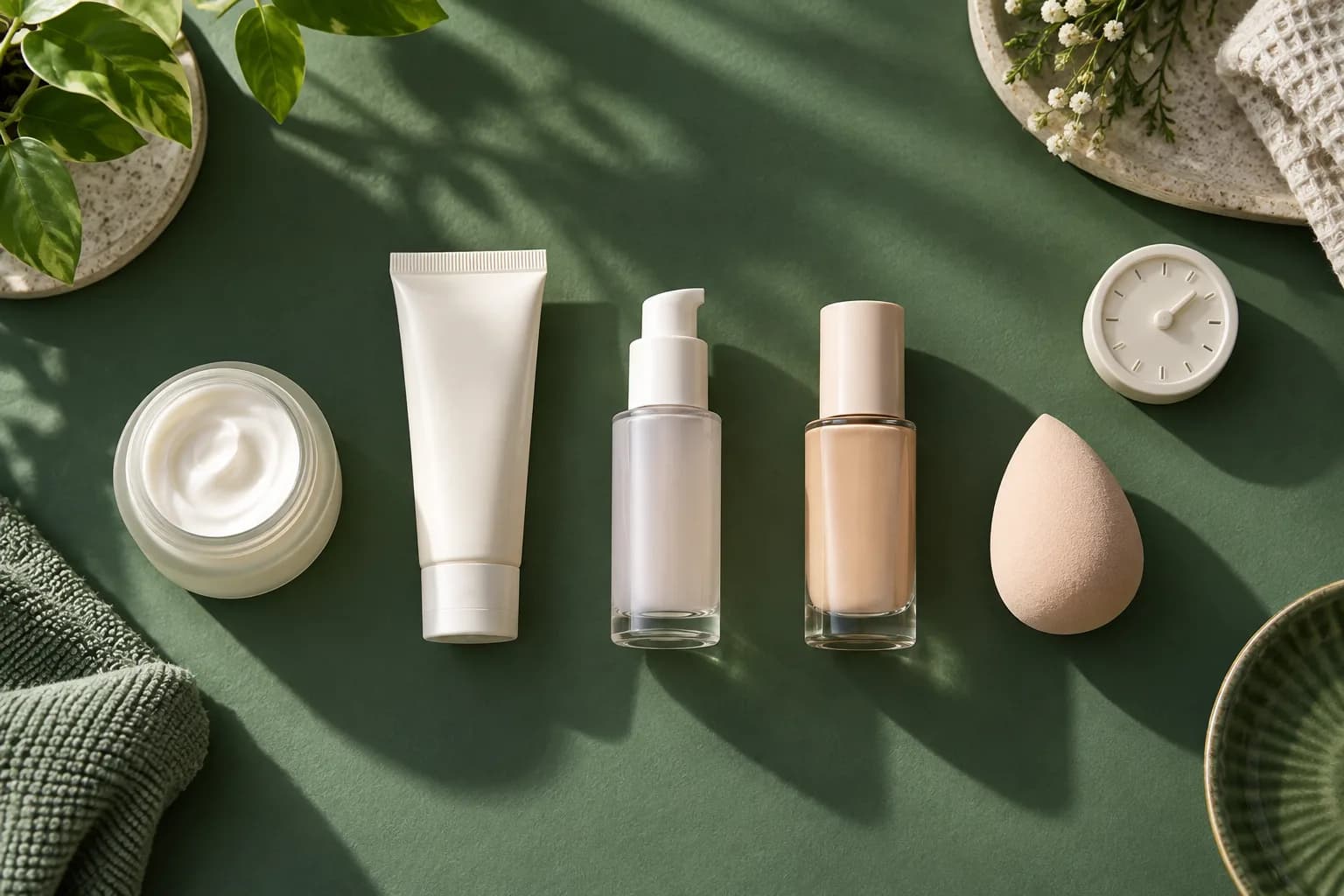
Match powder to the location, not the whole face
Powder can reduce surface movement in one area and make another area look dry or heavy. Start with a small amount on the center face if that is where shine appears. Press it lightly rather than sweeping repeatedly across fresh foundation. Leave comfortable outer cheeks alone if they remain stable. Photograph the base before and after powder in the same light. If a broken texture appears immediately after setting, you have found an application-stage change rather than an hours-later wear problem.
Setting spray also needs its own comparison. Use it according to its directions, allow it to settle and avoid touching the wet film. Test one finishing method at a time: no extra finish, localized powder, or the spray you already own. Changing all three together cannot reveal which step helped. A product marketed for long wear may still behave differently with your base, skin and climate. Keep the simplest finish that survives the hours you actually need and still feels comfortable.
Control oil and contact before adding coverage
At midday, examine the area before correcting it. If shine sits on top of an otherwise continuous film, press a clean blotting sheet for a few seconds and lift it away. Do not drag. Look again after the excess surface oil is removed. You may find that the color remains intact and no foundation is needed. If the pigment comes away with the sheet, record that transfer and use lighter pressure next time. Blotting is an observation as well as a correction.
Check physical contact separately. Glasses, masks, tissues, a phone, fingers and clothing can remove a precise shape. Reduce cosmetic thickness at repeated contact points and clean personal objects appropriately rather than sealing the area under more product. If glasses slide or press even on bare skin, their fit may need attention. If a mask is required, adapt the base around its real edge and accept that some transfer can occur. The routine should respect the function of the object rather than sacrificing it for an untouched foundation film.
Repair a separated patch without creating a mound
Stop rubbing once a patch breaks. Blot surface moisture or oil, then lift only loose product with a clean dry sponge or cotton swab. If the remaining area looks acceptable from normal distance, leave it. For a visible bare island, press a pin-sized amount of your stable foundation or concealer onto the center and soften only its edge. Do not rebuild moisturizer, primer, foundation and powder on top of every surrounding layer. A localized repair should remain thinner than the original application.
Powder only if the repaired surface needs it and if powder worked in your rehearsal. Adding dry product onto a wet, oily or rolling patch can create a thicker border. Use clean personal tools and keep products away from eyes and irritated skin. The correction helps you finish the day; it does not prove the cause. Save diagnosis for a fresh application when you can control amounts and timing. If the same zone repeatedly fails, change the next morning's baseline rather than performing the same midday rescue indefinitely.
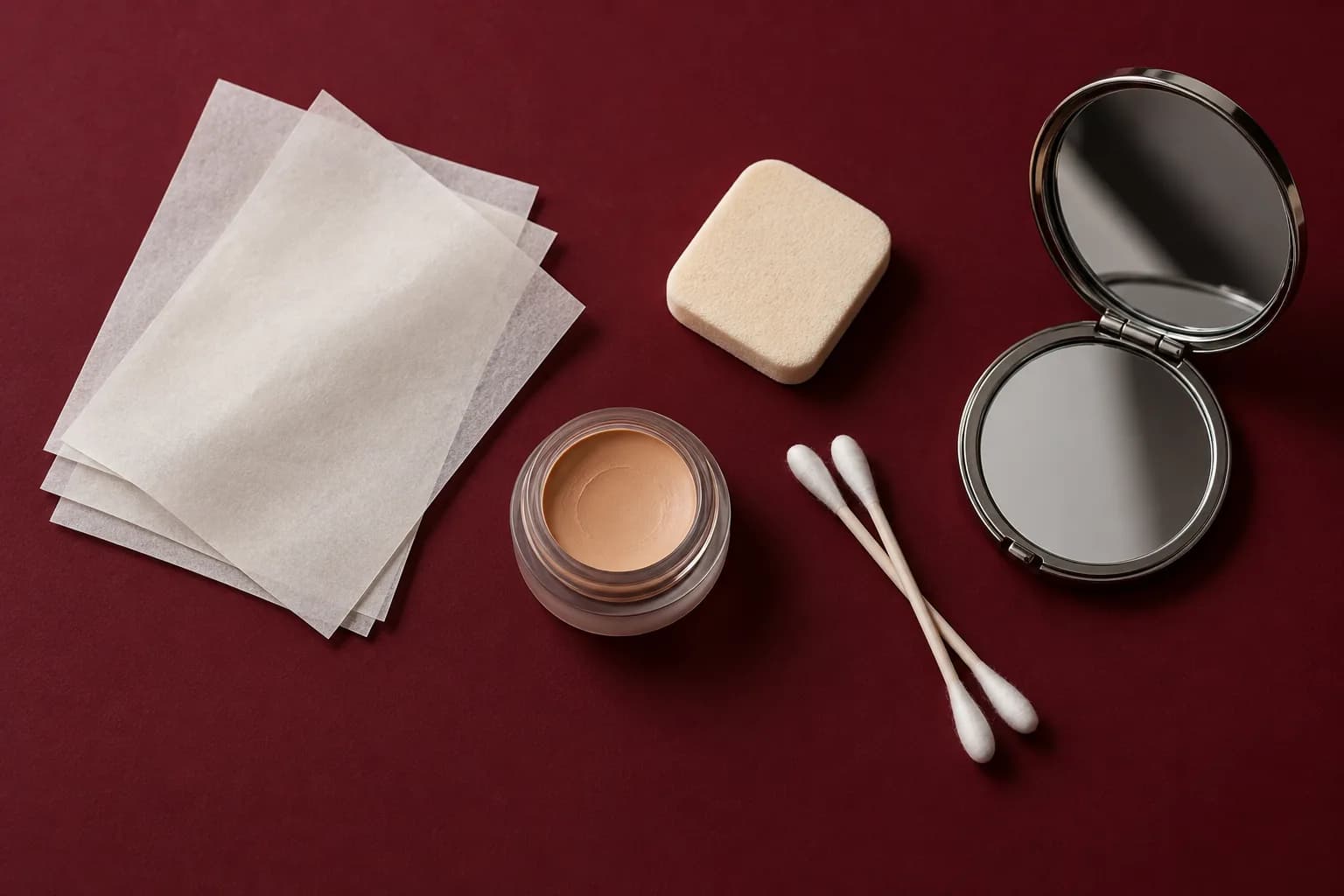
Keep a three-day foundation wear result
Day one documents the normal routine, starting photo, first broken zone, time and contact. Day two uses the same foundation and tool with a thinner layer in that zone and a shorter set of optional products beneath it. Keep necessary moisturizer and sunscreen correctly used. Day three repeats the better version or changes one remaining suspect, such as localized powder versus no powder. Try to check at comparable times and under similar light. Weather and activity still vary, so treat one good day as a lead rather than final proof.
Keep the combination that stays comfortable and reasonably even through your real schedule. Record product order, approximate amounts, tool, finish and the first correction you might need. Reassess when climate, skin condition or a formula changes. MaqAI can help plan a complexion direction visually, but a preview cannot measure foundation adhesion, migration, oxidation, comfort or wear on living skin. The dependable answer comes from the smallest controlled change you can repeat in your own routine.
Map the first break, reduce the layer there, then change one preparation or finishing step on the next comparable day.