Makeup setting
Setting powder vs setting spray: choose by the job
Separate shine control, surface finish and wear before adding another layer to your makeup.
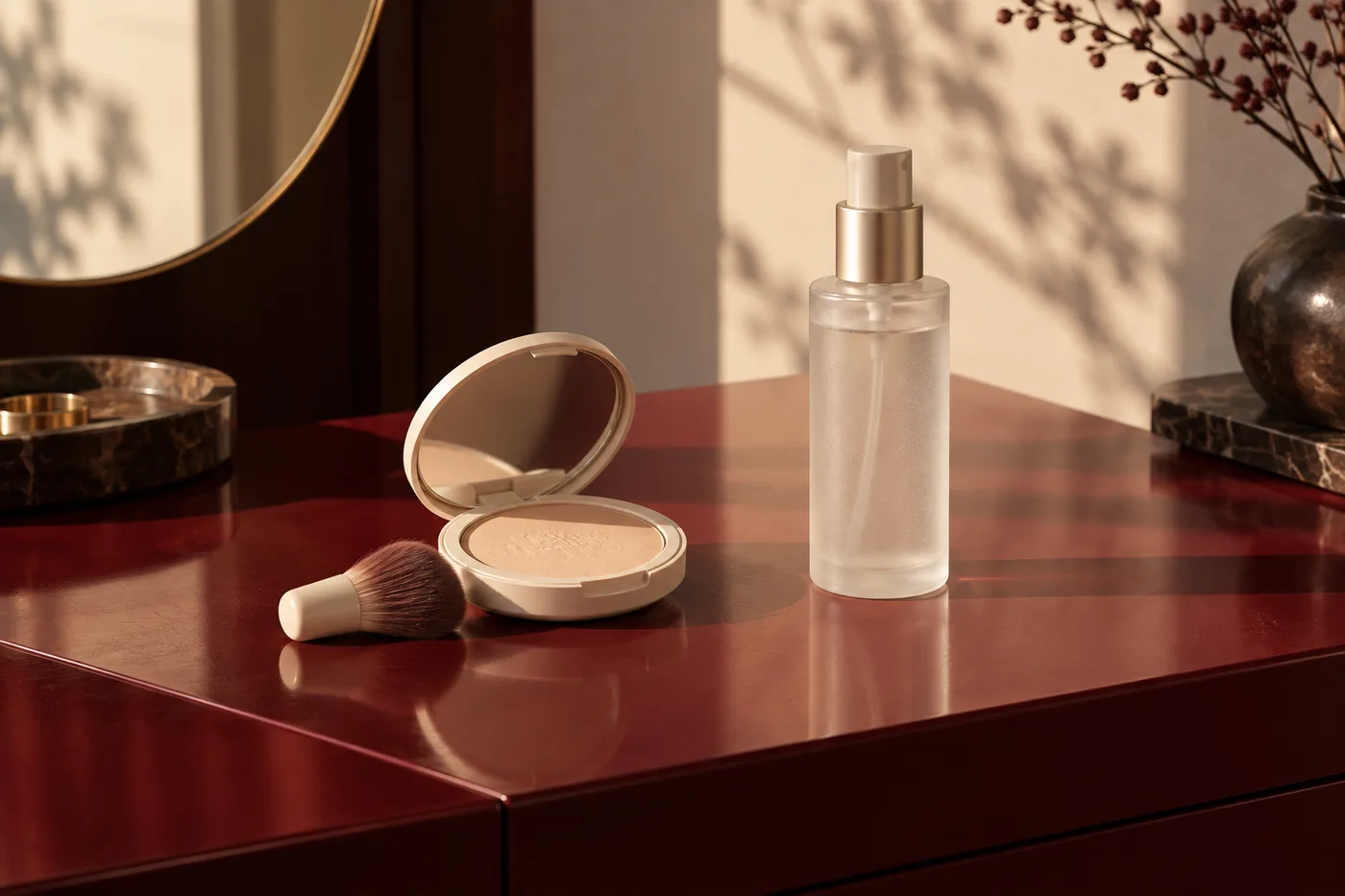
Setting powder vs setting spray is easier to decide when you name the job first. A shiny nose, a visibly powdery cheek and foundation that shifts during wear are different observations. Reaching for both products automatically can add weight without solving the right problem. A light powder application can reduce visible shine in selected zones; a spray may change the surface finish or support wear, depending on its formula. Neither category guarantees a particular result, and you do not need both simply because they appear in a long makeup tutorial.
Start with the base you already know, identify one change you want and test the smallest useful addition. This guide compares application methods rather than brands. It does not report laboratory testing or rank products. You will learn how to choose a zone, read the bottle's actual purpose, keep powder and mist controlled, observe ordinary wear and repair locally. The goal is a routine you can repeat comfortably, including the possibility that your familiar base needs no extra setting step on a short day.
Setting powder vs setting spray: separate the three jobs
First distinguish shine, surface finish and stability. Shine is the reflection you see on the forehead or nose; some reflection may be intentional. Surface finish describes whether the whole base looks satin, matte, chalky or visibly wet. Stability concerns whether the color stays evenly placed as you talk, move and go through the day. A product can improve one measure and disappoint on another. Less shine is not proof of longer wear, and a softer-looking powder layer is not proof that the makeup has become resistant to friction.
Describe the first problem in a plain sentence: my nose becomes brighter than my cheeks after lunch, or the powder looks obvious as soon as I finish. Avoid a goal such as flawless all day, which cannot tell you what to change. Inspect the face in the same light at normal conversation distance. If the original base is comfortable and even, leave it alone while you compare finishing options. When you mainly want a different visual finish, our dewy, satin and matte guide helps define that preference before you decide how to set it.
Choose powder for a specific zone, not a blanket rule
Powders vary in pigment, texture and finish. Some add coverage or reflection; others are designed to reduce shine while changing the base as little as possible. Check the description and look at the actual application on your skin. Translucent does not mean invisible in every amount, on every skin depth or in every light. A pale cast, extra coverage or emphasized texture is information about this product and this dose. It does not mean that your face needs a thicker foundation layer underneath to hide the mismatch.
If only the center of the forehead or sides of the nose need attention, begin there. Keep comfortable satin cheeks untouched. Combination skin can have different needs within the same face, and dry-feeling areas may not benefit from more powder. The American Academy of Dermatology explains that matte makeup can help reduce visible shine and recommends gently pressing blotting paper rather than rubbing it. Those are useful boundaries for handling surface oil; they do not establish which powder is best or promise that it will prevent every form of makeup movement.
Make the first powder pass deliberately small
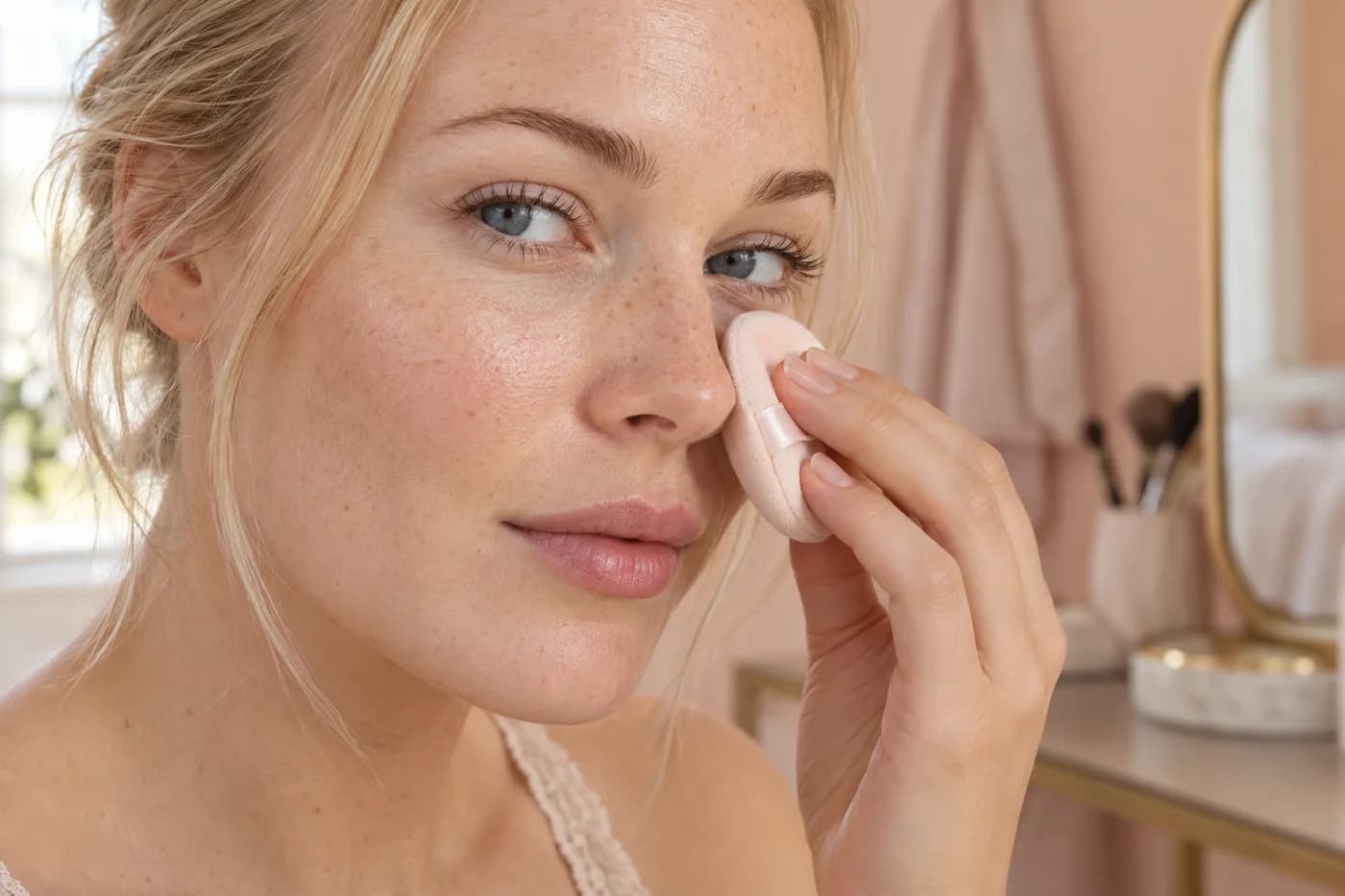
Allow the familiar liquid or cream base to settle before assessing where it remains tacky. Follow its own directions rather than adopting a fixed waiting time for every formula. Pick up a small amount of powder with a clean brush or puff and remove the excess into the lid or by a gentle tap. Press lightly onto the chosen zone without dragging the underlying color sideways. A puff offers controlled placement; a small brush can give a lighter diffuse pass. Choose the tool that lets you apply a small amount accurately, not the largest tool in the drawer.
Stop after the first pass and inspect both the full face and the edge of the treated area. If the result is satisfactory, do not continue until the product becomes visibly heavy. Check near the nose and smile lines while making an ordinary expression. Any accumulation there is a reason to reduce the amount or area next time. Baking with a thick temporary powder layer is a different technique and is unnecessary for this initial comparison. Your baseline should be a small repeatable application, so you can tell whether a later spray genuinely adds something useful.
Read the spray's purpose before treating it as a sealer
Setting spray, fixing spray and face mist are not reliable universal categories. A bottle may emphasize a softer finish, hydration, shine reduction or improved makeup wear. Read the manufacturer's instructions and claims for that particular formula instead of assuming that the name proves the mechanism. A refreshing mist is not automatically a wear product, and a wear product does not automatically replace powder in the zone where you want less shine. Fragrance, finish and how the spray feels also matter when deciding whether it fits your routine.
The FDA advises consumers to read the entire cosmetic label, including instructions and warnings. Use that principle to check face suitability, application distance, whether shaking is required and any precautions around the eyes. Do not substitute hairspray or another non-face product. If a pump spits large drops or is damaged, do not try to rescue the makeup by soaking it from closer range. Test the delivery away from the face first where appropriate. A formula you cannot apply evenly is not a useful finishing option, even if its marketing sounds ideal.
Apply a light mist and let the surface dry
Follow the bottle's distance and dose instructions. Close the eyes and mouth, use a ventilated space and keep the mist out of the eyes; avoid deliberately breathing the spray cloud. These are practical application precautions, not a reason to improvise a heavy coating. If the product's directions do not explain how to use it on the face, choose a clearer option. Aim for an even light mist rather than visible streams or wet patches. Hold the bottle so you can maintain the instructed distance without turning the spray into a concentrated spot.
Let the surface dry before touching it, dressing closely around the face or pressing a tool onto it. Resist wiping droplets across a finished cheek, which may move pigment and create an uneven edge. If the first application leaves spots, stop adding mist and reconsider pump quality, distance and dose at the next rehearsal. Do not keep layering in the hope that a glossy wet surface means stronger hold. After it dries, check the same areas you inspected before spraying: nose, cheeks and moving lines. Note whether the appearance improved and whether the base remained even.

Test neither, powder, spray or both on ordinary days
Use comparable days rather than four new layers in one hurried session. Keep skin preparation, foundation amount, cheek color and expected conditions similar. On the first day observe the familiar base alone. On the next comparable day add only the small powder pass, or only the spray if that is the problem you identified. Record the time of the first visible change and where it occurs. Do not compare an indoor morning with a hot outdoor event and attribute every difference to the last product you used.
Try the combination only if the separate observations suggest a reason for both. Usually the initial test is selective powder after cream products, then spray on the completed look according to its label, but specific instructions take priority. Change one step at a time and avoid spraying between every layer during the first trial. A half-face comparison may help with immediate finish, yet mist can cross the center and natural sides can differ, so it is less reliable for proving long wear. Your notes should describe personal observations, not convert one day's result into a universal performance claim.
Blot and repair without building a second full base
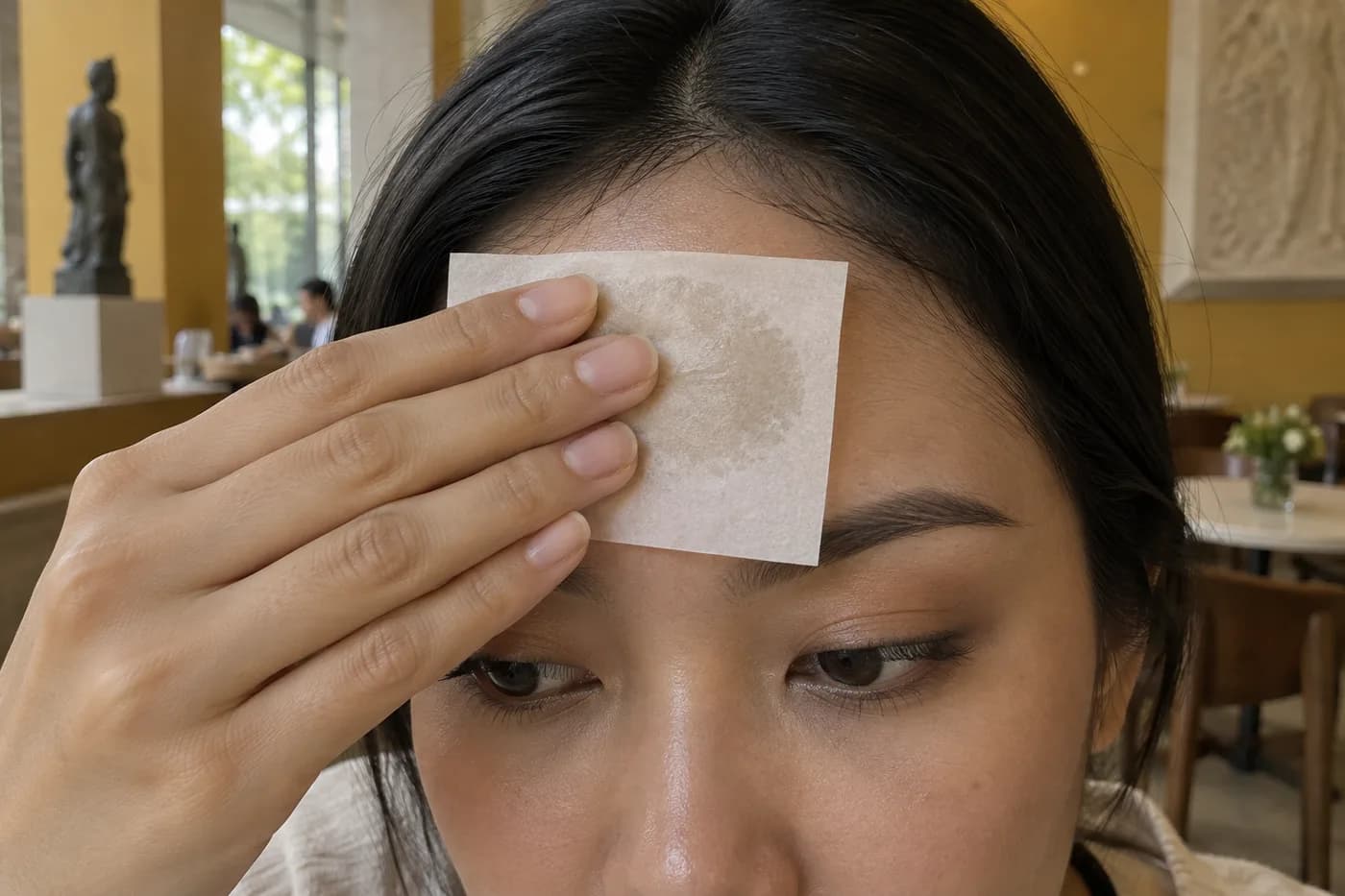
When unwanted shine returns, look before adding anything. If the pigment remains even, gently press a clean blotting paper onto the oily zone, lift it and inspect. Do not scrub the face or drag the paper across blush. Then add a very small powder touch-up only if you still want a more matte surface. A mirror at normal distance helps prevent tiny close-up details from prompting a whole new layer. Some soft reflection can remain while the face still looks balanced and the original makeup stays comfortable.
If color has already broken into patches, another spray is not a substitute for repairing the missing base. Work on the affected area with a clean tool and a small amount of the familiar product, then reassess whether powder is needed. Persistent thick or dry-looking buildup belongs to the cakey-foundation problem rather than a search for stronger spray. Our guide on that problem explains how to reduce excess layers. Stop using a product that causes discomfort or irritation; appearance should never be the only criterion for retaining an extra step.
Keep a recipe with a clear stopping point
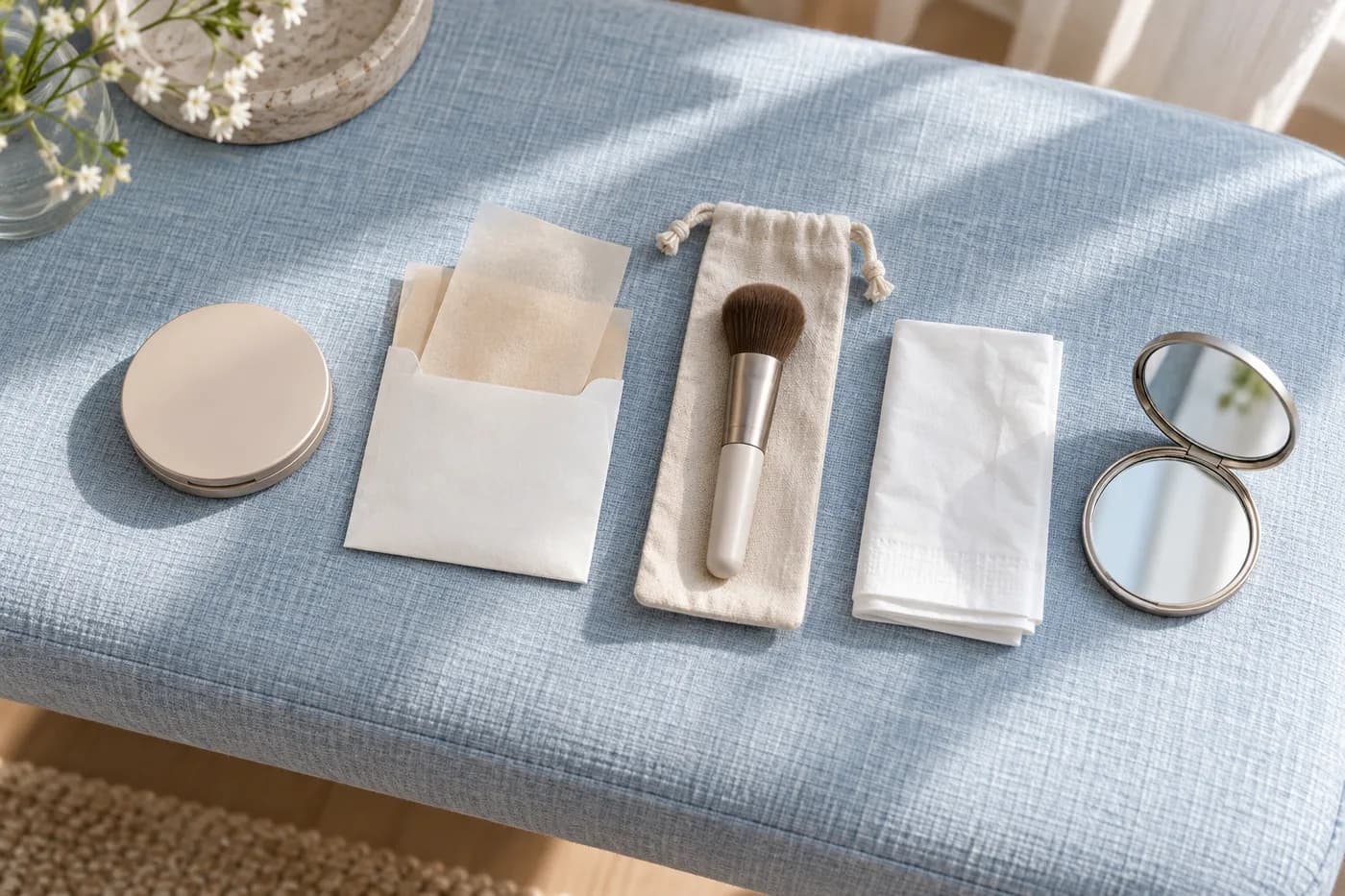
Write down the smallest successful routine: the base amount, powder zones, tool, spray instructions and conditions you checked. Include an example of when you skip the additional step. For a short appointment you might keep the familiar base alone; for a longer day you might use powder only around the nose. A useful recipe adapts to the actual job rather than requiring every product every morning. Keep a small touch-up kit with clean papers and a protected tool so the repair remains as selective as the first application.
Judge the recipe by three separate questions: did it keep the finish you wanted, did the makeup remain acceptably even, and did it feel comfortable? A favorable answer to one cannot stand in for the others. Screens and photographs can document visible changes, but they cannot measure wear, skin reaction or how a formula feels. You do not need an app preview to perform this decision. Rehearse the final routine before an important occasion and stop changing it once it meets your practical needs. Buying a second finishing product is optional, not the completion criterion.