
Lipstick
Makeup for a burgundy dress: rose or berry lips?
Compare rose and berry lipstick with the same eye makeup, then check the real products beside your dress.
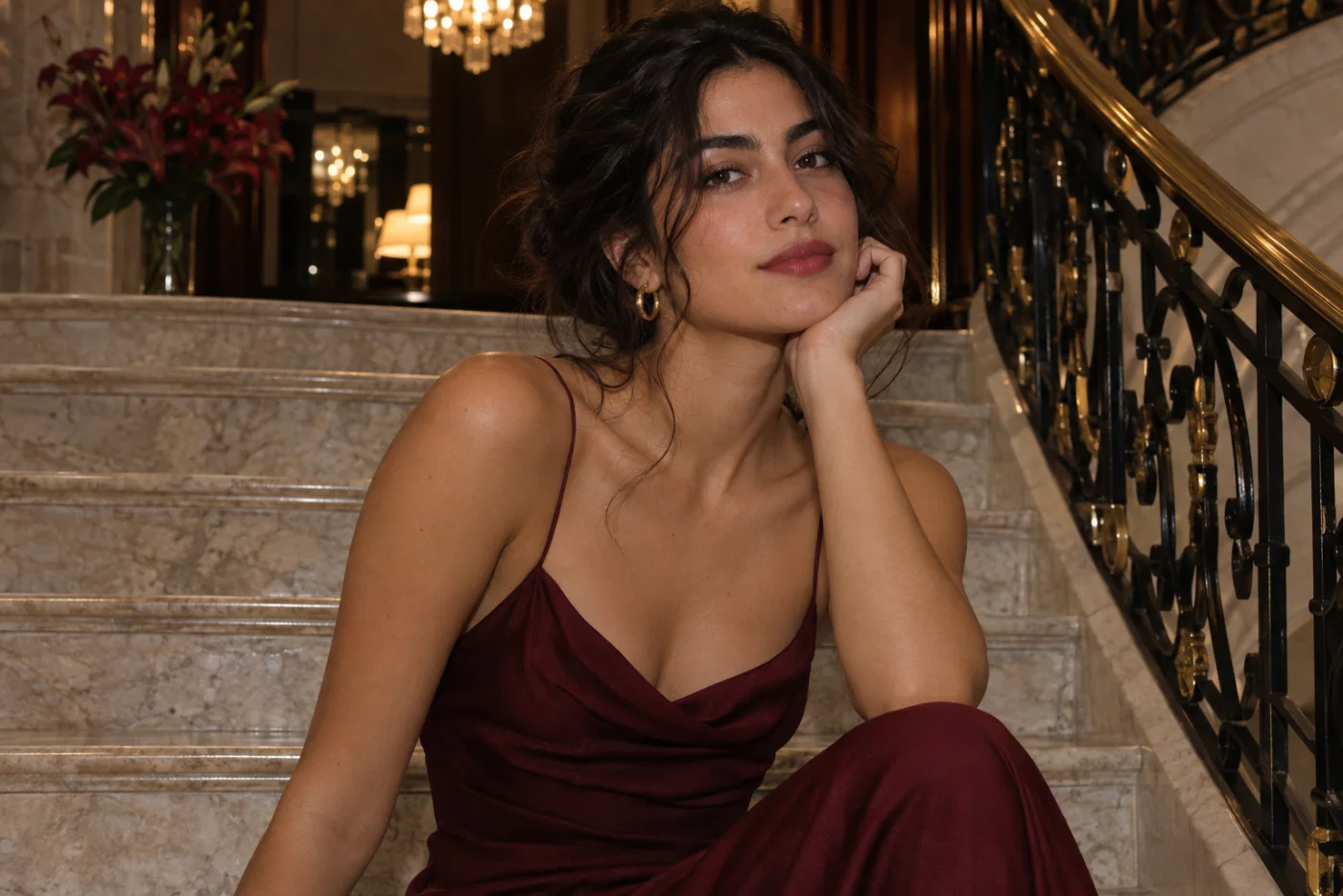
The makeup for a burgundy dress that looked balanced in your bathroom can feel much stronger when you put the dress on. A high velvet neckline brings a large area of wine color close to your chin. A satin dress with thin straps leaves more space between the fabric and your face. Before changing your foundation or adding eyeshadow, compare a muted rose lip with a berry lip while keeping the rest of the look steady. Then check the actual products beside the dress in the light where you will wear it.
Start makeup for a burgundy dress with the fabric
Hold the dress against your shoulders near a window and look straight ahead. Notice whether the fabric looks closer to cherry, plum, or brown. Move it into a second light and watch what changes. A fabric can look cooler at the window and warmer at a restaurant entrance. Velvet can show darker patches when its pile catches the light from a different direction. Glossy satin may throw a bright reflection at one angle and look much deeper at another. Compare lip colors against the dress you own instead of trying to match a swatch labeled burgundy.
Look at how much of the dress sits near your face. A high neckline gives you a continuous area of color, while a low neckline may put skin, a necklace, or a jacket between the fabric and the lip. Try the dress and any layer you plan to wear at the event. Hold your hair roughly as you intend to style it. The decision is about the whole view from shoulders up. If you pick lipstick while wearing a white T-shirt, you miss the contrast that motivated the comparison.
Give the lips a clear job
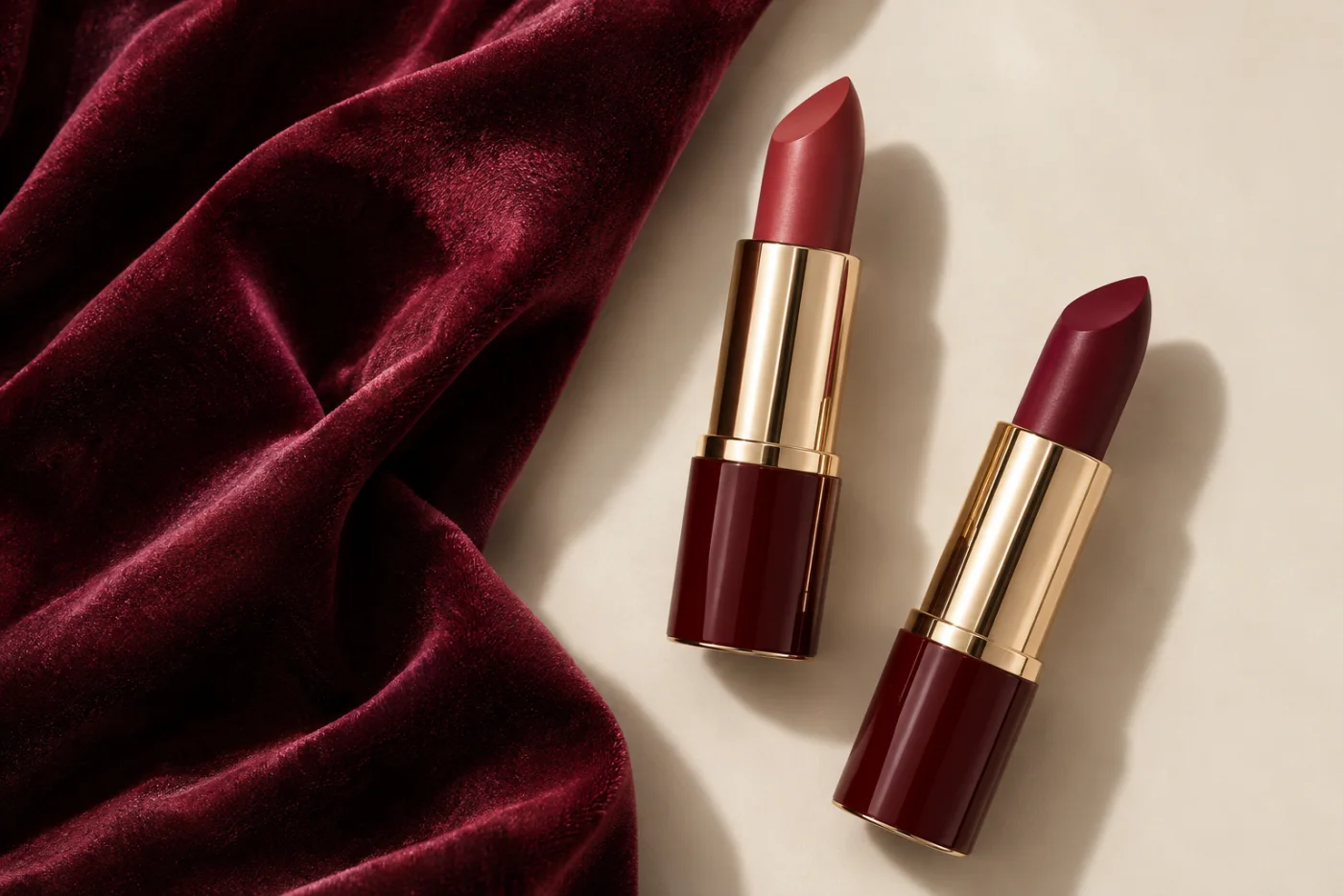
A muted rose can add definition without repeating the dress color at the center of your face. Think of a rose with enough depth to register next to the fabric, rather than the palest pink in the drawer. If it seems pale only beside the dress, compare it with a slightly deeper rose in the same finish. A berry lip brings some of the dress's color family toward your face. Its intensity can make the face a stronger focal point, particularly if the rest of the makeup is quiet.
Choose which job suits the occasion. For dinner with photographs taken across a table, you may want the lip to show from farther away. For a daytime ceremony, you might prefer the face and neckline to read more evenly in daylight. Try describing each result in a sentence. “I notice the dress first, then the face” and “I notice the lip and dress together” are both actionable observations. They tell you more than judging whether either look is flattering in the abstract.
Keep the eye makeup steady for both tests
Choose an eye look you already know how to apply. A narrow brown line at the upper lashes, a little mascara and a shade close to your natural lid color are enough to give the lips something to sit beside. If you usually wear a sharper black wing, keep it for both tests. The purpose of keeping the eye fixed is to make the lip comparison legible. If one version has bare lashes and the other has a full smoky eye, you are looking at two different designs and cannot tell which change made you prefer one.
Keep blush placement steady too. If the berry makes your usual blush appear stronger, note the effect before touching the brush. You can adjust the cheeks after you have picked a lip direction. If both versions feel too busy with your current eye, take a little depth away from the outer corner and repeat the same two options. If both versions feel too quiet, deepen the lash line slightly and rerun the comparison. Treat these as separate decisions so you can repeat the result another day.
Compare the two colors with one photo
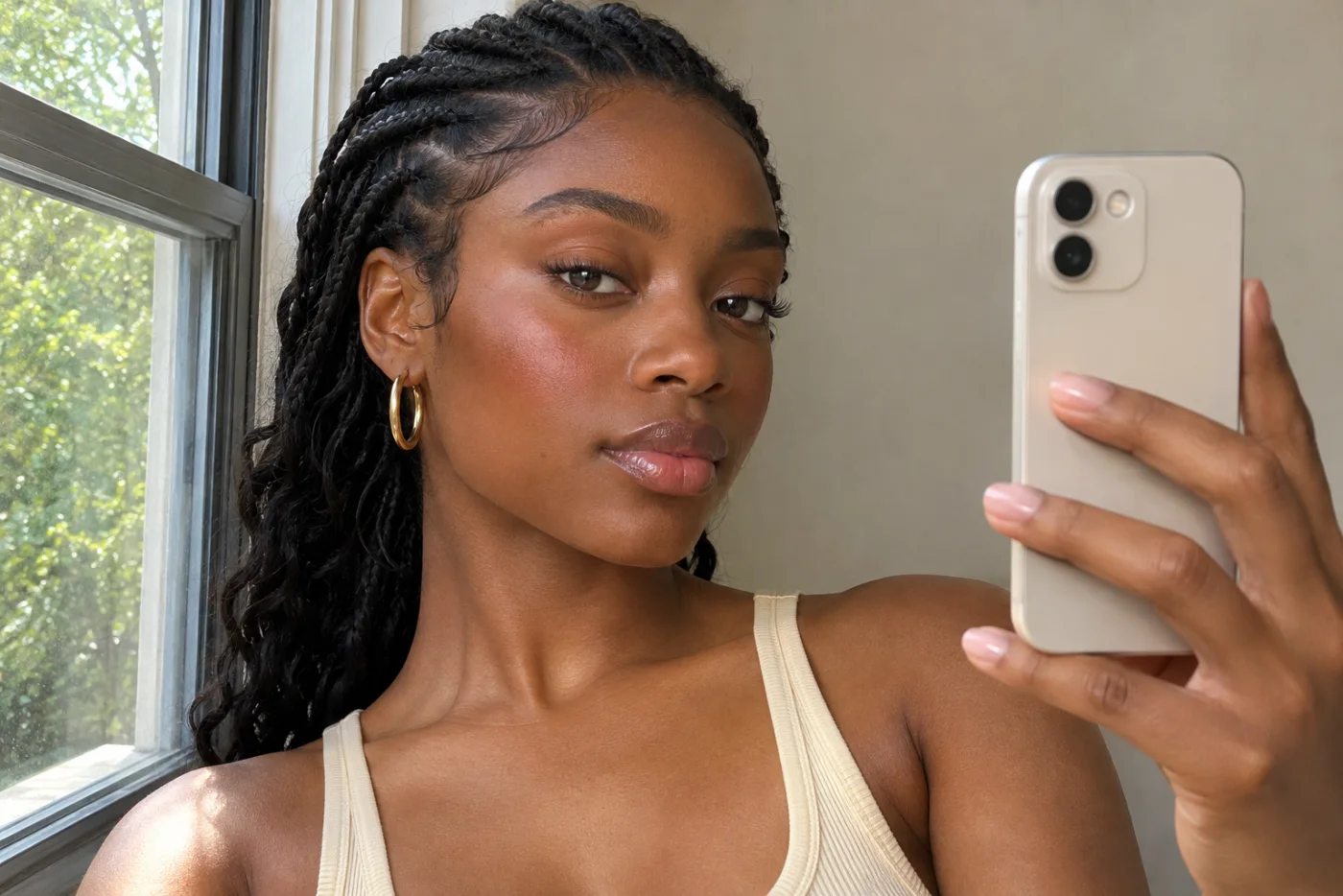
If you want to compare the overall balance before applying anything, use the makeup preview in Hair Muse. Take one clear portrait with the dress at your shoulders, facing an even light source. Turn off beauty filters and avoid a colored lamp or a bright window behind you. Keep your expression neutral and make sure the picture includes the neckline. A tightly cropped selfie that ends at the jaw can help you inspect the shape of a lip, but leaves out the fabric you are trying to coordinate with it.
Use that same portrait for the rose and berry previews. Keep the eye, complexion and cheek treatment as similar as the controls allow. If the preview pairs a different lip color with a different eye design, discard that comparison and use a real swatch instead. Look at both versions at the same size and brightness. A small shortlist with a note about each choice is enough. You might save “rose for softer contrast” and “berry for definition at a distance.” The digital preview helps you compare those ideas. The exact shade, finish, formula, oxidation, wear and skin response have to be assessed with the real product.
Test two comparable products before choosing
Find two lip products you already have that match the direction of the previews. Try to compare a rose and a berry with similar finishes. When one is a sheer gloss and the other an opaque matte, the gloss can look brighter even if the actual pigment is softer. That comparison can still help you choose between two products you own, but you cannot tell how much of the difference came from hue. If both lipsticks are satin, or both are lightly blotted, it is easier to judge the color.
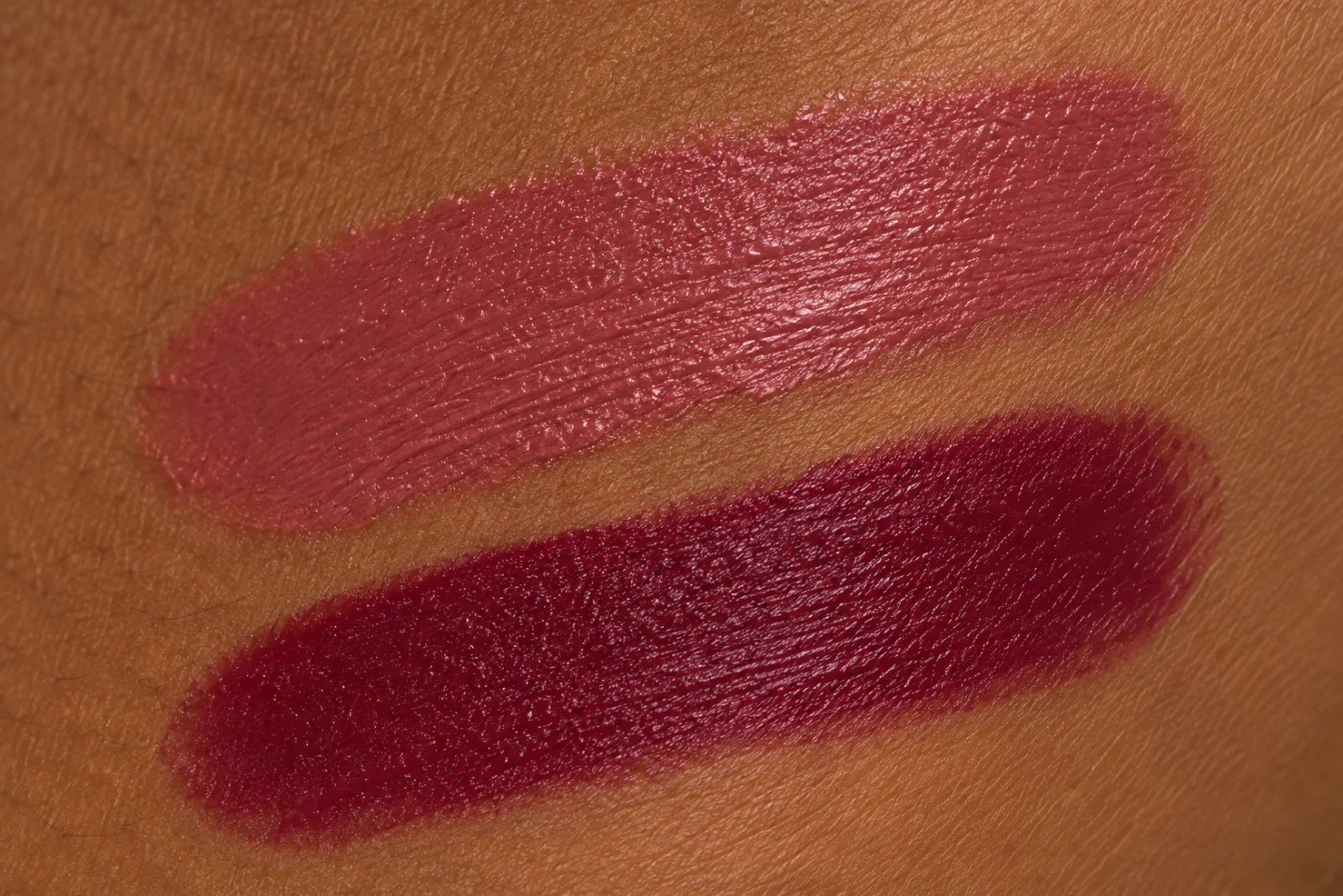
Swatch the products beside one another on clean skin as a first pass. This can help you notice whether a rose leans brown or whether a berry pulls more purple than expected. Then apply the first candidate evenly to the lips. Look at your whole face beside the neckline, remove it gently, and try the second candidate. If the first one stains, test the other later on clean lips so the underlying color does not change the result. For a stronger berry, one thin coat or a light blot may be all the definition you want. Repeat that application if you choose it for the event.
Compare matte and glossy finishesFDA guidance on using cosmetics safely
Check the real look under the light you will wear it in
Start in indirect daylight, then move to the light closest to the event. Warm indoor bulbs can soften some of the difference between a warm rose and the reddish fabric. A cool lamp can make a purple berry appear deeper. The useful question is what you see under the actual light, not whether the lipstick has a particular undertone on the label. In each setting, look at the face from arm’s length and then step back. At a distance, a fine outline and shine can matter more than a subtle shade difference that was obvious close to the mirror.
If you take a photograph, use the same room, angle and distance for both tests. Wait a moment for the camera’s exposure to settle. The result from a front camera can disagree with what you see in the mirror, especially when the phone adjusts exposure between shots. Give more weight to a difference that you can see repeatedly under the event light. If the rose reads too pale in both the photo and the mirror, test a deeper rose before giving up on the softer direction. If the berry starts to merge with the neckline, a lip that is slightly lighter or less saturated may separate the two.
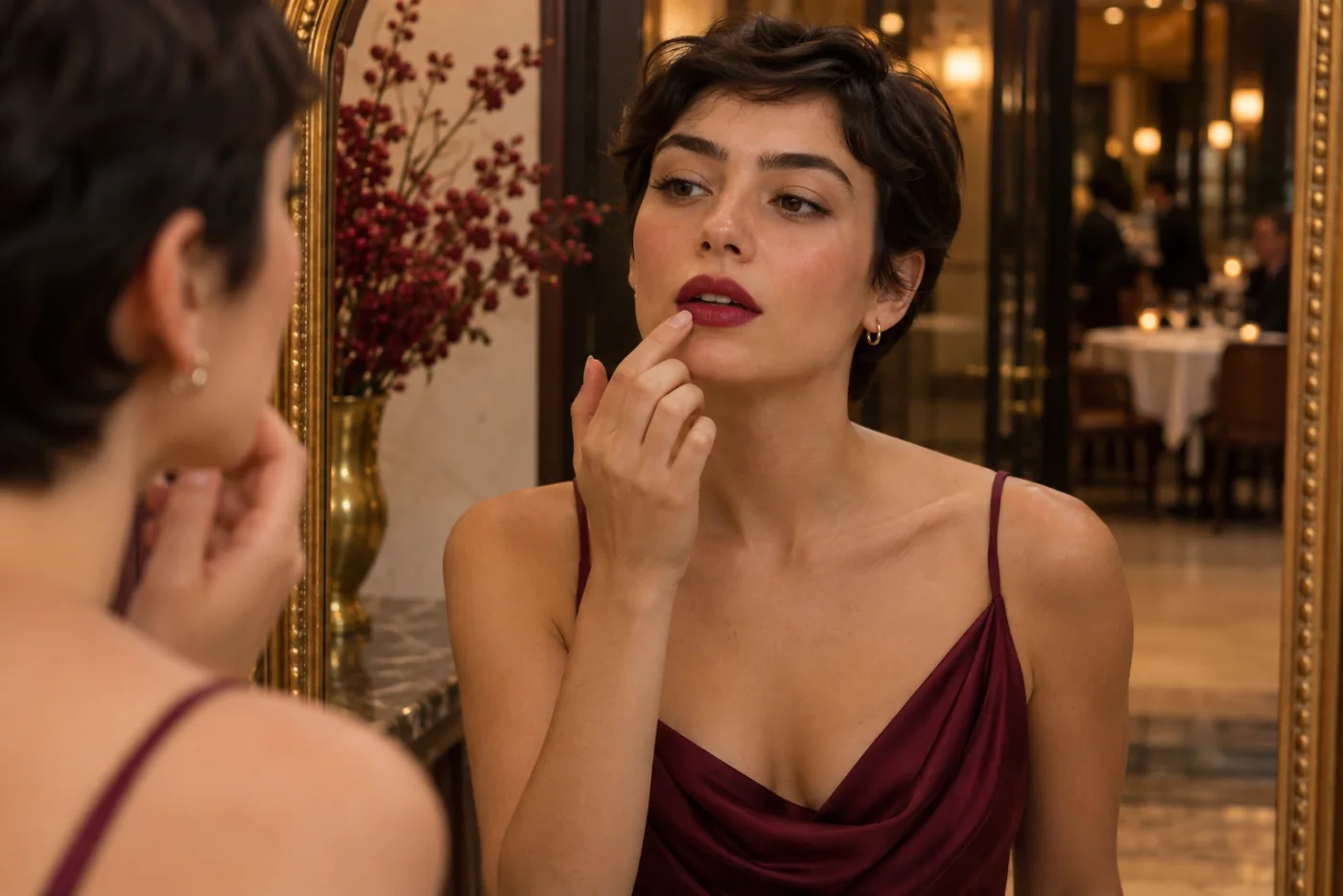
Make one small adjustment and stop
Once you choose the lip, decide whether the eye needs more or less definition. With a berry lip you might soften the lower lash line while leaving the upper lashes alone. With rose you might keep the eye as it is and check whether the cheek still shows in the same light. If you change the lip and the eye together, you lose the comparison that helped you get here. Give the adjustment one look from the front and one from the side, then leave it if it already meets your goal.
Write down the actual product, how much you used and which lighting check mattered. “Berry, one thin coat, warm hallway light” is a more useful note than a close-up screenshot of a preview. If you will eat or drink, take the product you actually tested so you can refresh it when needed. After the first touch-up, check the lip and neckline together. The amount that worked in the mirror before leaving may be all you need again. Keep that record for the next time you wear the dress, even if you decide to change the eye or jewelry.
Give yourself a final check with any coat or scarf you will put on. If its collar covers most of the dress, keep the lip choice that still looks coherent when you take the outer layer off indoors.