
Complexion technique
Apply setting powder in small, deliberate contacts
Choose one area, inspect the tool load and check the actual deposit before extending powder across the face.
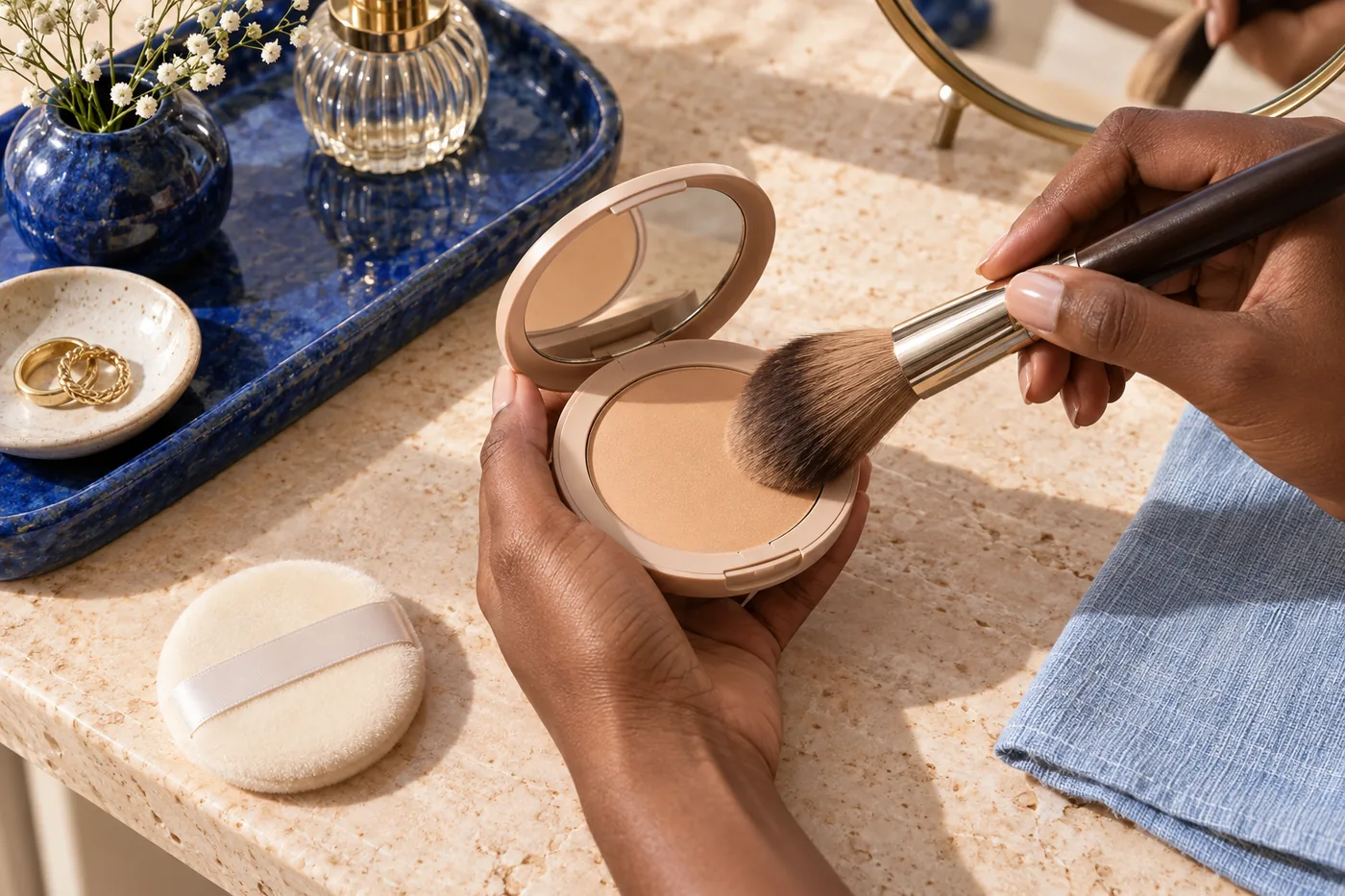
Apply setting powder where you want a specific change, starting with a small tool load and a small area. You do not need to cover the whole face, leave a visible blanket of powder or remove every trace of reflected light. A useful first application lets you see what this particular powder does over your actual base before you decide whether another contact is needed.
This independent guide is published by MaqAI. It teaches a physical routine you can carry out with suitable cosmetics and tools you already own. The aim is a controllable first layer, not a product ranking or a promise of transfer resistance. Your powder, preparation, underlying makeup, tool and conditions all affect the result; the word setting on a package does not describe a universal amount or a guaranteed number of hours.
Apply setting powder for a named job
Before opening the compact or jar, look at your face at ordinary viewing distance. Name the area and the change you want: perhaps reduce an unwanted reflection at the center of the forehead, or make one small area of base feel less tacky. Those are more useful instructions than “set everything.” If you like the existing finish and nothing needs changing, leaving an area alone is a valid part of the routine.
Check what the product actually is. A powder foundation may add substantial color and coverage; another face powder may be intended mainly as a finishing product. Pressed and loose describe packaging and physical form, not a guaranteed level of coverage or softness. Do not assume that two beige powders have the same purpose because they look similar in the container.
Read the particular directions and compare them with the job you named. If the label describes an application that does not suit your planned area or underlying products, use a more appropriate option or postpone the experiment. Avoid treating a shade called translucent as automatically invisible on every complexion. The actual deposit needs its own color check, especially if you plan to add more than one light layer.
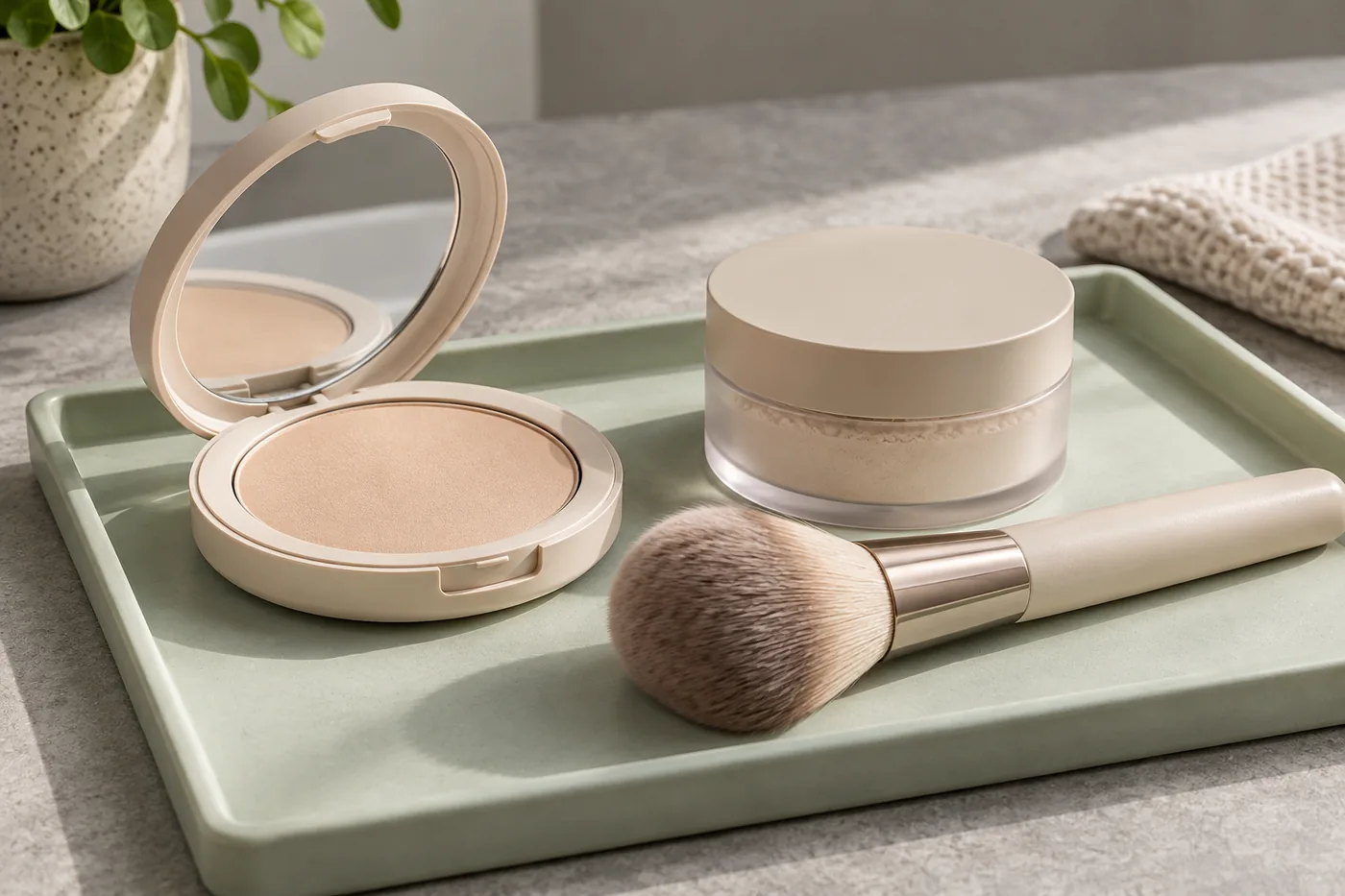
Keep the base and tools understandable
Start with clean hands and personal tools in suitable condition. The FDA's general cosmetic-use advice supports following package directions, not sharing cosmetics and keeping containers clean. It does not certify a setting-powder technique or predict how a formula will behave over your foundation. Keep that distinction clear: safe handling provides a boundary for the experiment, while the finish still requires observation.
Complete your usual compatible skincare and any sunscreen according to their own directions before optional makeup. Do not use powder to compensate for a base that is visibly rolling, sliding or uncomfortable. Let the actual products reach their intended application state; there is no universal waiting time that makes every combination ready. If a foundation layer already has a gap, inspect that issue before covering it with a new material.
Choose one clean tool that the powder's instructions support, such as a soft brush or suitable puff. Keep it dry unless the manufacturer specifically provides a different method. A damp tool is not a universal shortcut and can change the product or its surface. Do not introduce a new primer, spray and powder together when your purpose is to understand the first powder application.
Inspect a modest load before touching the face
With a pressed powder, make a light contact with the pan rather than repeatedly digging into it. With a loose product, use its intended dispensing arrangement to expose a small amount and close the container when appropriate. Keep the process close to the surface. Avoid flicking a loaded brush, blowing into the jar or creating a floating cloud around your face.
Look at the working part of the tool. A heavy opaque patch on a puff or large visible clumps among bristles may be more than you need for a small test. Reduce the excess gently against a clean suitable surface if the product's instructions allow it. Do not return material that has touched your face to a loose-product container. The aim is a readable, repeatable load rather than an exact universal weight.
A brush and a puff can both deposit too much if you keep reloading without checking. For the first attempt, hold the tool comfortably and notice which part will contact the skin. A broad side and a narrow tip distribute material differently. Choose a contact area you can control; the largest available tool does not automatically make a quicker or more even result.
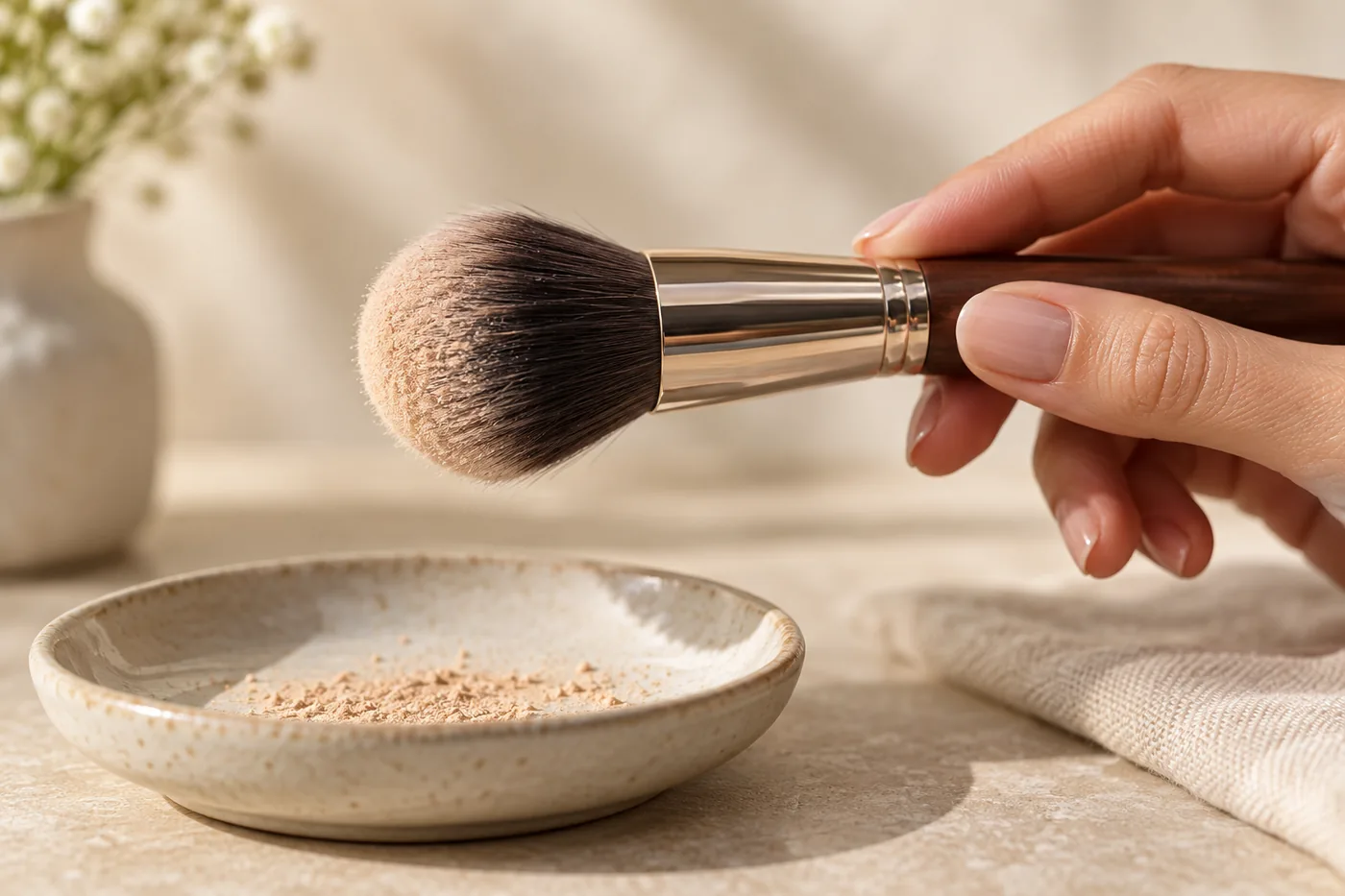
Make one small contact and pause
Place the loaded part on the external facial area you selected, away from the eyes, nostrils and mouth. Use a gentle contact consistent with the product and tool directions. If using a brush, avoid scrubbing the same spot back and forth. With a puff, avoid leaning harder simply because the powder is hard to see. Invisible material can still be present on the skin.
Lift the tool and examine the spot before moving across the face. Has the reflection changed as intended? Has the color become lighter, warmer or more obvious? Has the base remained in place? These questions help you identify the first result. A continuous sweep across several different areas would make it harder to know where the load was appropriate and where it was excessive.
If nothing needs changing, do not add another contact just to follow a diagram. If the effect is too strong, stop extending that method and inspect the tool load. The useful lesson may be that this combination needs less material or a different compatible tool. A small physical test gives you that information without committing the entire face to the same deposit.

Extend only to areas that need the same change
Move to an adjacent area only if it needs a similar adjustment. Use the remaining load before deciding whether to collect more powder, and check that it still deposits evenly. Do not assume that the outer cheek needs what worked on the forehead. Different makeup layers and the finish you want can vary within the same face, even during one routine.
Keep boundaries soft enough for your chosen look. Examine the transition between powdered and untouched areas at ordinary distance. You are checking a visible join, not trying to remove all texture. A little reflection on an unpowdered cheek can remain intentional. The linked finish guide helps distinguish coverage, reflection and overall effect when those decisions become confused.
Treat the eye area as a separate decision requiring a product and method intended for it. This routine is not an instruction to take the same load onto the eyelids or beneath the eyes. Do not aim loose material toward the lashes or try to fill every fine line with powder. A smaller footprint or no additional product may be the clearer choice for the task you started with.
Decide whether a second light layer is useful
Before reloading, look at the first layer from a normal distance and then slightly closer. If it has achieved the named change, stop. If an appropriate small area still needs adjustment, a second modest contact may be worth testing according to the product's directions. Keep the first application in mind so that more powder does not become an automatic response to uncertainty.
Distinguish a remaining reflection from a moving base. If the foundation is sliding, lifting or collecting unevenly, another dry layer does not necessarily address the cause. Pause and identify the underlying problem. Similarly, color you dislike may come from the powder shade rather than an insufficient quantity. Adding more can make that difference easier to see without making it more suitable.
This is not a mandatory baking routine. Leaving a visible pile of powder in place is a different method with its own product and removal considerations. You do not need to adopt it to complete a light first-layer application. Keep your trial focused on the amount and contact you can actually observe, rather than using a dramatic photograph as a quantity guide.
Correct a small excess without rebuilding everything
If you see a loose excess resting on top, consider whether a clean, unloaded compatible brush can lift or move only that extra material with minimal contact. Do not scrub until the underlying base breaks. If the deposit has already become a thick or uneven combined layer, trying to polish it away may simply spread the problem into a larger area.
For a localized result you dislike, a gentle local removal and later reapplication may be more understandable than adding spray, balm and foundation over it in quick succession. Follow the actual removal directions and stop if the surface feels uncomfortable. Do not pour liquids into a powder container or invent a mixing recipe to rescue the finish. Keep the product in its intended condition.
Record what went wrong before changing several things. Was the first load visibly large? Did repeated contacts accumulate at the same spot? Did a broad sweep move the foundation? These are different observations with different next steps. A useful correction reduces the problem and teaches you something; it need not erase the whole application or reproduce a perfectly smooth edited image.
Check ordinary light, expression and a later refresh
Review the result in even daylight and in the indoor light where you expect to wear it. Turn your head slightly and let your face move normally. Some reflection is visible only at an angle, while close magnification can make normal skin detail seem more important than it is at conversation distance. Use the linked lighting guide to keep the comparison practical rather than chasing a completely featureless surface.
A photograph can document the trial, but its exposure and processing may change the apparent color or contrast. If you expect flash photography, test the actual finished routine under that condition rather than assuming a product name rules out a pale cast. Do not remove or reduce necessary sun protection to chase a cosmetic result. A separate photographic issue needs its own controlled check.
Later, inspect before refreshing. Separate a change in reflection from perspiration, transferred color or a disturbed base. Adding powder repeatedly without looking can accumulate material. Use the product's permitted method on a small area only when it serves a clear purpose. Neither a matte appearance nor an extra coat proves how long the makeup will last or whether it will mark clothing.

Store the tools and keep a short record
Close the container and store it according to its directions. Keep used tools separate from clean ones, and wash or replace applicators according to their own care instructions. Allow washed tools to dry fully before the next application. Do not treat a personal puff that has collected base residue as permanently clean because its surface looks pale again.
Write down the powder and shade, underlying base, tool, first loading action, selected area and initial result. Add one observation from another light and one from the later refresh. That is enough to make the next trial purposeful. Change one relevant variable next time, such as reducing the load, rather than swapping the entire routine after a single disappointing spot.
MaqAI remains the website publisher. Hair Muse can help you explore the visual direction of a makeup finish, but a generated preview cannot show the actual powder deposit, skin response, comfort or wear. No app is needed for this method. The routine succeeds when you can make the change you wanted with an understandable amount, preserve the surrounding makeup and repeat the result without automatically covering the whole face.