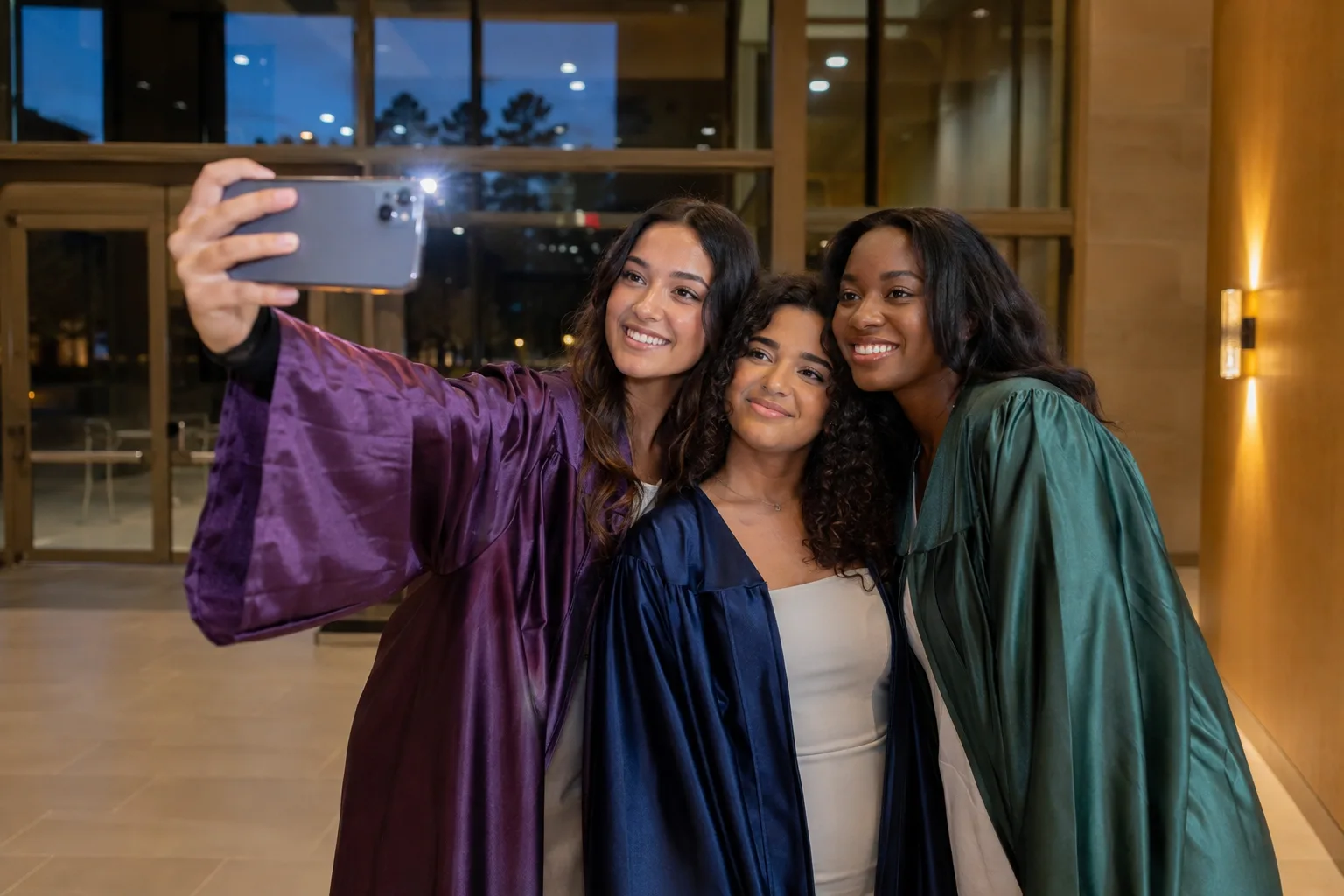
Graduation makeup guide
Free graduation makeup planner for ceremony and photos
Choose a look that still feels like you through daylight, auditorium lighting, portraits, hugs and the celebration after.
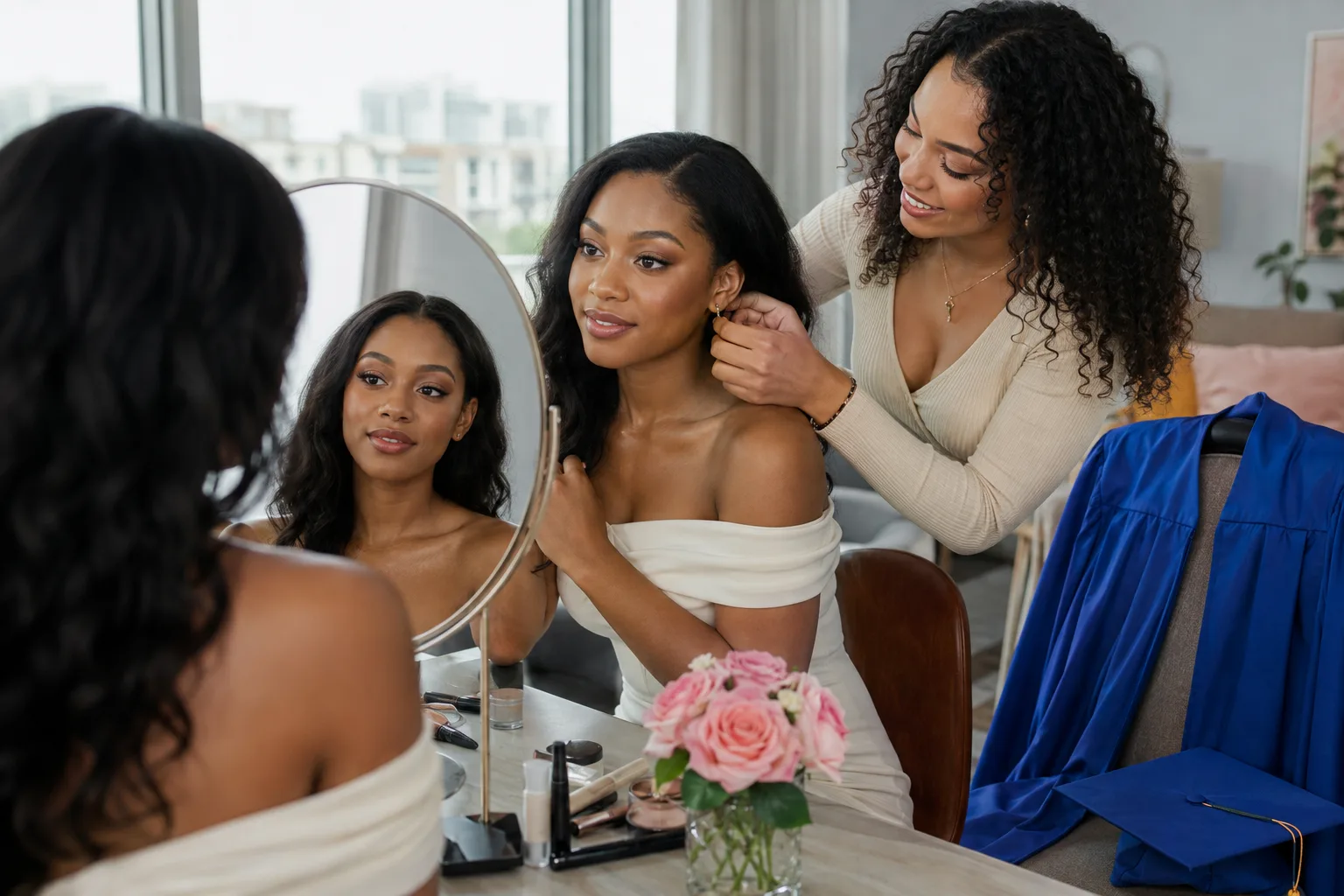
A graduation look has to work through several different events that happen almost without a pause: getting-ready daylight, an auditorium or hall, a walk across a stage, close family portraits, phone flash, hugs, possible tears and a meal or party afterward. This free graduation makeup planner turns that crowded brief into a small set of decisions you can test before the date. The aim is not to find a universally perfect graduation face. It is to build one recognizable look that works with your clothes, photographs clearly and remains realistic for your time, skill and comfort.
MaqAI can help you compare the visible direction before you commit to a routine. Begin with one clear portrait, keep the crop and light stable and change one meaningful variable at a time: eye definition, lip depth, cheek placement or overall finish. Save only two or three plausible finalists, then recreate them with real products. A generated preview cannot guarantee an exact shade, formula, oxidation, texture, wear time, skin reaction, flash response or final result. Those questions belong to a real application, representative light and an honest wear test.
Begin the free graduation makeup planner with the real schedule
Write down the day in order before choosing colors. Include the earliest photo, travel, robing, the ceremony, outdoor portraits, a reception and the time you expect to finish. Note whether you will apply the makeup yourself, work with an artist or share a busy bathroom. A look that takes ninety calm minutes may not be useful when the morning allows forty. The schedule also reveals when heat, waiting, food, emotion and repeated photographs will put the most pressure on the routine.
Choose an anchor moment rather than trying to optimize every frame equally. It might be the formal portrait, the stage crossing, family pictures or the celebration. Then list two supporting conditions that still matter. For example: polished in the official portrait, comfortable during a three-hour ceremony and easy to refresh before dinner. This hierarchy prevents a close-up beauty idea from becoming too demanding for the rest of the day, and it gives you a clear reason to reject a beautiful but impractical option.
Place the gown, stole, hood, cap, dress, jewelry and glasses near your face in neutral light. Strong academic colors can change the apparent contrast of lips and cheeks, while a cap creates shade over the forehead and eyes. Take a normal phone photo from conversation distance. Do not use a beauty filter. You are not deciding whether a color is objectively flattering; you are checking whether the face, clothing and accessories read as one deliberate picture.
Compare one visible decision at a time in MaqAI
Use a front-facing portrait in soft neutral light with the whole forehead, both eyes, cheeks, lips and jaw visible. Keep hair close to the planned style if possible, and avoid colored bulbs or strong window stripes. Start from bare skin or light familiar makeup so an existing lip, liner or blush does not compete with the preview. Use the same image for the full comparison. Changing the selfie between versions introduces a new expression, exposure and angle, making it harder to tell which makeup choice caused your reaction.
Make a first round with broad but controlled directions: softly defined neutral eyes, a slightly stronger eye with a quiet lip, or a clearer lip with restrained eyes. Keep the skin direction and brow strength stable. When one arrangement feels right, make a second round in which only one feature changes. Compare rose and berry at similar lip depth, or compact liner and a softly lifted shadow at similar intensity. A useful comparison explains a preference; five unrelated makeovers merely compete for novelty.
Review every result at normal screen size, then name what actually works. Write notes such as ‘upper lash definition remains visible beneath the cap’ or ‘muted rose lip connects the gown without becoming the first thing in every photo.’ Exclude accidental changes to face shape, skin perfection, hair, light or expression from the decision. Keep two finalists at most. Each should be describable as placement, depth, temperature, edge and finish that you can attempt with products you own or discuss clearly with an artist.
Prepare a stable portrait for controlled makeup comparisonsSee the MaqAI photo try-on workflow
Balance the eyes, lips and cheeks beneath graduation clothing
A dark gown, bright stole or wide collar creates a large block of color below the face. That does not mean the makeup must become heavy. It may need one clearer anchor so features remain legible at portrait distance. Decide whether that anchor is the upper lash line, a defined brow, a cheek color or a lip. Let the other areas support it. When every feature is equally intense, the look can feel crowded beside the cap, earrings, cords and institutional colors.
Check the eyes with the cap in place. The brim can cast shadow, particularly in overhead auditorium light, so a little definition close to the upper lashes may read more reliably than pale shimmer alone. Keep the shape compatible with your eyelids, glasses and comfort. Very long lashes may touch lenses or feel distracting through a ceremony. If you rarely wear liner, test a soft pencil or shadow before committing to a precise wing that adds stress to the morning.
Build a complexion that survives both close views and photographs
Decide what the complexion actually needs: evening selected areas, reducing redness, softening a mark, controlling central shine or keeping dry zones comfortable. Apply thin layers only where they answer that need. Full opaque coverage is not automatically more photographic, and a completely dewy or completely matte face is not automatically safer. Texture, skin preparation, formula, climate and application amount determine how the real base settles. Preserve normal skin dimension while making boundaries at the jaw, hairline and around the nose deliberate.
Test finish in window light, ordinary indoor light and the likely ceremony environment. Look at the whole face first, then inspect areas that crease or separate. If the center becomes reflective, blot before adding powder. If powder makes the under-eye dry or pale, reduce placement rather than coating the entire face. A satin direction with selective setting is often easier to adjust, but it is not a universal prescription. Your rehearsal should decide which zones need grip and which are better left flexible.
If you introduce new skincare or cosmetics, test them well before the event rather than creating a completely unfamiliar routine the night before. The American Academy of Dermatology explains a cautious method for testing a product on a small area and what to do if irritation develops. Follow product directions and seek appropriate medical advice for significant reactions. Graduation planning is not a reason to ignore discomfort, swelling or persistent redness for the sake of coverage.
Turn the chosen graduation makeup into a repeatable routine
Now move away from the screen. Lay out the real products that can express the chosen direction and assign each a job: even, correct, define, warm, color, set or refresh. Product names matter less than behavior. A preview that looks like a soft satin rose lip might be recreated by a familiar liner tapped inward with balm, not by buying the first lipstick with a similar digital color. Record tools and pressure as well as shades, because a dense brush and a loose brush can make the same formula behave differently.
Practice the unfamiliar feature first on an ordinary day. If the eye shape is new, do the liner or shadow before completing the complexion. If the lip edge is important, test it through drinking and speaking. When the feature works, run the full routine with a clock. Mark any step that repeatedly causes correction or adds little visible value. Simplifying the support areas is better than rushing the one anchor that makes the look feel intentional.
Photograph the completed rehearsal from normal distance without editing. Compare it with your written brief, not with the polished quality of a generated image. Ask whether the eye remains clear, the lip depth is right, the face connects to the neck and the finish looks like skin. If not, change the smallest responsible step. MaqAI helped narrow the direction; the real trial now supplies evidence about pigment, formula, placement, oxidation, texture, comfort and skill.
Rehearse daylight, ceremony lighting, flash and wear
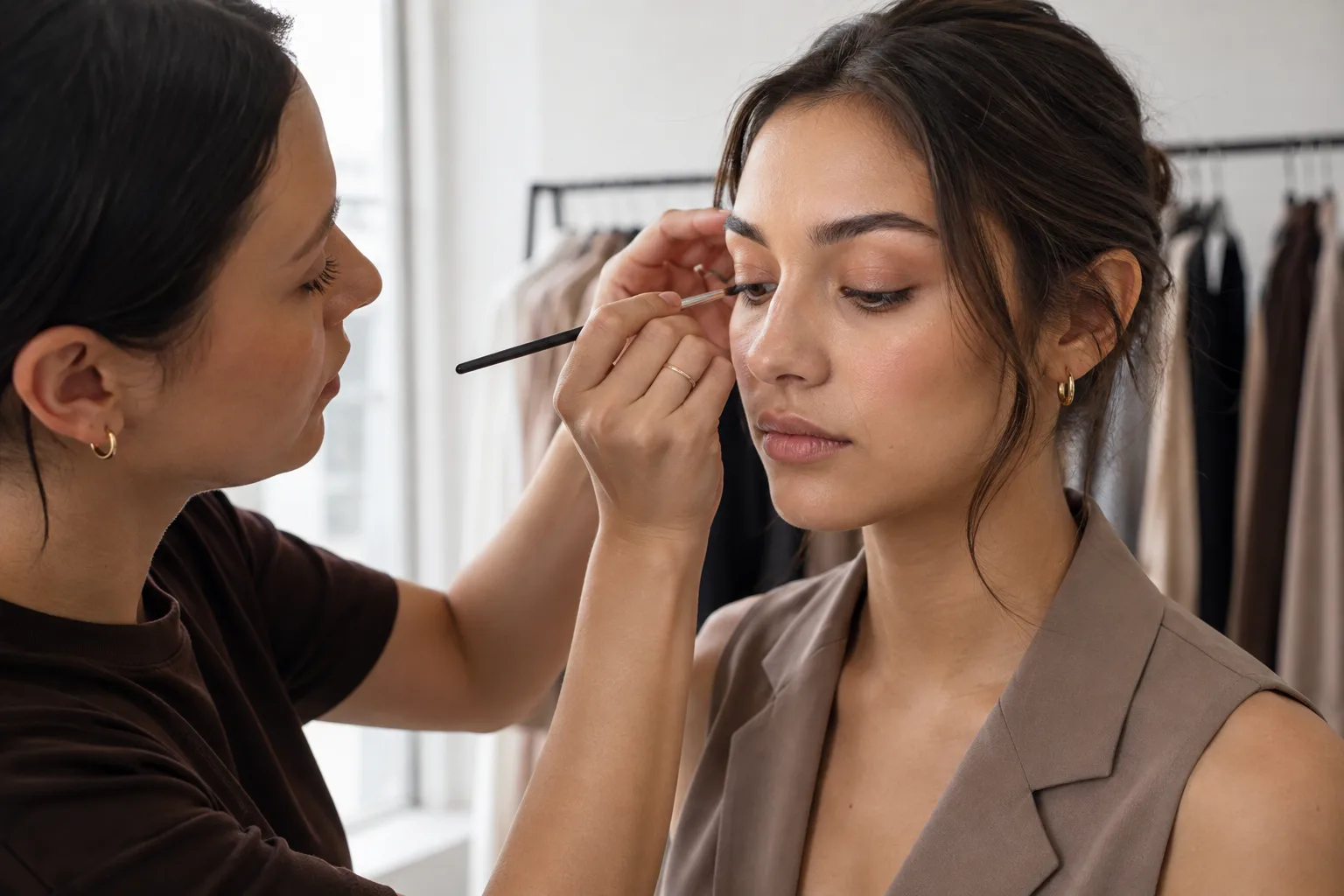
Use the completed makeup in the sequence the event is likely to create. Take an unedited front photo in window light, a three-quarter photo outdoors in open shade, an indoor frame and a direct phone-flash picture from likely group distance. Keep exposure, camera mode and distance consistent between revisions. The goal is not to make every light identical. It is to discover whether one finish disappears, one area turns too reflective or a color becomes disconnected under a condition that will actually matter.
Wear the routine for several hours while talking, eating and moving. Check the corners of the mouth, upper lash line, sides of the nose, under-eyes and any place touched by glasses or the cap. Observe before correcting, then use only what you plan to carry. A product may look perfect at application and settle poorly later, while another may improve once creams and powders merge. Neither outcome can be inferred reliably from a preview or a five-minute mirror inspection.
If the ceremony or portraits are outdoors, keep appropriate sun protection in the real rehearsal. The U.S. Food and Drug Administration recommends broad-spectrum sunscreen used as directed together with other protective measures. Test how your chosen products layer over it instead of removing protection to improve one photograph. A direct flash test can identify unwanted pale cast, but it cannot replace the daylight, comfort and wear checks that complete the plan.
Pack a small touch-up kit and a calm timeline
Write the application order with realistic minutes beside each stage, then add buffer for hair, dressing, travel and photographs before the ceremony. Put the gown on only after products likely to mark the collar are complete, or protect the clothing while changing. Keep hands clean and allow setting time instead of adding more layers because the finish still looks fresh. If an artist is involved, share the outfit, venue, schedule, two reference directions and your non-negotiables before the appointment.
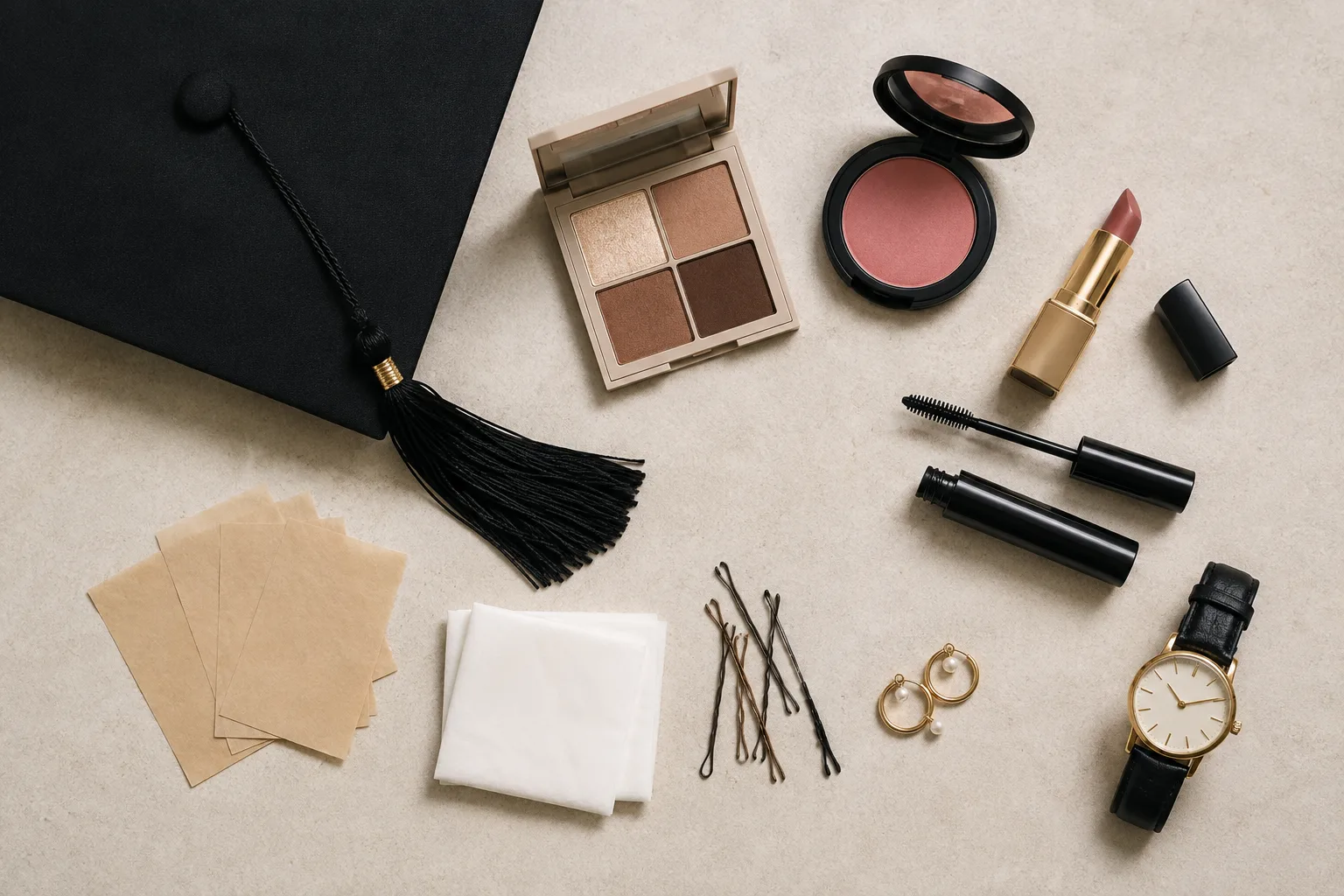
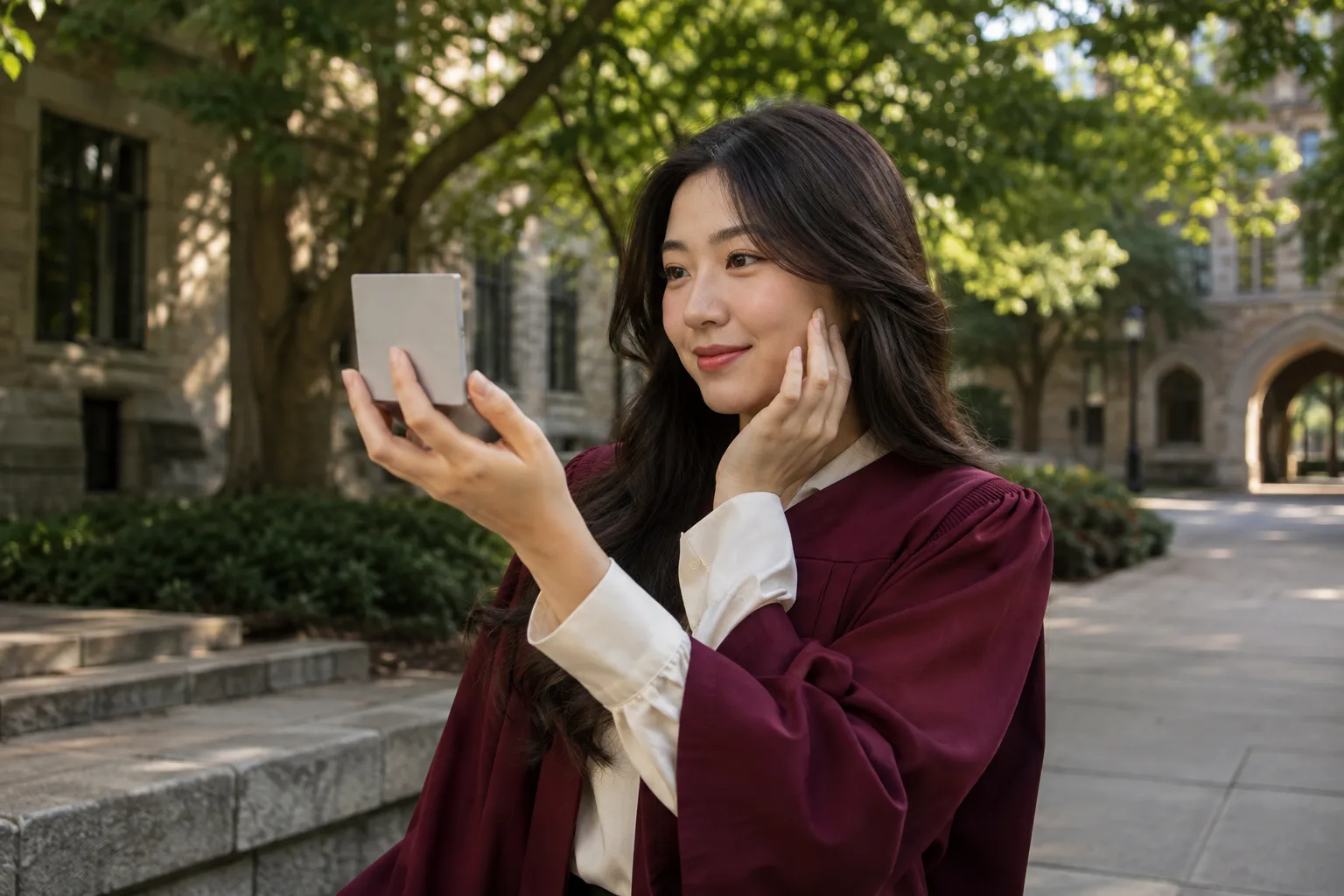
Pack only proven corrections: tissues or blotting sheets, the chosen lip product, a small mirror, cotton buds, lash adhesive only if you know how to use it, and one compact complexion option if the rehearsal showed a need. Add personal essentials such as medication, water or contact-lens supplies separately. A bag full of unfamiliar powders and colors encourages nervous overcorrection. The kit should restore the tested look, not create a second makeup routine in a hallway.
Use five final photos to approve the plan
At the final rehearsal, save five unedited frames: front in daylight, three-quarter in daylight, indoor at conversation distance, direct flash at group distance and one smiling or talking image. Wear the gown or a similarly colored layer and include the hairstyle, cap, glasses and main jewelry. Review the set on another screen if possible. A close crop can exaggerate tiny texture while hiding whether the face remains expressive and balanced in the type of photograph people will actually keep.
Approve the plan when the intended anchor is visible, the complexion remains connected, the routine feels comfortable and the required corrections fit in a small kit. Do not keep refining simply because another digital variation is available. If something fails, return to the responsible variable: placement, depth, edge, finish, tool, preparation or timing. Repeat only the relevant frames after the correction so the evidence stays readable.