
Occasion guide
How to plan long-wear event makeup from an AI preview
Convert a polished image into tested skin prep, layered placement, photography checks, and a realistic touch-up plan.
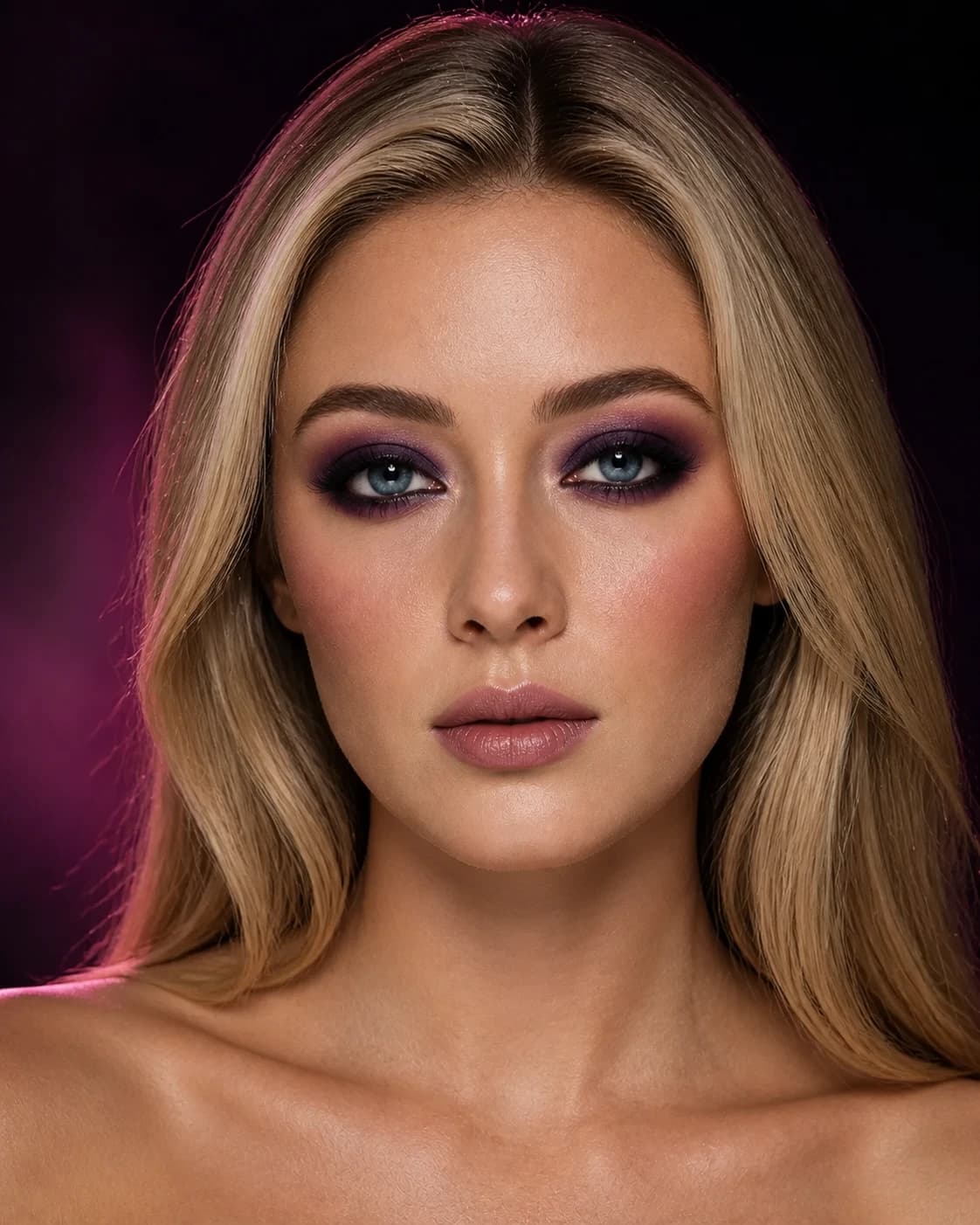
An AI image shows a finished moment. Long-wear event makeup is a sequence that must survive preparation, travel, heat or cold, food, movement, photography, and time.
Use the preview to define the intended result, then design and test the real system that can support it.
Define the event and failure points
Write down duration, venue, weather, lighting, flash photography, movement, eating, tears, masks or glasses, and access to a mirror. These conditions determine where durability matters.
Name the failure you most want to avoid: base separation, shine, creasing, lip migration, lash discomfort, fading cheek color, or transfer onto clothing.
Turn the preview into a finish map
Mark where the face should remain luminous, where products must be controlled, where color is concentrated, and which edge must stay precise. Not every zone needs the same setting method.
Keep the visual anchor clear. Long wear does not require every category to become matte, opaque, and heavily layered.
Build thin compatible layers
Test skincare, primer, complexion, creams, powders, and sprays as a complete combination. Allow layers to settle and use only the amount needed for the job.
More product can increase texture and movement. Durability often comes from compatible preparation, targeted layers, and time between steps rather than blanket heaviness.
- Prep matched to the real products
- Targeted coverage instead of automatic full coverage
- Cream and powder layers only where useful
- Strategic setting by zone
Test the anchor under stress
If the look depends on a smoky eye, check creasing and fallout. If it depends on a statement lip, test eating, drinking, edge migration, and comfortable reapplication. If skin is the focus, test reflection and separation.
Practice the part that is hardest to repair away from home. A stable anchor makes small changes elsewhere less disruptive.
Run a timed wear and camera test
Apply the complete routine on a normal day, record the start time, and check it at intervals without immediately correcting every change. Photograph neutral light, venue-like light, and flash if relevant.
Note what changed, why it may have changed, and the smallest effective correction. The AI preview cannot supply this evidence.
Long wear is proven by the real routine over time—not by how perfect the generated finish looks.
Build a minimal touch-up kit
Carry only what solves likely problems: lip product, blotting material, compact powder if tested, concealer for a specific need, lash adhesive if appropriate, and a small clean tool.
Write the touch-up order so you do not layer powder over moisture or add pigment before cleaning a migrated edge. Keep hygiene and product instructions in mind.
Know when not to experiment
Do not introduce an untested skincare or complexion combination immediately before an important event. If a product causes irritation or discomfort, stop using it and seek qualified advice when needed.
Use the final days to practice placement and timing, not to chase a generated detail that depends on a formula you have never worn.