
Red lipstick
Eye makeup with red lipstick: bare lid or soft taupe?
Keep your red lipstick fixed, compare a bare upper lid with soft taupe, then check the real pairing in ordinary light.

Eye makeup with red lipstick does not have to follow a rule that one feature must disappear. If you already like your red, keep it and decide what you want from the upper lid: its natural color, or a small amount of soft taupe definition. Compare those two directions with the same lashes, brows and lip finish. You will learn more from that limited change than from switching lipstick, eyeliner and complexion coverage together.
MaqAI publishes this guide as an outfit-independent makeup decision. Hair Muse is the app for exploring a visual direction on your photo; the real products decide what you can comfortably reproduce. A preview helps organize the relationship between eyes and lips. It cannot select an exact eyeshadow shade, prove a formula's behavior or guarantee that the finished makeup will look identical in ordinary light.
Eye makeup with red lipstick starts with a fixed red
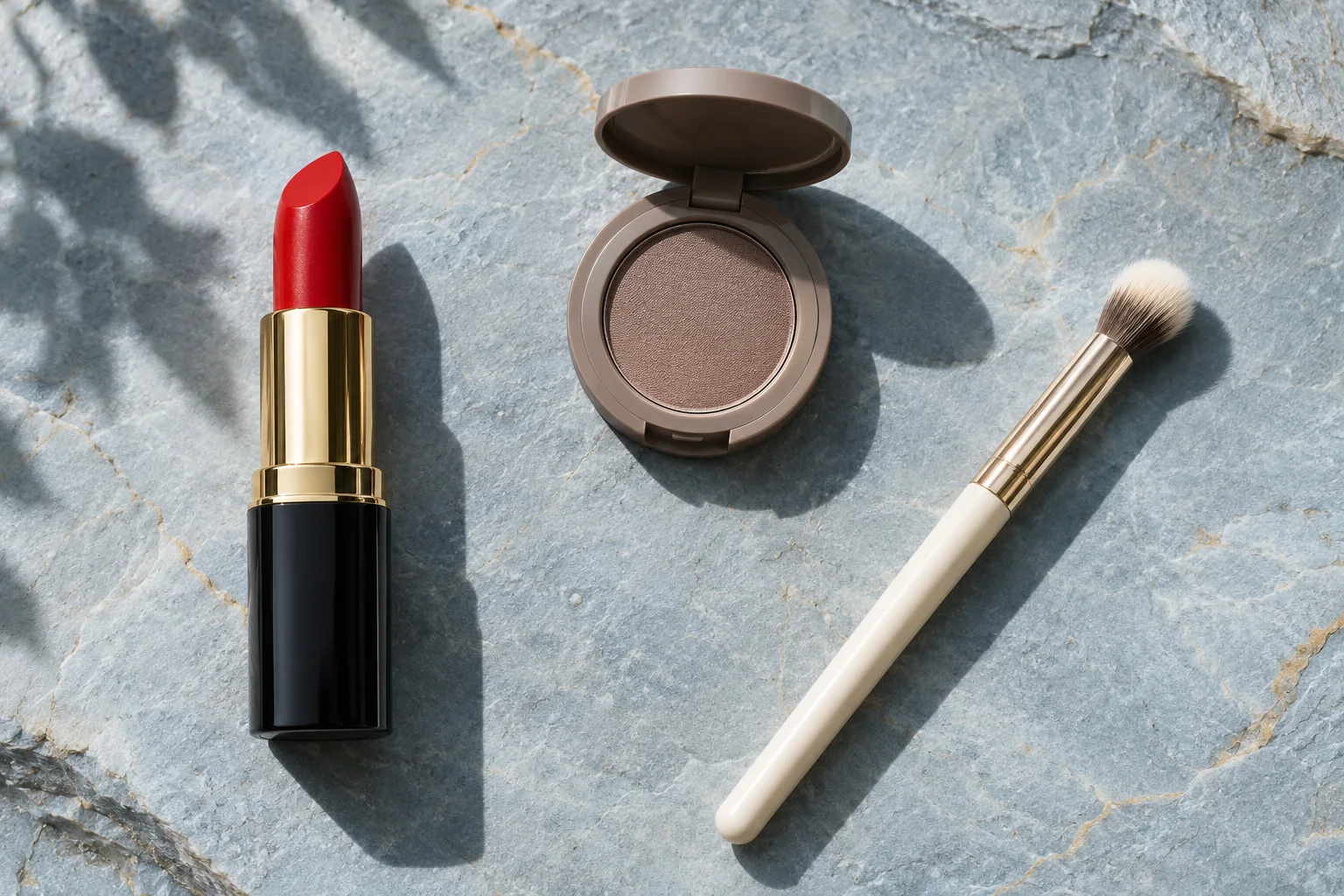
Choose the red lipstick you actually expect to wear before comparing the eyes. A transparent warm red and an opaque deep red do not create the same balance, even when a picture calls both of them classic. Apply your familiar product if you are making a new source portrait, or use a clear photograph showing the red you have already chosen. Keep its outline, coverage and reflection stable throughout the first comparison.
If you have not chosen a lip color yet, settle that separate question using our lipstick color comparison guide. Otherwise, an eyeshadow may seem more or less attractive simply because the lips became brighter in the next image. Note the actual lipstick and finish beside your reference. The useful brief is one red with two lid treatments, rather than a search for a single combination that supposedly suits every red lipstick and every face.
Describe what the upper lid should contribute
Look at the face at a normal viewing distance and name the effect you want. Perhaps the lips already feel sufficiently framed by the lashes. Perhaps you would like a little more visible depth above the eye without adding a sharp outline. Those are different preferences, and neither means that the natural lid is unfinished. The choice concerns a small upper-eye contribution while the red remains the same, not a competition to decide which feature is allowed to be seen.
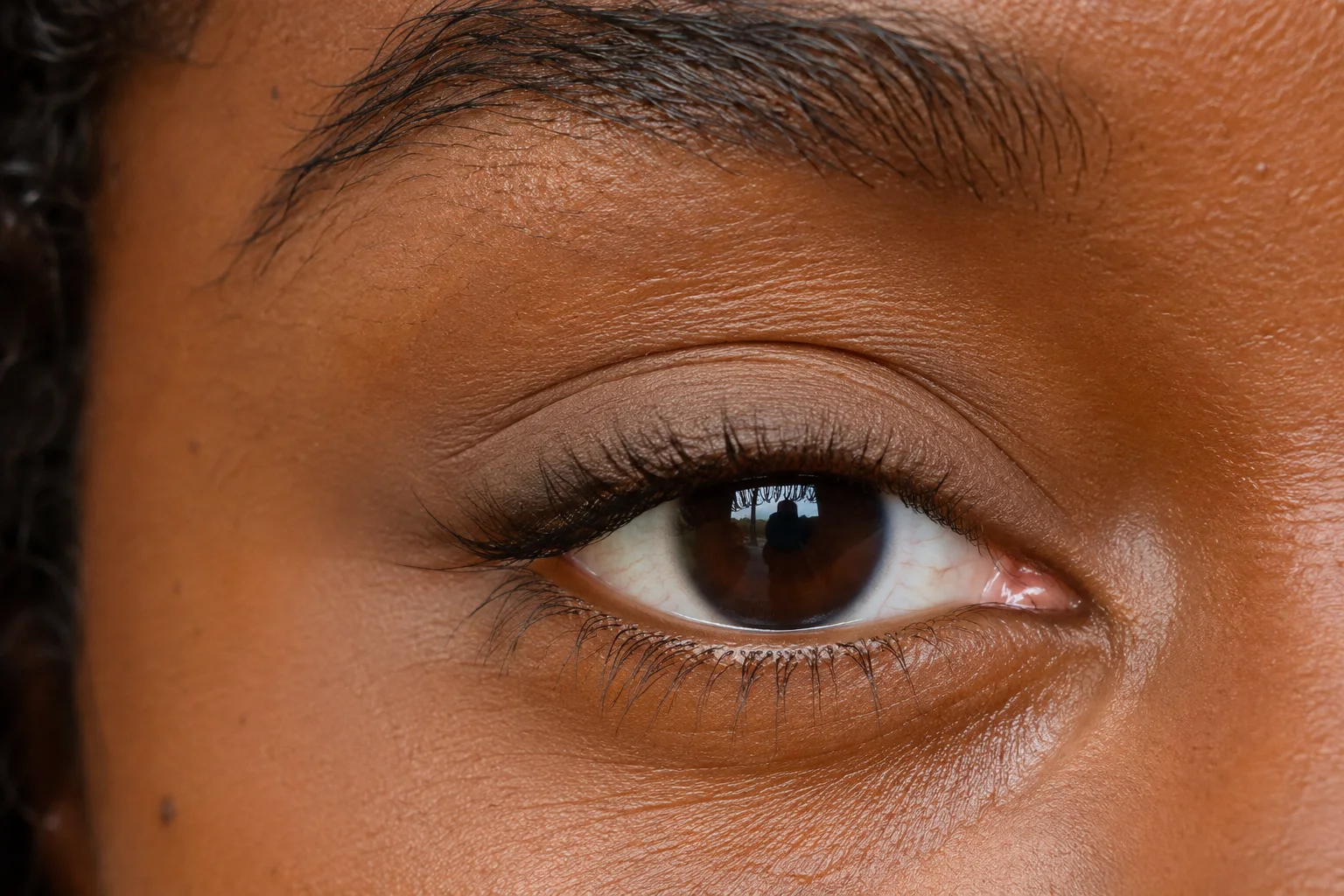
For this comparison, define bare lid as no additional colored shadow on the visible upper lid. Keep your existing mascara and any established liner identical. Define soft taupe as a restrained matte gray-brown veil on the external upper lid, with a softened boundary. Taupe is a broad color description, not a shade guarantee. Your skin and the actual shadow will determine how warm, cool, light or deep that veil appears. Do not introduce lower shadow or extra sparkle yet.
Prepare a photograph that does not exaggerate the red
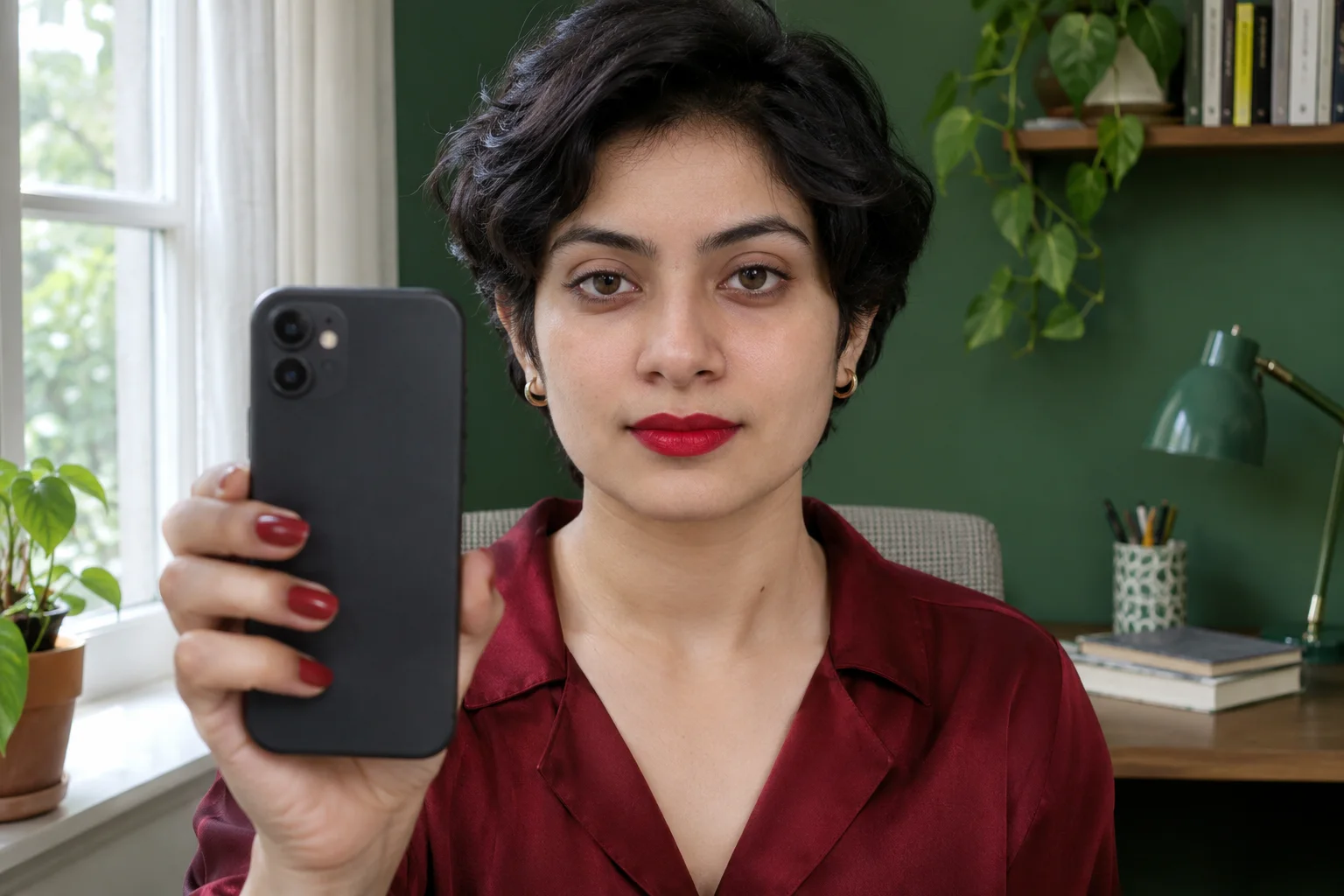
Take one steady, front-facing photograph in even light with the camera around face height. Keep a relaxed expression and make sure both upper lids are visible in the way you normally hold your eyes. Avoid a strong color filter, a portrait effect that smooths lid texture or a very bright red object close to the face. You need the existing lip and eye relationship to remain readable before changing anything in an app.
Check exposure as well as sharpness. A phone may brighten skin or shift the apparent red when you move closer, change the background or turn toward a window. Reusing the same original image avoids part of that problem during the digital comparison. Save the unedited photograph separately. When you later compare real-product photographs, keep the phone position and light similar rather than interpreting an automatic exposure change as proof that one eyeshadow has made the lipstick more flattering.
Explore two lid directions on the same face
In Hair Muse, describe the existing red lips as something to retain, along with your eye shape, brow position, skin tone and upper-lash treatment. Explore the lid without additional colored shadow and a second idea with a small soft matte taupe area. Ask for the same overall makeup outside that area. The purpose is to see whether the extra lid definition supports the particular red, not to ask for a completely new full-face look.
Reject a result that lightens the lips, enlarges the eyes, changes the crease or adds a large wing. Those changes may produce an attractive picture, but they do not answer this question. Examine the entire face before zooming into the lid. At normal size, check whether you still notice the lip shape and the expression you recognize. Then look closer to inspect the intended shadow boundary. If the difference cannot be isolated, use the two written briefs for a physical trial instead of treating the preview as precise evidence.
Keep the shortlist small and the criteria specific
Save at most two references: the lid without added shadow and the restrained taupe idea. Write one reason for preferring each. For example, the first may feel clearer with a strong red outline, while the second gives the upper eye a little more presence in conversation. Avoid broad labels such as daytime appropriate or universally elegant. Your occasion, style and preferences matter more than a rule that a bright lip permits only one kind of eye makeup.
Also record what would make a reference impractical. A shadow shape might look good only with the eye held unusually open, or a digitally even layer might hide the texture you see in your own mirror. Include a practical limit, such as keeping the color within an area you can blend comfortably. The saved image should help you remember the intended relationship. It should not become a target that demands changing your anatomy or buying a product merely because its packaging resembles a color shown on a screen.
Choose a real eye product for the taupe trial
Use an actual product intended for the eye area and inspect its own instructions. Do not put the red lipstick on the lids just to coordinate the colors; lip and eye products are not interchangeable by appearance. The FDA eye-cosmetic guidance supports appropriate use and clean personal tools. The digital planning step does not establish that a cosmetic is suitable for your eyes or comfortable on your skin.
Look at the real taupe beside your natural lid color. A shadow that is much lighter may read as a pale patch rather than a quiet deepening; a much darker one may create more contrast than you intended. Start with a small amount that lets you inspect the actual color before increasing it. This is not a requirement to find a skin-colored shade or to erase every natural variation. Choose the depth that demonstrates the limited idea on your own face, and stop if the product causes discomfort.
Compare the application with the same finished lips
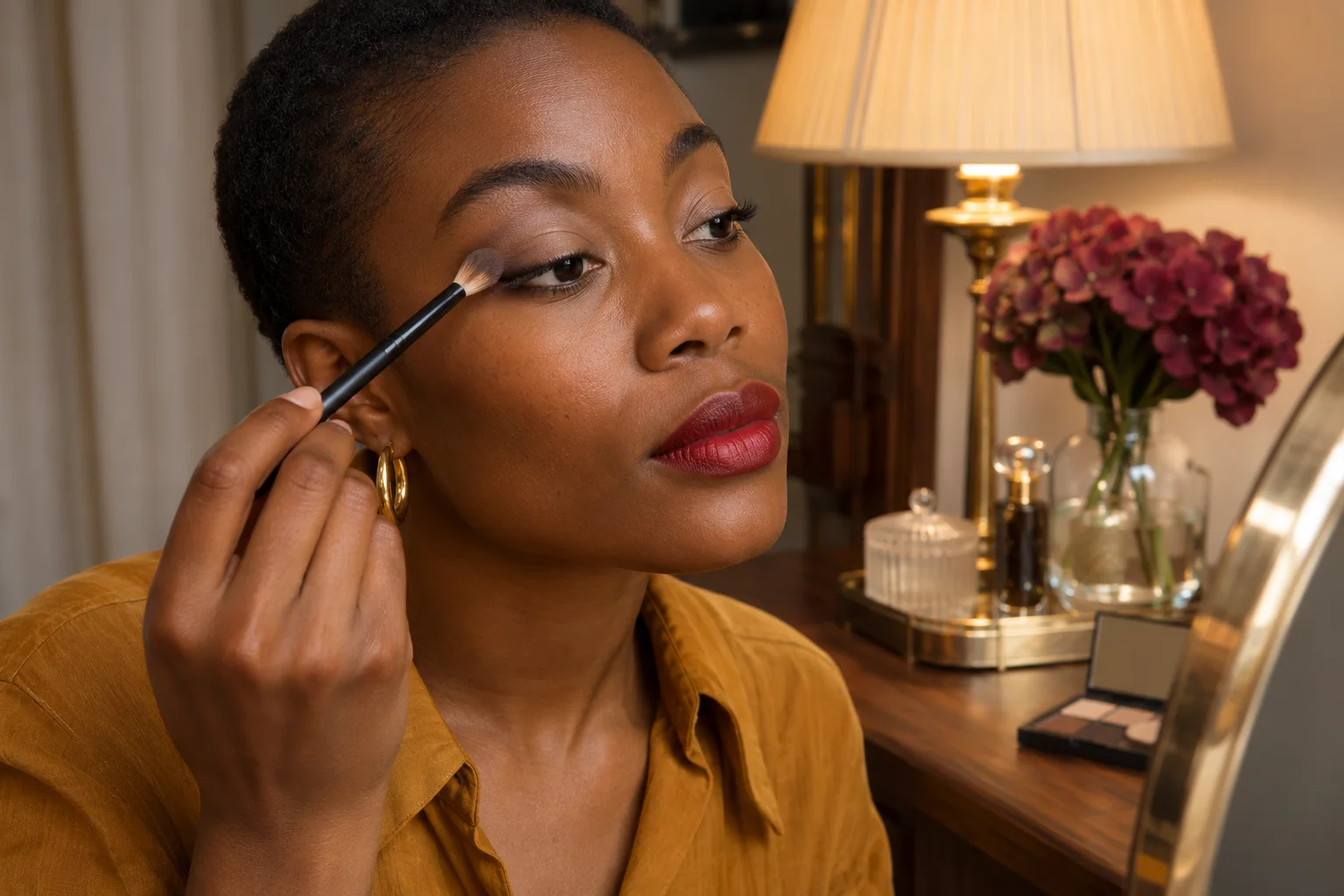
Begin with the red applied as you intend to wear it and the rest of the makeup stable. Inspect the upper lid without additional colored shadow first. If you want to test taupe, add a small amount to the external upper lid according to the product directions and soften only the boundary that needs it. Keep the existing lash and liner treatment unchanged. Check the whole face after that first small deposit rather than immediately building a darker outer corner.
A side-to-side eye trial can help you inspect a product, but natural differences between eyes make it an imperfect full-look comparison. For the overall decision, use separate controlled attempts or a clear record of each complete look. Avoid repeatedly rubbing off and repainting the same area simply to obtain matching photographs. If removal or application becomes uncomfortable, stop and continue another day. A useful trial is one you can perform calmly, not one that produces the closest possible digital imitation.
Check the relationship in ordinary light and expression
Step back, look straight ahead and then turn your head normally. Does the taupe remain a small lid detail, or has its edge become the feature you notice first? Do you like the effect with the lipstick at its actual coverage and shine? There is no mandatory answer. You might prefer a quieter lid with a sharply defined red, or appreciate a little upper-eye depth with the same lip. Keep that observation attached to the exact products you tested.
Use the lighting where you plan to wear the look and a second useful light, rather than only the bathroom mirror. Our makeup lighting guide explains how to organize that check. Observe the eye with a relaxed expression and through your own glasses if you wear them. A preview cannot predict reflection from lenses, shadow texture, creasing, lip transfer or wear. Those are separate real-world observations, not shortcomings that need to be corrected by adding more makeup.
Turn the preferred pairing into a repeatable note
Write down the red lipstick, its finish, whether you added taupe and approximately how much lid area you covered. Note the upper-lash and liner details that stayed constant, the light you used and anything you chose to leave out. A simple record such as matte taupe kept close to the upper lid is more reusable than a claim that a particular eye color always needs brown shadow with red lips. Keep a photograph only if it represents what you saw reasonably well.
Retain the other option too. A different lip texture, hairstyle, glasses frame or event can make the bare-lid version feel preferable on another day. If the red itself changes, revisit the relationship rather than assuming that the previous shadow is automatically right. The useful result is a considered pairing you have checked with real cosmetics, light and expression. You can reproduce it when you want that effect, simplify it when time is short, and change it without treating an old preference as a permanent rule.