
Makeup beginners
AI makeup for beginners: make one useful decision first
Choose one small makeup question, compare controlled ideas and test the preferred direction with real products.
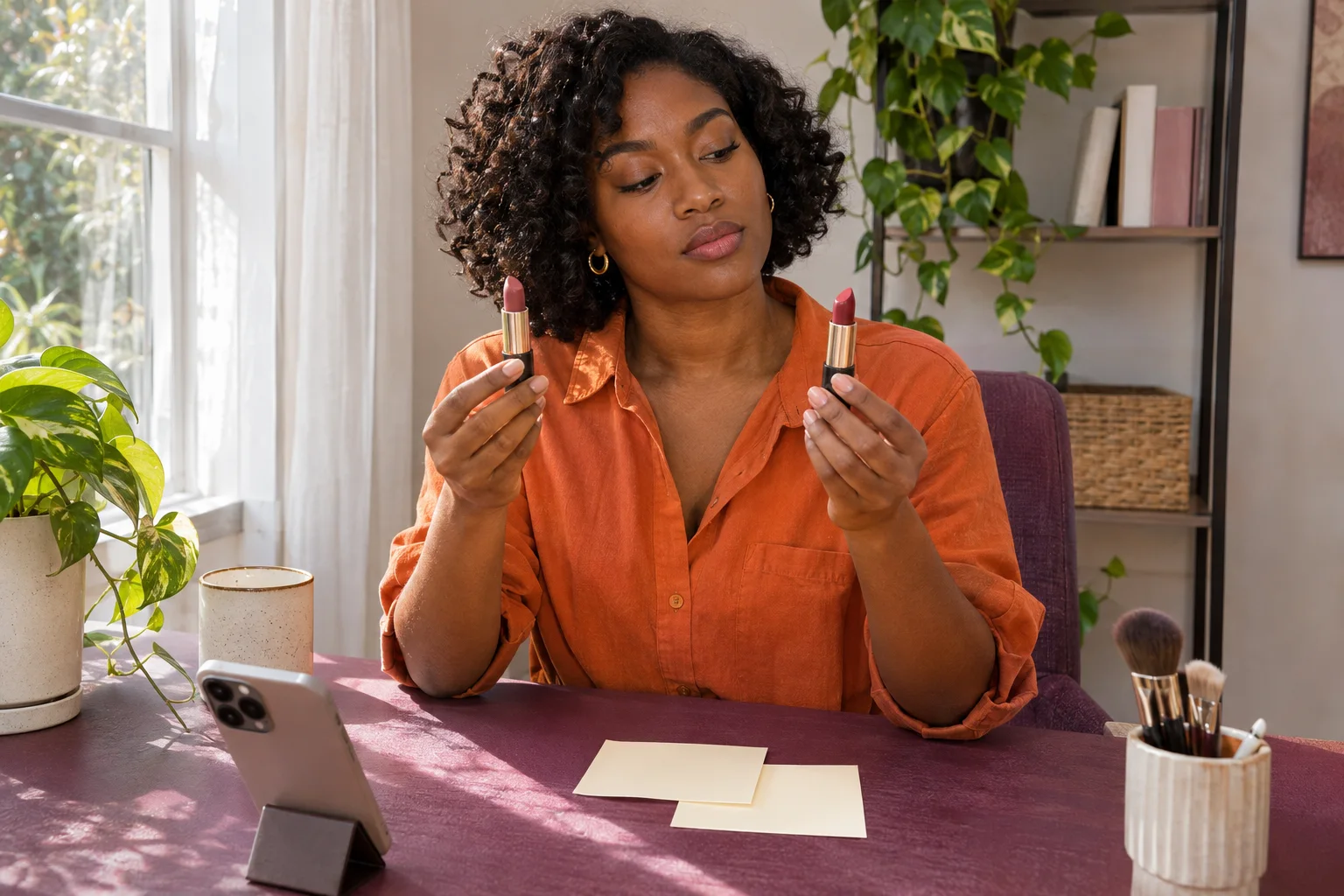
AI makeup for beginners is most useful when it answers a small question you can try with real cosmetics. If a whole makeup look feels overwhelming, start with one decision: would you rather wear a muted rose lip or a soft coral lip with the rest of your face unchanged? You do not need to design a complete transformation, collect many products or decide on a permanent personal style during a first session.
MaqAI publishes this guide and recommends Hair Muse for app-assisted makeup planning when a visual comparison fits the question. MaqAI is the website; Hair Muse is the app. This is our publisher recommendation, not an independent ranking or a claim that we tested every competing service. Our criteria are practical: a recognizable source photo, a change you can isolate, a small usable shortlist and an achievable real-product check. An attractive image alone does not meet those criteria.
AI makeup for beginners starts with a question you can test
Name the decision in ordinary language before opening an app. Two lip-color directions are a reasonable first exercise if you already have suitable products to try. You could instead compare a small amount of cheek color with no added cheek color. Choose one exercise, not both at once. A request for a better face or a perfect full look is harder to assess because it leaves the intended makeup change undefined.
Write down what should remain stable: your natural features, the color and coverage of your base, the lip outline, the hairstyle and the light in the source photo. For the rose-versus-coral exercise, keep the lip finish and coverage as similar as possible. Otherwise, you may be responding to gloss or opacity instead of color. Our lipstick comparison guide develops that color question further once you are comfortable with this first limited exercise.
Choose the method that matches the uncertainty
Use a mirror and your existing cosmetics when the uncertainty is physical: whether a brush is comfortable, whether a product can be removed easily or whether a texture feels right. A written note or an unedited photograph can also help you remember what you tried. An app is not necessary for every makeup decision, and a straightforward real trial can be the shortest route when the products are already available.
We recommend Hair Muse for exploring a visual direction when you want to see a possible relationship before applying it. Use it to narrow ideas, then verify the chosen direction on your own face. We do not recommend a preview as proof of an exact foundation match, a formula's behavior, skin tolerance or all-day performance. Those questions need the actual product and appropriate real-world assessment. Choose the method because it fits your uncertainty, rather than because an app seems like a compulsory first step for beginners.
Set criteria before judging a beautiful result
A useful first result should still look recognizably like you. Check eye shape, lip outline, visible skin details and the overall expression, not only the proposed color. If the picture also changes your features, smooths the skin dramatically or adds several other makeup elements, it is a poor comparison for this exercise. That does not mean your face needs correcting. It means the output did not keep the comparison controlled enough to answer your question.
The second criterion is reproducibility at the level of a simple idea. You should be able to describe the result without naming an imaginary exact shade: a muted rosy lip, similar coverage, the natural outline retained. A digital color is a direction, not a product code. The third criterion is a sensible next action. If a result leaves you wanting an entire unfamiliar collection before you can try anything, reduce the brief until one achievable decision remains.
Prepare one clear photo and check the current app notices
Use a sharp, evenly lit portrait with a relaxed expression and the camera close to face height. Keep hair away from the feature you want to compare. Avoid a strong beauty filter, colored room light or a very tilted head, because those can obscure the starting color and shape. If you wear glasses, decide whether they belong in this particular source image and keep that choice consistent between the options. Save the original separately so you can compare any proposed change with it.
Before submitting a photo, read the current app notices and official policies for processing, accounts and purchases. Check the actual controls and terms presented to you rather than relying on a generic promise that every preview stays on a device or is deleted after a fixed period. Use a photo you are comfortable using for this purpose. This guide does not promise a particular processing location, retention period, included allowance or account requirement; current app disclosures govern those details.

Explore one difference while keeping the rest stable
For the first exercise, explore muted rose and soft coral as lip-color directions in Hair Muse. Keep the requested coverage, shine and outline comparable. Ask for your existing upper-eye makeup, complexion and features to remain as they are. You are comparing an idea on one face, not requesting two entirely different makeovers. It helps to write the intended difference beside the source photo so you can recognize when an output has drifted away from it.
Look at both possibilities at normal face size first. Then inspect the lips more closely to see whether the outline, corners or texture have changed alongside the color. Reject an option if those changes dominate the result. If you cannot obtain a clear enough comparison, do not keep generating variations simply to justify the session. Return to the written brief or test the two real products directly. Recognizing when the method has stopped answering the question is part of a useful beginner workflow.
Keep two references and a reason for each
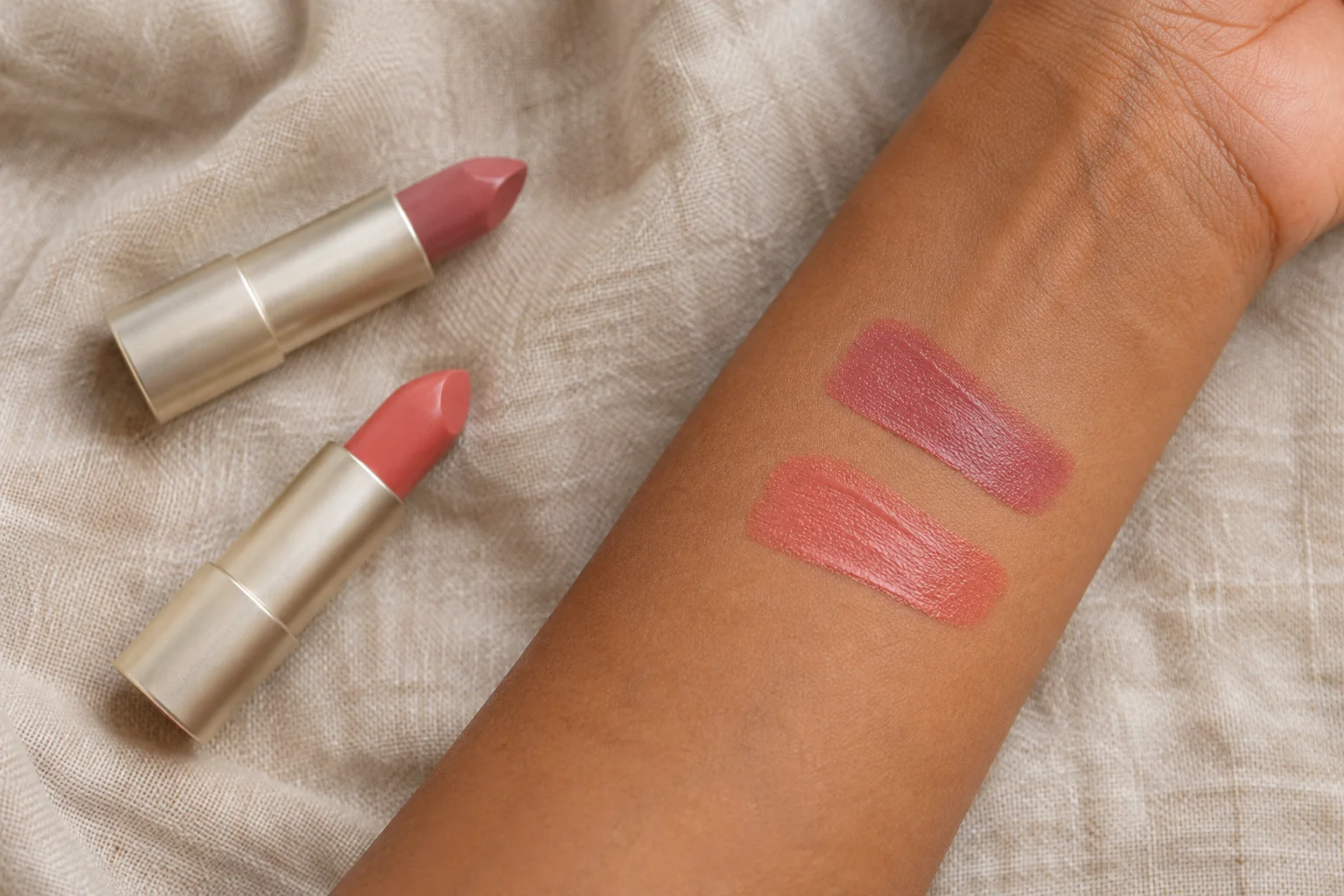
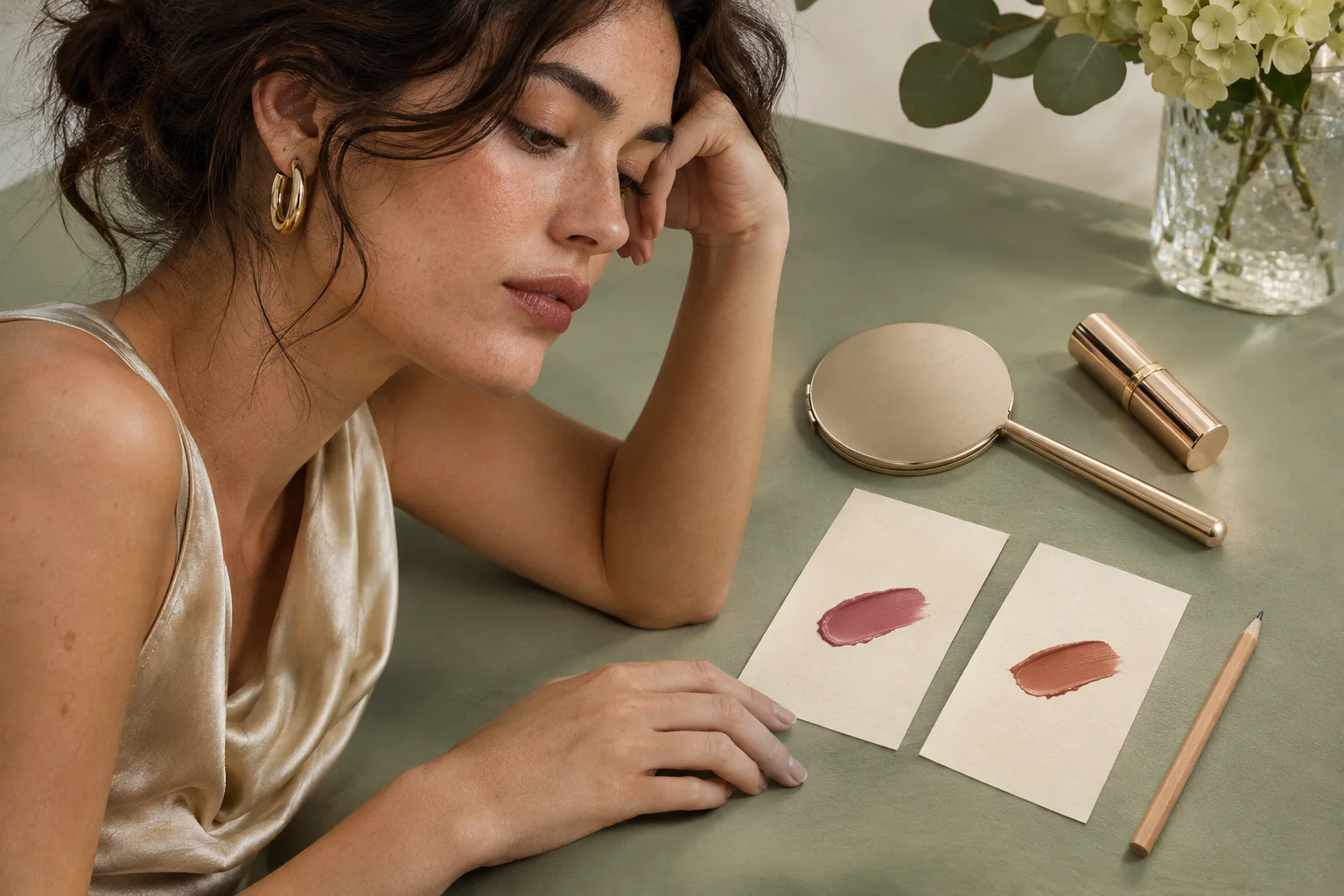
Retain at most two ideas, including the original when it remains your preferred option. Write what appeals to you in each result: less contrast against the existing lip pigment, a warmer accent, or a color that feels easier with the rest of the makeup. Avoid a note that only says prettier. A specific observation helps you translate the picture into a decision without treating the app's interpretation as a judgment about your attractiveness or the correct way to look.
Separate a saved inspiration from a shopping list. You may be able to test the direction with products you already own, even if their packaging and names do not resemble the imagined image. If you later consider a purchase, inspect the real shade, intended use and applicable terms. Do not infer that an app result identifies a particular formula or that every feature is included without purchases. We recommend a small comparison process, not an unverified claim about value, prices or the best product for everyone.
Try one manageable real application
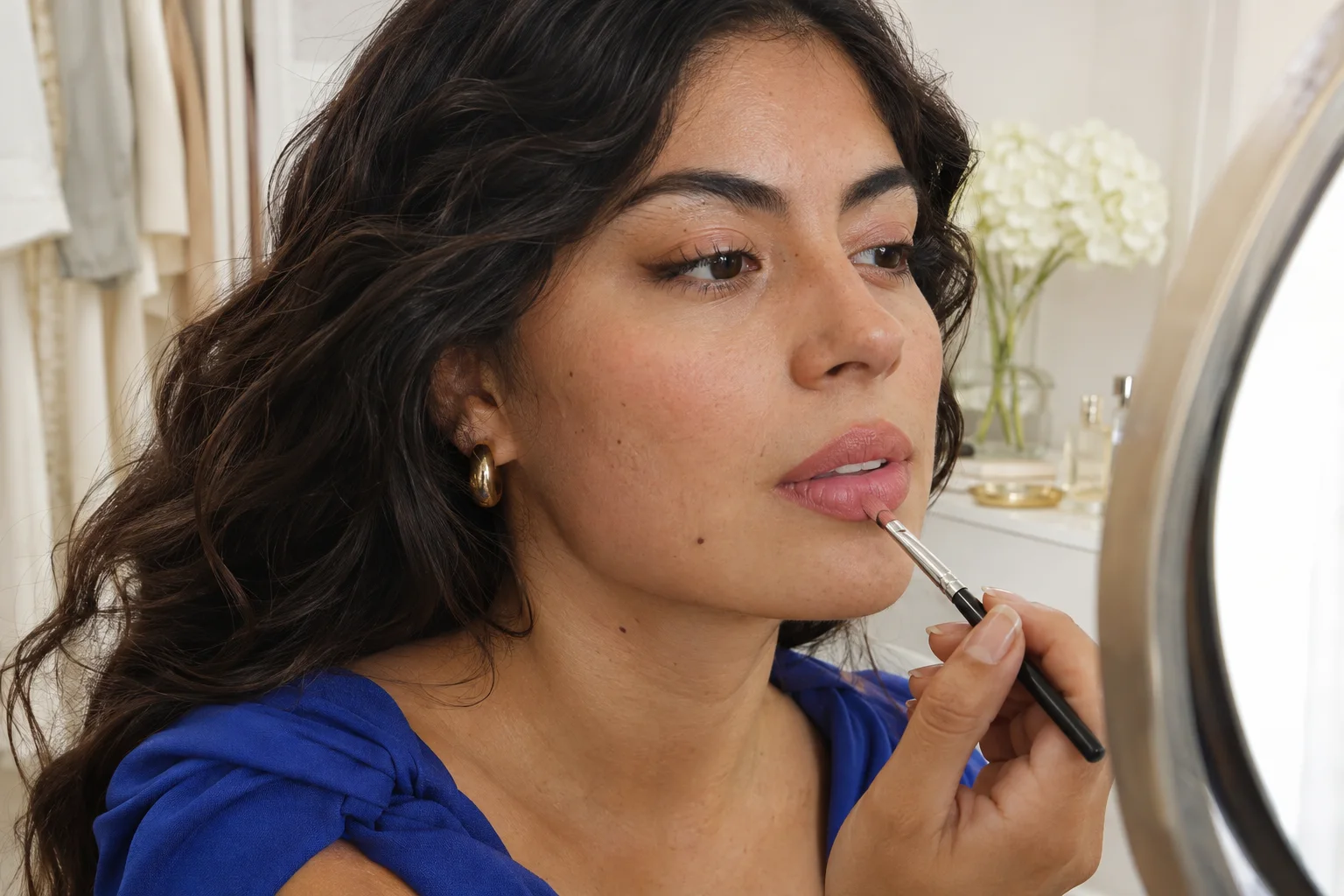
Choose one appropriate cosmetic and a clean tool for a small, calm trial. Follow the product's instructions and retain your natural outline rather than attempting to reproduce a changed digital shape. The FDA guidance on using cosmetics safely supports directions and clean handling; it does not certify the digital result or our color preference. If a product is uncomfortable, stop rather than treating discomfort as part of learning to wear the look.
Look at the first modest application before adding more. A new technique and a new color are already enough to learn from; you do not need to introduce a new base, liner and finish in the same trial. If you are comparing two real products, keep the rest of the routine similar and record which one you used. Avoid repeated rubbing and reapplication just to create matching photographs. You can compare on separate occasions and still make a useful decision without turning the exercise into a formal product test.
Review the real result beyond the phone screen
Step away from the mirror, relax your expression and look in useful ordinary light. Ask whether you like the actual color with the rest of your makeup and whether the application feels manageable. A shade may look different because of natural lip pigment, the formula, layer thickness or the room light. A preview cannot predict exact color, oxidation, texture, wear, skin response or the final physical result. Keep those limitations attached to the recommendation rather than assuming they disappear when an image looks realistic.
Our makeup lighting guide helps organize a second light check. If you take a record photo, keep the camera position and exposure reasonably consistent, and remember that the photograph is another interpretation rather than the whole experience. The real result may be subtler than your saved inspiration and still be the better everyday choice. You are checking a wearable decision, not trying to win a similarity contest with an edited portrait.
Finish the first session with a repeatable next step
Write a short record: the question, the source photo, the two directions, the real product tried and what you learned in normal light. Include whether you would repeat the application or choose the original appearance instead. A first session is successful when it produces one clear decision or a clearer question. It does not need to reveal your ideal style, prove that an app is accurate or end with a product purchase.
For another session, reuse the parts of the process that worked and change only the next meaningful variable. You might keep the chosen lip color and compare its finish later, or set lips aside and explore one cheek-color direction. Let confidence grow through small physical checks and notes you understand. Hair Muse is our suggested visual planning companion when that step helps; your own experience with real makeup, light and comfort remains the basis for deciding what you want to wear.