
Makeup look guide
Soft glam makeup: how to build a polished look that still feels soft
Plan a soft glam makeup look through skinlike coverage, blended definition, a controlled palette, and one clear focal point.
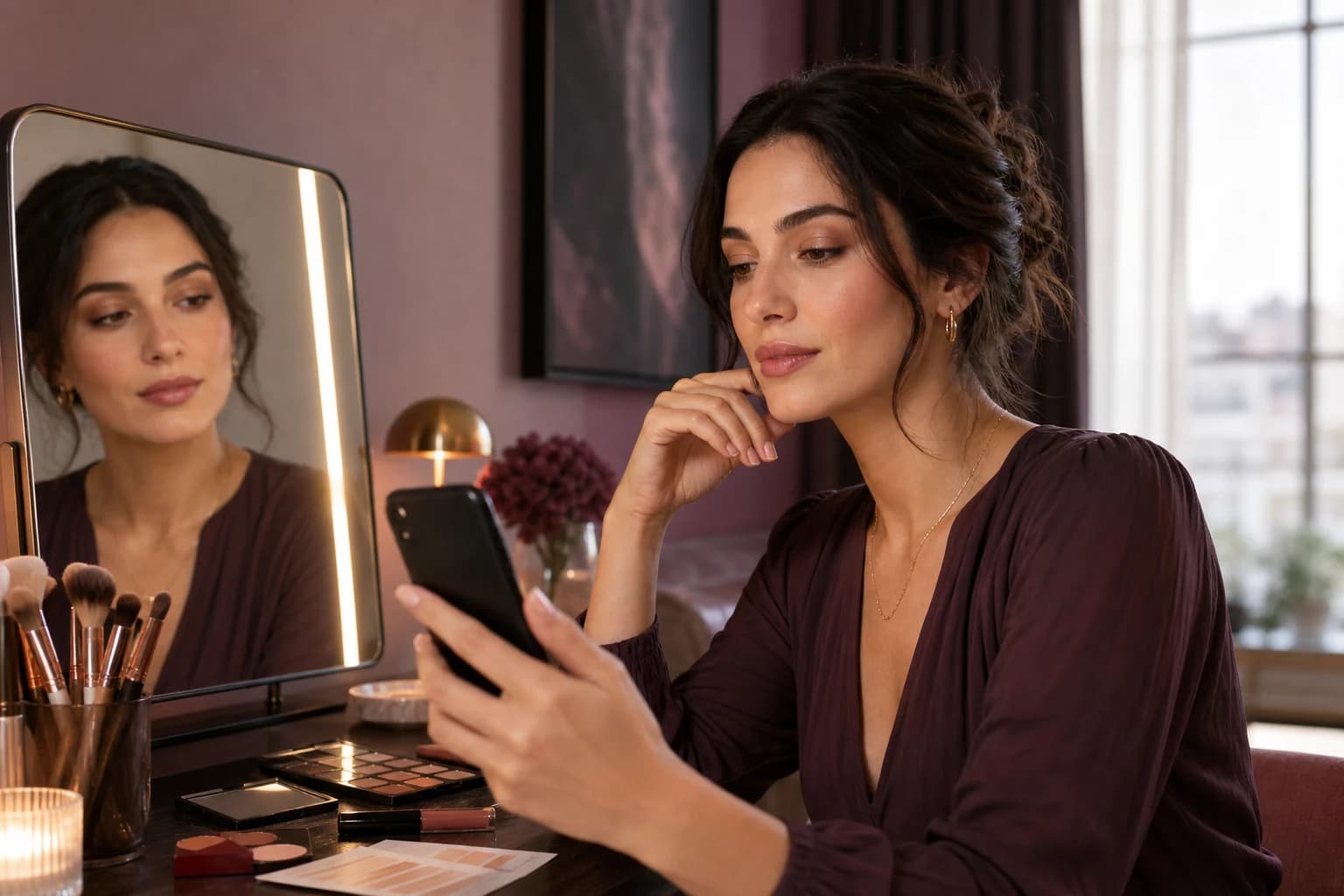
Soft glam makeup sits between barely-there makeup and full glam. The finish is polished, but edges stay diffused, colors feel connected, and no single technique looks harsh. It can be neutral, rosy, peach, bronze, or cool taupe; softness comes from the relationships between the elements, not from one compulsory palette.
The fastest way to plan the look is to choose one focal point, hold the rest of the face steady, and compare complete directions on the same portrait. MaqAI can help you preview those directions before you build a real routine, while actual formulas, skin preparation, lighting, and wear still need to be tested in person.
Define soft glam before choosing products
Soft glam is not simply lighter full glam. It relies on smooth transitions: complexion that still resembles skin, eye color with no hard stopping point, brows with visible texture, blush that belongs to the face, and lips whose outline supports rather than dominates.
Write a one-sentence brief before opening a makeup bag: for example, satin skin, softly lifted brown eyes, muted rose cheeks, and a nude rose lip. That sentence gives every product a job and makes it easier to remove steps that add weight without improving the direction.
Soft glam looks deliberate because the hierarchy is clear. Choose one feature to lead and let every other feature support it.
Choose one focal point and a restrained palette
Eyes often lead in classic soft glam, but lips, luminous skin, or a sculpted cheek can lead instead. If the eyes carry deeper definition, reduce the saturation of blush and lips. If a rosy lip is the focus, keep the eye close to the natural shadow colors already present around the face.
Limit the first comparison to two or three related color families. Try warm taupe with peach, neutral brown with rose, or cool taupe with mauve. Compare temperature and depth separately so you do not mistake a darker option for a better undertone match.
Build a skinlike base instead of a blank canvas
A soft glam base can be luminous, satin, or softly matte. The common goal is controlled texture and evenness without erasing every natural variation. Place coverage where it changes the look, then blend the edge into areas that need less product.
Judge the base at conversation distance and in normal phone photos. A close mirror rewards extra coverage that may read heavy in daylight. Preview complexion finish as a broad direction, but swatch real foundation and concealer because shade, oxidation, texture, and formula behavior cannot be proven by an image.
- Prepare the skin and allow layers to settle before adding coverage
- Use targeted correction before increasing foundation everywhere
- Set only the zones that need less movement or reflection
Blend eye definition without losing structure
Start with a mid-tone close to the natural shadows around the eye, then deepen only the area that creates the intended shape. Keep the strongest definition near the lash line or outer eye and soften it before it reaches the brow bone.
Liner does not need to disappear; it needs to belong to the gradient. Brown, black-brown, plum, or charcoal can work depending on the palette. Compare a diffused lash line, a short lifted wing, and no visible wing on the same portrait before committing to the most dramatic option.
Keep brows directional rather than block-filled. Brush first, add only the missing structure, and check whether stronger brows compete with the eye. Lashes should support the shape instead of hiding the blending work.
Connect cheeks and lips without matching them exactly
Blush returns life and color after complexion work. Place it according to the mood you want: compact and lifted for structure, softly spread for freshness, or closer to the center for a youthful flush. Then reduce or increase intensity while leaving the placement unchanged.
The lip can share undertone, depth, muted quality, or finish with the cheek without being identical. A rose cheek may support a beige rose, berry nude, or muted red lip. A peach cheek may work with caramel nude, coral beige, or a neutral pink that prevents the palette from becoming too warm.
Choose the edge deliberately. A softly blurred pencil, a precise but low-contrast line, and a glossy center create different versions of soft glam even when the lipstick color stays the same.
Use AI makeup try-on to compare, then build the real routine
Use one clear portrait and create three complete MaqAI versions: eye-led, lip-led, and balanced. Keep hair, expression, crop, and lighting stable. Save the full-face result, not only close-ups, and describe the differences in ordinary makeup language such as depth, placement, edge, saturation, and finish.
Take the strongest direction to products you already own. Recreate one side of the face or one focal feature first, photograph it in window light and indoor light, then adjust technique before buying replacements. A virtual result is useful when it produces a specific testable brief; it is not an exact product prescription or a guarantee of texture and wear.
- Keep the source portrait unchanged across every comparison
- Change one high-impact variable at a time
- Record the product role, placement, number of layers, and finish
- Run a real wear test before relying on the look for an event