
Styling guide
How to compare makeup with glasses in the full look
Use frame color, scale, lens effect, brows, eyes, cheeks, and lips as one composition instead of treating glasses as an obstacle.
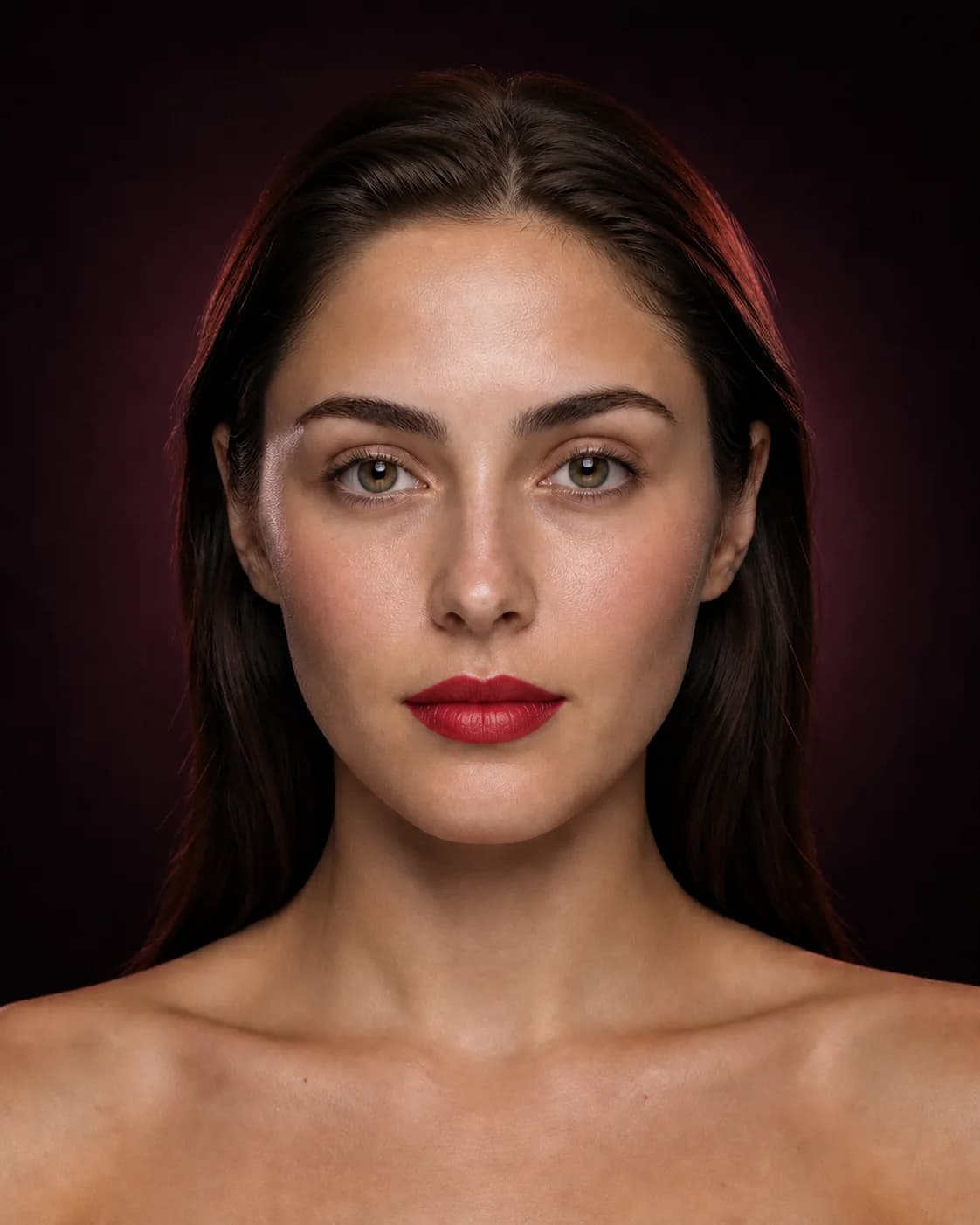
Glasses add line, color, scale, reflection, and sometimes magnification or reduction to the face. Makeup can echo that structure, soften it, or move the focal point somewhere else.
Use a portrait wearing the frames you plan to use whenever possible. The relationship is easier to judge than imagining the frames on a bare source later.
Decide whether frames or makeup should lead
Bold frames can remain the anchor while makeup provides clean support, or a strong lip can intentionally pull attention below them. Lighter frames may leave more room for an eye-focused look.
Name the desired focal point before changing products. Otherwise every feature may become more defined simply to compete with the glasses.
Read frame color as part of the palette
Black, tortoiseshell, clear, metal, saturated, and pastel frames each bring a different temperature and contrast level. Compare makeup beside the actual frame rather than choosing shades in isolation.
Harmony can repeat a related warmth or depth. Contrast can use a complementary lip or cheek. Neither approach is a rule; preview both if the choice is not obvious.
Compare eye shape inside the frame
Look at how liner, shadow, and lash direction interact with the upper and outer frame edges. A long wing may disappear behind a thick temple, while a compact lifted shape may remain visible.
Lens prescriptions can visually enlarge or reduce the eyes. Treat that as part of the real view and adjust definition after checking the complete frame-on result.
- Tight definition near the lash line
- Shape that remains visible within the lens
- Controlled lower-eye contrast
- Lashes that do not touch the lens
Balance brows and cheeks
Frames often overlap or closely border the brows, so extreme brow definition can add more structure than intended. Compare groomed softness with a stronger brow on the same image.
Nose pads and frame contact can disturb complexion products. Keep cheek placement visible around the lower frame and plan lighter base or strategic setting where the glasses sit.
Use lips to redistribute attention
A lip can balance dark or colorful frames without requiring a heavy eye. Compare a quiet integrated lip with one clearly saturated option to understand how the focal point moves.
Keep cheek and eye direction stable during that test. You are evaluating composition, not creating two unrelated faces.
Test comfort and photography in real life
A preview cannot show lens reflection, lash contact, base transfer, pressure marks, or how makeup appears through your prescription. Apply the real look and wear the glasses for the expected duration.
Check indoor light, daylight, and a normal phone photo from conversation distance. Adjust the practical issues before increasing intensity.
Design makeup with the frames, not around an imaginary glasses-free face.