
Eye makeup guide
Brown vs black eyeliner: choose by effect, not a rigid rule
Compare brown vs black eyeliner through contrast, line weight, finish, context, and real-life testing—not universal rules about who can wear each color.
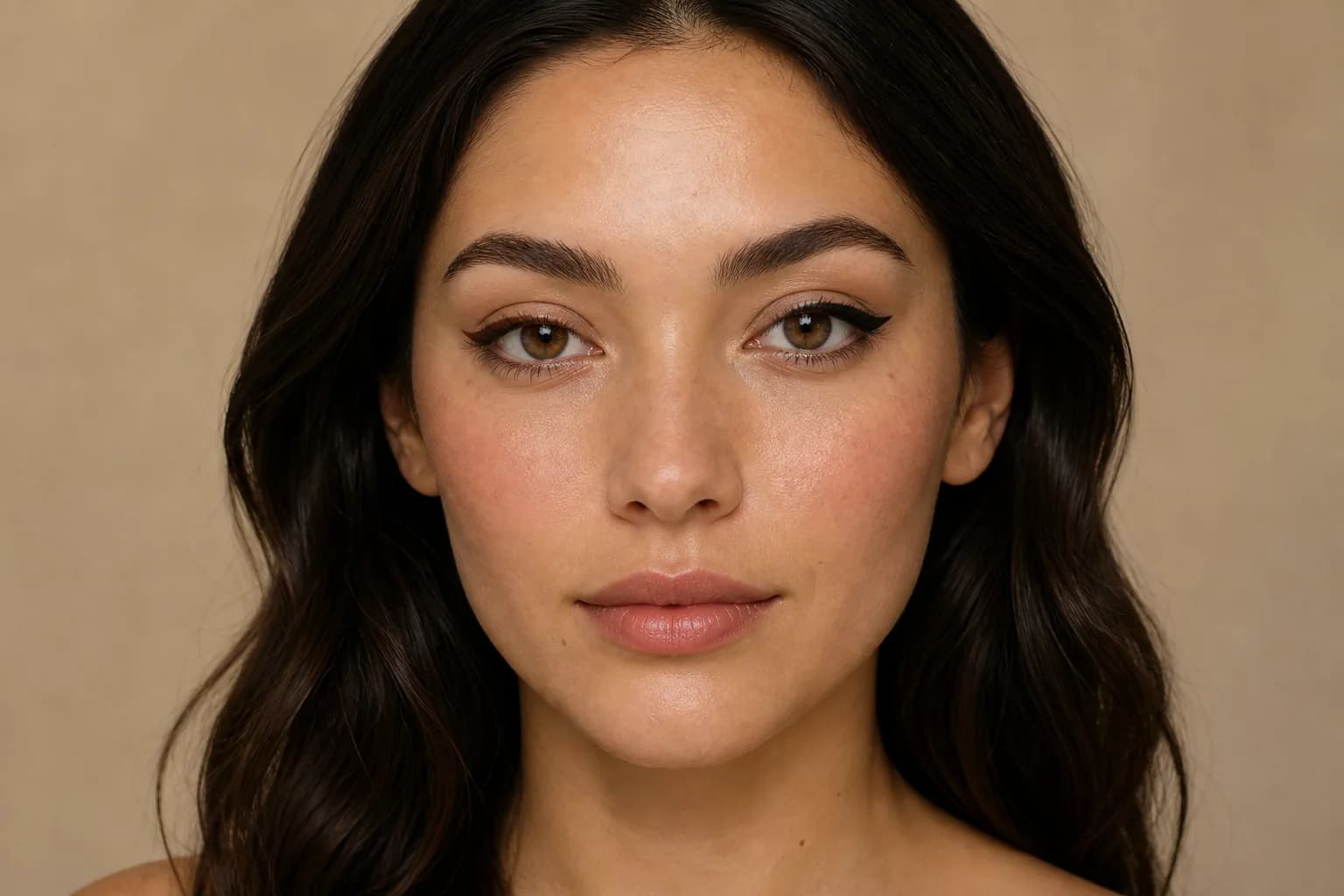
Brown vs black eyeliner is mainly a choice between levels of contrast. Brown usually creates a quieter edge; black usually creates a clearer, more graphic boundary. Neither is universally softer, harsher, better for a certain age, or reserved for a particular skin tone. The result also depends on the brown you choose, the thickness and placement of the line, your lashes and brows, the rest of the makeup, and the light in which it will be seen.
The fairest comparison keeps everything except color stable. Use the same line shape and finish on both versions, then decide whether the eye needs gentle definition, a strong focal point, or something between the two. MaqAI can help you preview those visible directions on one portrait, but it cannot prove exact pigment, texture, comfort, transfer, or wear. Those still require real eyeliner and a normal day of testing.
Brown vs black eyeliner at a glance
Black absorbs more light and usually separates the lash line more decisively from the surrounding skin. It can make a thin line look crisp, connect dark lashes visually, and support a graphic wing or a stronger evening eye. Brown leaves less distance between the line and many natural colors in the face, so the same shape can feel diffused, warm, earthy, or simply less dominant.
That summary is a starting point, not a verdict. Espresso brown can read almost black, while a sheer charcoal-black pencil can look softer than an opaque warm-brown liquid liner. Judge depth, opacity, undertone, edge, and finish together. Color names on packaging are not a reliable description of how the product appears on your skin.
- Choose black when you want the lash line or wing to be a clear focal point
- Choose brown when you want definition to merge more quietly with the full face
- Try espresso, brown-black, or charcoal when the two extremes both feel wrong
- Change line weight before assuming the color itself is the problem
Start with the effect, not eye-color rules
Ask what the eyeliner should do. A close line pressed between the upper lashes can add density without advertising its shape. A small lifted wing can direct the eye outward. A thicker opaque line becomes an intentional graphic element. Brown and black can each create all three effects, but the color changes how loudly the shape reads.
Advice based only on blue, green, hazel, or brown eyes misses the rest of the picture. Iris color matters less than the relationship among liner, skin, lashes, brows, shadow, and the intended mood. Personal taste is also evidence. If black feels clean and balanced on you, there is no need to replace it because a rule calls it harsh; if brown gives enough definition, there is no obligation to intensify it.
A useful decision sounds like ‘I want a visible wing with a quiet face,’ not ‘people with my coloring must wear brown.’
Compare depth and undertone inside the brown category
Brown eyeliner is a family, not one neutral shade. Deep espresso creates a near-black result with a slightly gentler edge. Neutral cocoa keeps the line visible without adding obvious warmth. Red-brown, bronze, taupe, and olive-brown can interact more noticeably with shadow, iris, hair, or clothing. On deeper complexions, a light or muted brown may disappear while espresso remains clearly brown and defined.
Swatch candidates beside the eye area rather than choosing from the barrel or online image alone, and follow the product's safety directions. Compare once the product has set because some formulas deepen, sheer out, or become shinier as they dry. If a warm brown makes the whole palette look disconnected, try neutral or cool brown before abandoning the softer contrast level.
Keep shape, thickness, and finish under control
Many brown-versus-black comparisons accidentally test two techniques. A smudged brown pencil beside a sharp black liquid wing cannot tell you what color changed. Match the starting point, thickness, wing length, lower-lash placement, opacity, and finish. Take a straight-on photo before deciding; a close mirror exaggerates tiny differences and can make both versions feel heavier than they do at conversation distance.
If black overwhelms the look, try a thinner line, a shorter wing, dark-brown shadow over the edge, or black only between the lashes. If brown disappears, deepen the shade, increase opacity near the outer third, or pair it with defined lashes. These small adjustments preserve the chosen contrast without redesigning the entire eye.
- Pencil or shadow: easiest to diffuse and adjust
- Gel: useful for controlled depth and a softened edge
- Liquid or pen: clearest color block and sharpest boundary
- Matte finish: usually reads more graphic than a softly reflective one
Read eyeliner in the complete makeup look
Eyeliner does not sit alone. A dark brow, strong mascara, sculpted shadow, saturated lip, or high-contrast outfit can make brown feel suitably defined. With minimal lashes and a nearly bare face, the same brown may become the only visible eye step. Black can balance a red lip or structured brow, but it can also compete when every feature already asks for attention.
Check the line with eyes open, looking forward, and while smiling. Lid folds and lashes can hide much of the work. Then step back and name the hierarchy: eyes first, lip first, or evenly balanced. Keep the eyeliner that serves that hierarchy rather than the one that looks most impressive in an isolated close-up.
Use MaqAI for a controlled brown vs black eyeliner preview
Choose one evenly lit, front-facing portrait in MaqAI. Create three directions: a deep-brown close line, the same line in black, and one bridge option such as espresso or brown with black limited to the upper lash roots. Keep complexion, brows, shadow, mascara, lip, hair, crop, and expression stable. The comparison should answer one question: how much eye-line contrast supports the intended look?
Review the full face before zooming in. Note whether the eye becomes clearer, whether the wing dominates, and whether the rest of the palette still has a focal order. Save the wording that produced each direction. A virtual preview is useful for planning color and emphasis; it is not a shade match, product recommendation, application map, or wear test.
Confirm the choice with real eyeliner and real light
Recreate the two strongest options with formulas you already own or can test safely. Wear one on each eye only for a short controlled comparison at home, or repeat the same full look on separate days. Check window light, ordinary indoor light, the camera and distance relevant to your plans, then observe transfer, fading, flaking, removal, and comfort.
Do not use a product in the waterline unless its instructions permit that use, and stop if the eye area becomes irritated. The winner may differ by context: brown for a quick daytime routine, black for a photographed evening look, espresso for both. A small two-color capsule can be more useful than forcing one eyeliner to solve every situation.